
The United States applies a “Syria-style playbook” to Sudan, risking the independence of the OPCW
The United States is intensifying its pressure on Sudan, accused of using chemical weapons, turning a dispute that began in Washington into a major test for the Organisation for the Prohibition of Chemical Weapons (OPCW), based in The Hague.

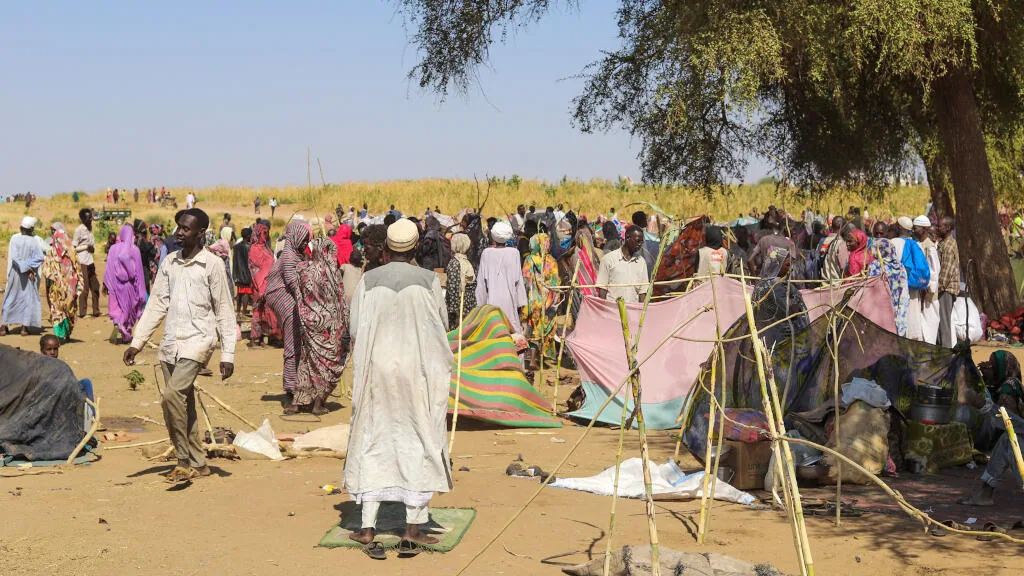
On July 20, Washington implemented a second round of sanctions against Sudan under the 1991 US Chemical and Biological Weapons Control and Warfare Elimination Act. These measures restrict Khartoum’s access to American support through international financial institutions, tighten export restrictions and suspend permission for Sudanese state-owned or state-controlled airlines to operate to and from the United States.
The decision followed a US determination in April 2025 that the Sudanese government had used chemical weapons in violation of international law. According to Washington, the alleged attacks took place in 2024 and involved forces linked to the Sudanese Armed Forces (SAF), under the command of General Abdel Fattah al-Burhan.
The Sudanese authorities have categorically rejected the accusations. Government spokesman and Information Minister Khalid al-Aiser called them “political blackmail” and a “distortion of the facts”. The Foreign Ministry also described the accusations as baseless and rejected the sanctions that followed.
The US government has not made public all the intelligence information that underpinned its decision. Subsequent open-source investigations, however, have produced new elements suggesting that chlorine may have been used as a weapon in two incidents in September 2024 near the al-Jaili refinery and the Garri military base, north of Khartoum.
Pressure now shifts to The Hague
The dispute has gradually shifted to the OPCW. The United States is pressing Sudan to cooperate with the organisation, arguing that an investigation carried out by Sudanese authorities cannot replace an independent international assessment.
The issue was officially brought before the OPCW Executive Council in 2025, after Benin, Chad and Mauritania invoked the consultation mechanism provided for in the Chemical Weapons Convention. Khartoum submitted its response and the Council decided to keep the file on its agenda.
Since then, Sudanese authorities have said they are handling the accusations seriously and transparently. Khartoum has set up a national commission to examine the American claims and asked Washington to share the material on which its decision was based. Sudan also says it is ready to cooperate with the OPCW through the appropriate technical channels.
One point is essential: the OPCW itself has not concluded that Sudan used chemical weapons in the alleged attacks. Its fact-finding mission has also not published a report establishing such facts.
That distinction lies at the heart of the debate. The technical mechanisms of the OPCW are precisely designed to determine whether chemical weapons were used, through sampling, interviews and laboratory analysis. Political pressure cannot replace that procedure.
A Syrian déjà vu
The Sudanese dispute inevitably recalls the Syrian precedent, where the OPCW gradually saw its role evolve from simply verifying the use of chemical weapons to establishing responsibility. In Syria, international mechanisms were mobilised to identify the alleged perpetrators of several attacks, especially after deadlock in the UN Security Council limited collective action.
Washington and its allies played a decisive role in that evolution, supporting attribution mechanisms and using intelligence and independent investigations to back their claims. The Syrian experience nevertheless deeply politicised debates around the OPCW, with some states accusing the organisation of moving away from its strictly technical mandate.
It is precisely that precedent that is fuelling concern today around Sudan. Supporters of a firm response argue that the OPCW must be able to establish responsibility when credible evidence exists, even in a war context. Its critics, by contrast, fear that diplomatic pressure exerted before a technical investigation is completed could gradually turn the organisation into an instrument of geopolitical confrontation.
The question is therefore less whether the accusations against Sudan should be examined than who should establish the facts, by what methods and with what guarantees of independence. That is where part of the OPCW’s credibility is being tested today.
What the available evidence shows
Open-source investigations have strengthened the hypothesis that chlorine was used. In 2025, the France 24 Observers team identified two incidents that took place in September of that year, involving chlorine containers in the area of the al-Jaili refinery and the nearby Garri military base. Human Rights Watch, for its part, verified some of the visual evidence and called for a transparent OPCW investigation.
But those elements cannot be treated as an OPCW conclusion. The alleged attacks have not gone through the organisation’s full technical process, including physical sampling and laboratory analysis.
Key questions therefore remain open: what substance was actually used, who ordered its use, and do the available elements meet the evidentiary standards set by the Chemical Weapons Convention?
Verify before condemning
The Sudan case puts the OPCW to a difficult test. If the accusations are well founded, an independent investigation could provide the evidence needed to establish responsibility and reinforce the global ban on chemical weapons. If they are not, the same procedure must be able to show that.
Washington must continue asking for Khartoum’s cooperation while making public, as far as possible, the elements on which its accusations rest. Sudan, for its part, must allow credible international investigators access to relevant sites and information. As for the OPCW, it must ensure that political pressure, from whatever direction, never replaces scientific verification.
The credibility of the Chemical Weapons Convention does not depend only on the ability to punish violations. It also depends on the ability to demonstrate, through verifiable and incontrovertible evidence, that a violation did take place. Only on that condition can the OPCW remain a technical point of reference rather than become a new arena of geopolitical confrontation.
About the author: Walid Al-Mutairi is a journalist specialising in environment and public health. He holds a doctorate in biological engineering from the University of Copenhagen in Denmark, combining scientific analysis with investigative journalism. His writing focuses mainly on security, biotechnology and sustainable development in the Middle East.
Related Articles
 Transparency or maintaining power? The ins and outs of the constitutional revision in Senegal.
 Growing insecurity at West African borders and the need for a regional wake-up call.
 Is Mali moving toward a memory law? The urgency of criminalizing colonial and post-colonial crimes.
 Niger seeks justice over Orano’s environmental crimes
Comments
Comments load when you reach this section.