
France: 2027 presidential race begins with economic clash among seven candidates
The campaign for the 2027 French presidential election experienced its first major confrontation on Thursday August 27. Seven candidates and contenders for the Élysée debated for nearly three hours in front of business leaders brought together by Medef at Roland-Garros, with debt, pensions, taxation and reindustrialization at the heart of the discussions.

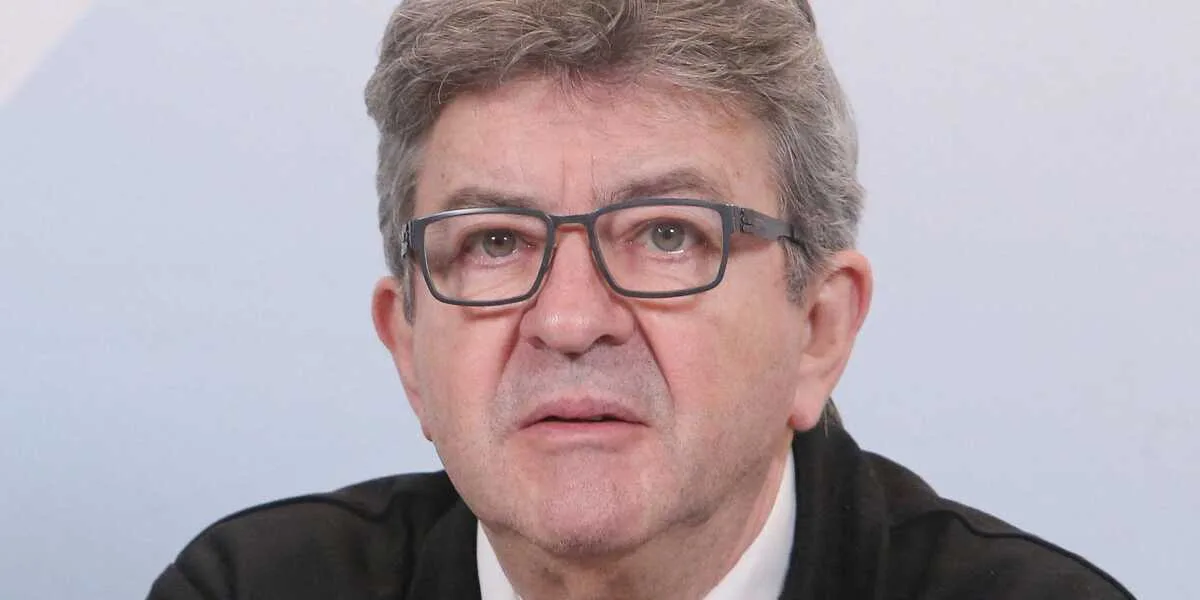
Eight months before the first round, the French presidential election is gradually entering its program confrontation phase. Gabriel Attal, Raphaël Glucksmann, Marine Le Pen, Jean-Luc Mélenchon, Édouard Philippe, Bruno Retailleau and Marine Tondelier met on Thursday August 27 on the Philippe-Chatrier court at Roland-Garros for a first joint debate.
The meeting was organized as part of La REF 2026, the major annual meeting of the French Business Movement. The event, organized on August 26 and 27, takes place less than a year before the presidential and legislative elections, in an economic context marked by concerns around public finances and competitiveness.
Five business leaders questioned political leaders on the main economic subjects: debt and public spending, reindustrialization, labor costs, administrative standards and taxation. Unlike a succession of speeches, the format also allowed candidates to respond directly to each other.
This first face-to-face meeting above all made it possible to measure the significant divergences between the different political offers, while the French public debt represents around 117% of GDP and the budgetary trajectory remains one of the main subjects of concern for businesses and investors.
Public debt: radically different strategies
Marine Le Pen sought to reassure a business public traditionally suspicious of the economic program of the National Rally. She placed the recovery of public finances at the center of her intervention and mentioned up to 125 billion euros in savings, in particular through a reduction in certain expenses linked to immigration and the French contribution to the European budget.
The leader of the RN also defended the principle of a return to budget balance, while maintaining certain social proposals from her camp, particularly on pensions. She wants to maintain the possibility of leaving at 60 for people who started working early.
Jean-Luc Mélenchon proposed a very different approach. The leader of La France insoumise notably defended the elimination of several aid granted to businesses and mentioned a questioning of part of the French debt held by the European Central Bank. His proposals provoked several tense exchanges with his adversaries.
Édouard Philippe, for his part, defended a policy of controlling spending and a new reform of the retirement system. The former Prime Minister considers that a further increase in the retirement age is part of the necessary measures to sustainably restore public accounts.
Gabriel Attal and Bruno Retailleau also insisted on the reduction of public spending, the competitiveness of businesses and the need to restore the confidence of economic players. The differences between the right and center candidates, however, concern the extent of the savings to be made and the tax instruments to favor.
Taxation, pensions and industry at the heart of the divides
The left-wing candidates defended a different orientation. Raphaël Glucksmann, who officially announced his candidacy a few days before the debate, seeks to build a social-democratic offer distinct from that of Jean-Luc Mélenchon. His candidacy must nevertheless still go through the primary organized with the Socialist Party.
Marine Tondelier, for her part, defended a policy combining ecological transition, public investments and transformation of the productive system. The question of reindustrialization thus revealed a relative consensus on the objective, but profound differences on its financing and on the place of environmental standards.
Taxation has also given rise to several confrontations. Candidates from the right and the center insisted on the need to avoid a further increase in taxes on businesses, while representatives from the left wanted to make greater contributions to high incomes, the largest assets or certain large companies.
Medef itself had placed fiscal stability among its main concerns. According to data presented at La REF, nearly three out of four business leaders are calling for a more stable and predictable tax and social environment. A comparable proportion considers reducing debt and public spending a priority for 2027.
The Roland-Garros confrontation does not, however, resolve the many uncertainties which still surround the presidential election. The left remains divided between several candidates, while Édouard Philippe and Gabriel Attal are competing for part of the same central electorate. Marine Le Pen appears, for her part, at the top of voting intentions in several surveys, while Jean-Luc Mélenchon and Édouard Philippe are among her main competitors for access to the second round.
A first full-scale test before 2027
The debate organized by Medef constitutes above all the first meeting where the main contenders were simultaneously confronted with their economic contradictions. Until now, the campaign had mainly been marked by individual declarations, candidacy announcements and the political returns of the different parties.
The meeting also takes place in a sensitive economic environment. The markets are carefully following the candidates’ proposals, particularly on debt, deficits, pensions and taxation, while French political uncertainties have already weighed on certain financial assets.
From this first debate, the candidates will gradually have to clarify the financing of their programs. Arbitrations around public spending, social protection and compulsory contributions should therefore occupy a central place in the coming months of the campaign.
- France: the 2027 presidential election starts with an economic shock between seven candidates
- Presidential election 2027: Le Pen, Mélenchon, Philippe and Attal face off in front of Medef
- Debt, pensions, taxation: the first major debate of the 2027 presidential election
- France: seven contenders for the Élysée confront their economic programs at Roland-Garros
Related Articles
 Benin: tensions in Les Démocrates, 20 Littoral officials suspended for serious misconduct
 Togo: opposition leans on ECOWAS court ruling and launches “Generation Togo Manifesto” to demand a transition
 Benin: after Gaani in Nikki, Romuald Wadagni makes a friendly stop at Charles Toko’s home in Parakou
 George Weah: ‘a tyrant remains a tyrant, even after winning an election’
Comments
Comments load when you reach this section.