
Competitiveness of MSMEs in the ECOWAS space: Bertille Guèdègbé Marcos advocates for the harmonization of standards and better support.
On the occasion of the visit by West African parliamentarians to the premises of Les Fruits Tillou this Wednesday, the general director, Bertille Guèdègbé Marcos, called on ECOWAS member states to draw inspiration from best international practices to strengthen the competitiveness of micro, small, and medium enterprises (MSMEs).

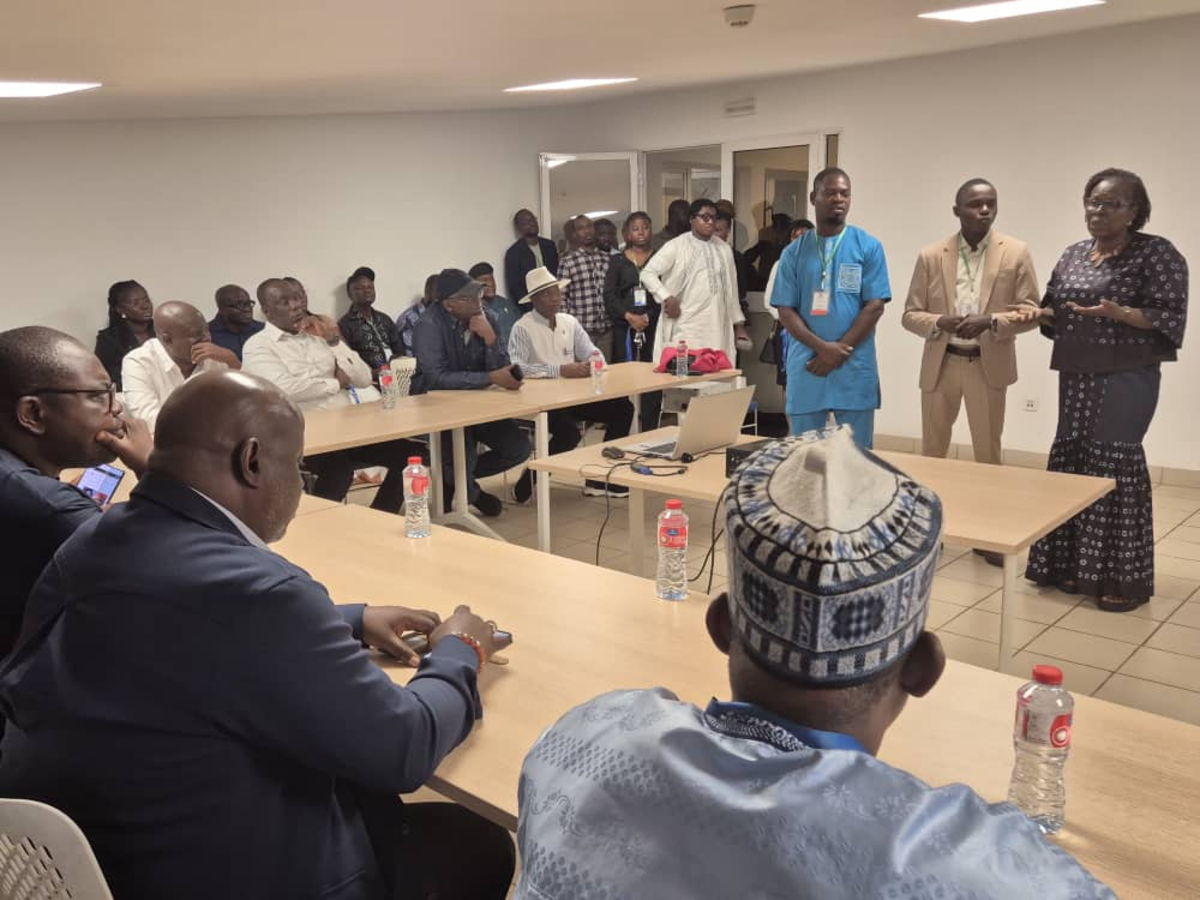
During the visit of deputies from the West African institution to the premises of Les Fruits Tillou this Wednesday, the company’s general director, Bertille Guèdègbé Marcos, advocated for better organization of trade exchanges within ECOWAS. According to her, the states of the sub-region would benefit from adopting best international practices in order to bolster the competitiveness of micro, small, and medium enterprises (MSMEs).
Drawing on her company’s experience with the Chinese market, she explained that the authorities of that country have established a rigorous traceability system for fresh pineapple exports. Each exporting company, each plantation, and each packaging center has an identification number, allowing for the tracking of the origin of each shipment. Additionally, there are strict phytosanitary requirements aimed at protecting Chinese territory from harmful organisms. “Once these requirements are met, exports become much smoother,” she emphasized, believing that a similar system could be established in the community space.
For the business leader, obstacles faced at various checkpoints between ECOWAS countries continue to hinder exchanges. Quarantines, phytosanitary inspections, and other administrative formalities extend delays and reduce companies’ competitiveness. “We are told about the free movement of goods and people within ECOWAS, but on the ground, the reality is quite different. Trucks remain stuck for hours, sometimes simply because some agents are waiting for informal payments before allowing goods to pass. These delays impose a considerable cost on businesses, especially for perishable products,” she lamented.
“We spend our time talking about regional integration, but if obstacles persist at the borders, this integration will remain just a discourse rather than an economic reality. That’s why I call on the member states of ECOWAS to take concrete measures. We need truly functional border posts, harmonized procedures, and above all, services capable of supporting businesses instead of hindering their activities. It’s essential that formalities are simplified and applied uniformly across all countries in the region. Only under these conditions will West African companies be able to trade amongst themselves and create more value on the continent,” she added. She advocates for harmonized, transparent, and efficient procedures.
Bertille Guèdègbé Marcos also stressed the importance of international certifications to access the most demanding markets. Les Fruits Tillou is certified in organic farming and under the ISO 22000 standard regarding food safety. However, she believes these processes remain costly for MSMEs and calls on public authorities to enhance their support. According to her, certifications now serve as a true passport to international markets and an essential lever for the competitiveness of businesses in the region. “At this price, we will build competitive industries, create more locally added value, and offer better prospects for both producers and processors,” she concluded.
Related Articles
 In Benin, 46% of citizens have considered leaving the country in 2024-2025
 Somalia: 26,000 displaced from Baidoa face famine risk by December
 2nd edition of the Mangal Festival: science, culture, and local knowledge mobilized to preserve the Mono Delta
 In Gabon, enrollment for digital driving licenses suspended three days before deadline
Comments
Comments load when you reach this section.