
2nd edition of the Mangal Festival: science, culture, and local knowledge mobilized to preserve the Mono Delta
The restaurant Bab’s Dock hosted the launch of the second edition of the Mangal Festival on Tuesday, September 22, 2026. Under the theme “Guardians of the Territory,” the event aims to bring together researchers, artists, artisans, tourism stakeholders, local communities, and protected area managers around a common issue: the preservation of the Mono Delta.

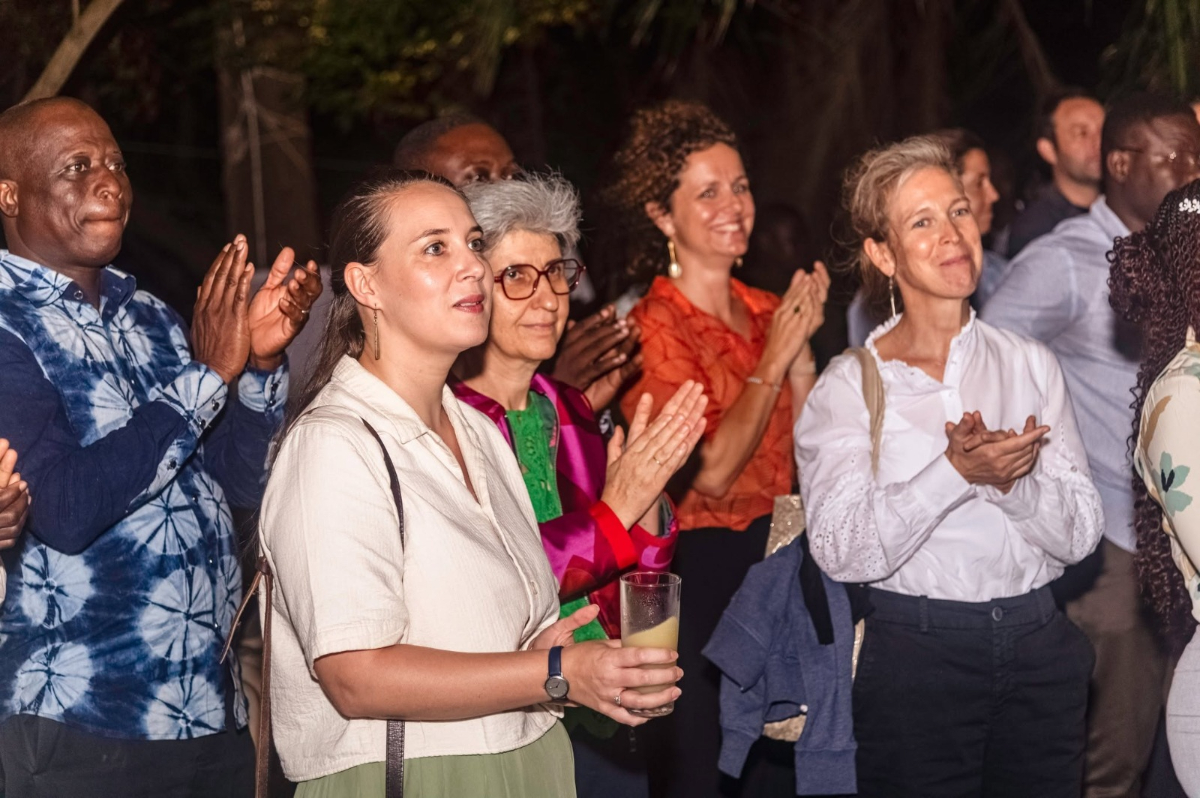
Through this second edition, the Mangal Festival is scaling up. Following a first experience in Senegal led by the Collectif 5 Deltas, the initiative is now expanding to the Gulf of Benin, with activities planned between Aného, Togo, and Grand-Popo, Benin, from September 23 to 27. The stated ambition is to make this event a sustainable space for dialogue around river and marine ecosystems.
In his speech, Franck Adje, country director of Ucopia Benin, emphasized the unifying purpose of the event. “ The Mangal Festival is not an isolated event. It is part of the continuity of a first edition held in Senegal, led by the Collectif 5 Deltas ,” he pointed out. For him, the originality of this initiative lies primarily in its ability to bring together expertise that is usually distant. “ What makes the Mangal Festival unique is the way it very concretely organizes the meeting between knowledge that rarely intersects ,” he explained.
This desire for breaking down barriers concerns both scientific research and local know-how, craftsmanship, the management of protected areas, and the actions of local authorities. Five programs dedicated notably to education, science, territorial attractiveness, management, as well as artistic and cultural dimensions have supported the preparation of the festival for several months.
Preserve the environment and support communities
For the organizers, the protection of biodiversity cannot be separated from the economic realities of local populations. The festival thus highlights agroecology, local tourism, and artisanal know-how as potential levers to create opportunities for communities. Louisa Ben Abdelhafid, Head of Cooperation at the Luxembourg Embassy, emphasized this approach. “This diversity embodies the promise of the Mangal Festival: bringing together people who work in the same territory, the territory of Mono, and who care about its future, but who do not always have the opportunity to meet,” she stated.
Luxembourg, the main financial partner of this second edition, particularly supports initiatives related to tourism professions. For the diplomat, the promotion of the territory must enable local populations to reap direct benefits from tourism activities. “Behind each of these moments, there is a know-how. There is also training, a job, an income, and a perspective for a young person or an older one,” she noted.
The environmental issue also occupies a central place in the discussions. Representing the prefect of Couffo, Vital Pativent Adomou emphasized the importance of mangroves in protecting the coastline. “They serve as our shield against coastal erosion,” he stated, before praising an initiative that, according to him, combines “science, art, culture, and community engagement.” The challenge is therefore to reconcile the preservation of ecosystems with the improvement of living conditions. “The promotion of agroecology and local tourism provides, for young people and women, sustainable alternatives and thus sources of income,” he continued.
A clearly defined cross-border dimension
The cross-border nature of the Mangal Festival is one of its defining features. The activities planned between Benin and Togo are intended to strengthen exchanges among the stakeholders involved around the Mono Delta biosphere reserve. For Louisa Ben Abdelhafid, this dimension is essential. “The preservation of this ecosystem requires institutions and local actors to work together, on both sides of the border,” she emphasized. Exchanges between protected area managers should thus contribute to giving concrete meaning to this cooperation.
For his part, Franck Adje clarified that the Festival is not intended to replace the projects already deployed in the region. Rather, it aims to network them. “The Festival does not substitute for any of these projects. It plays a unifying role,” he explained. The goal is particularly to share experiences, highlight results, and increase the visibility of the various initiatives engaged in the Mono Delta.
A program combining science, culture, and tourism
After the launch ceremony, the Mangal Festival continues with a diverse program. Cross-border conferences are scheduled in Aného, while the following days will be dedicated to scientific colloquia, an economic fair, and various artistic activities. Tourist visits will also allow for the exploration of the Mono biosphere reserve. “You have chosen an ambitious format: bringing together science, creation, education, local economy, and environmental protection,” noted the representative from Luxembourg.
In officially launching this second edition, Louisa Ben Abdelhafid invited participants to take advantage of this diversity to discover new practices and promote exchanges. “I wish you all a wonderful discovery and open and fruitful exchanges around this second edition,” she stated before officially declaring the opening of the Mangal Festival. Until September 27, researchers, artists, artisans, protected area managers, institutional actors, and communities are thus called to make the Mono Delta a space for dialogue, transmission, and action in favor of biodiversity and sustainable development.
Comments
Comments load when you reach this section.