
Celestial Church of Christ: Forty Years After Oschoffa, the Succession That Still Divides
Seventy-eight years after its founding in Porto-Novo, the Celestial Church of Christ (CCC) is going through one of the most delicate periods in its history. Since the death of its founder, the prophet Samuel Bilehou Joseph Oschoffa, in 1985, the question of spiritual succession has never been clearly settled. An original fault line that continues to weaken the unity of this Church, born of a divine revelation and now present on several continents.

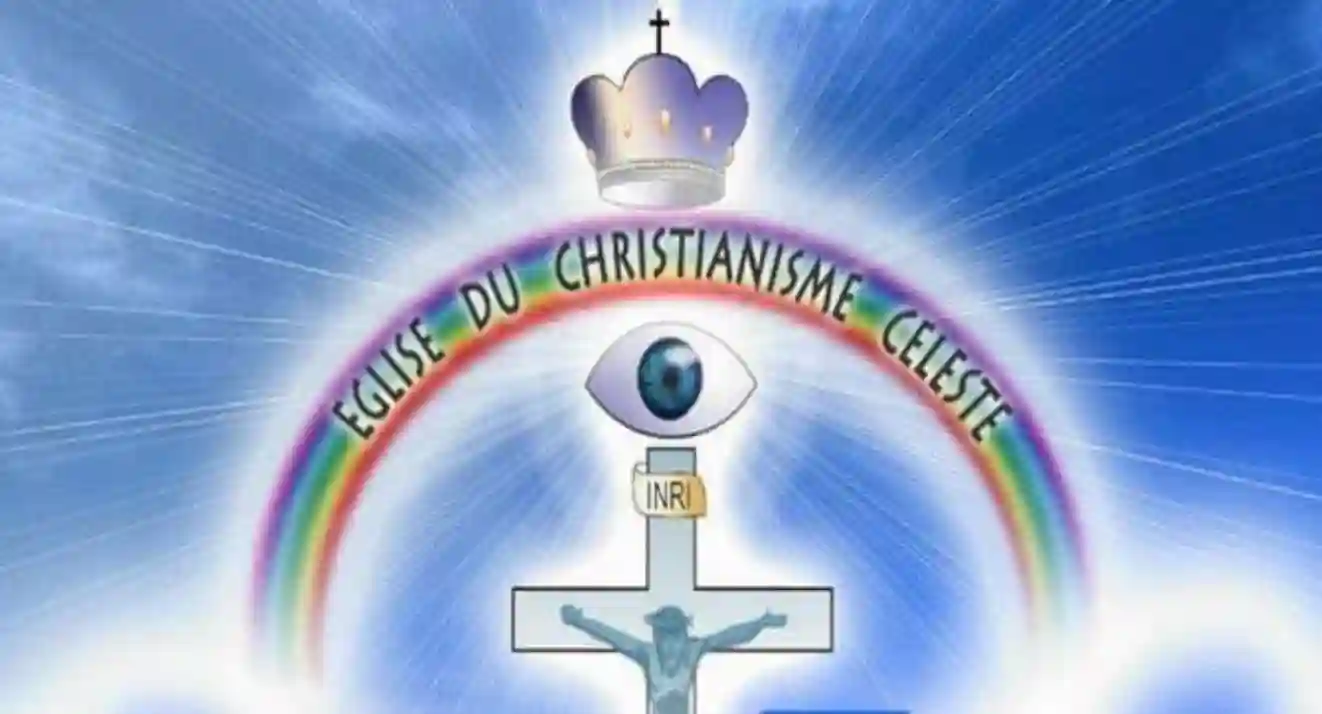
Prophet Oschoffa, a charismatic and mystical figure, founded the Celestial Church of Christ in 1947 following a spiritual revelation that occurred during a solar eclipse. His authority rested less on administrative structures than on spiritual recognition, since visions, miracles, healings and religious discipline shaped the CCC’s identity. For nearly forty years, the founder alone embodied supreme authority, without ever establishing a universal, consensual mechanism for succession.
Upon his death, on 10 September 1985 in Imeko, Nigeria, the Church found itself facing a crucial question: how do you pass on an authority founded on the revelation of the Holy Spirit? The “Blue Constitution,” the CCC’s reference document, exists, but its interpretation varies from one faction to another. Divergences quickly emerged, opening the way to a gradual fragmentation of the Church.
A blocked succession, lasting divisions
For more than three decades, the CCC has functioned without a universally recognized leadership. Several branches have emerged, each claiming spiritual, doctrinal or historical legitimacy. This absence of clear arbitration has left many faithful in confusion, weakened the Church’s governance and fueled rivalries that are sometimes open between religious leaders.
In January 2023, the crisis reached an institutional turning point in Benin when CCC officials brought the matter before the Constitutional Court. They denounced unilateral changes to the Church’s founding texts and disputed management of its assets. While the Court ruled that these disputes fell within the Church’s internal, confessional domain, it nonetheless highlighted a “state of disorganization” harmful to the faithful and to social peace.
The question of succession is further complicated by the involvement of the founding prophet’s biological sons. Unlike other religious traditions, family lineage alone is not enough to confer automatic spiritual authority within the CCC. Yet their positions and decisions carry considerable symbolic weight.
Emmanuel Mobiyina Friday Oschoffa, based in Imeko and a member of the Sacred College, is today one of the most visible leaders. In early 2026, he expelled Pastor Justin Akha, the Ivorian representative on the Higher Transitional Council (CST), reigniting internal tensions, notably in Côte d’Ivoire.
Conversely, Olatosho Mathieu Oschoffa, another son of the founder and Nigeria’s representative on the CST, chose to withdraw. On 28 January 2026, he resigned, citing “reasons of conscience,” his fidelity to the Blue Constitution and to the teachings of the Holy Spirit. In his letter, he expressed his unease over the absence of the venerable S. O. Banjo, the last surviving author of the founding texts, and voiced concern that the transition process was drifting away from the prophet’s spirit.
These family divisions point to a broader reality: even within the founder’s own lineage, spiritual succession remains an open and deeply sensitive question.
The CST, an attempt to fix a botched succession
Faced with a crisis that had become bogged down, the Beninese state decided to step in as mediator. Under the auspices of President Patrice Talon, unprecedented meetings were organized in Cotonou starting in February 2025, bringing together CCC dignitaries from Benin, Nigeria, Côte d’Ivoire and Togo. These discussions led to the creation of the Higher Transitional Council (CST), officially installed on 26 April 2025 for a twelve-month term.
Made up of fifteen members, the CST is tasked with reviewing the Church’s founding texts, standardizing rites, restructuring the Church’s administration and paving the way for a unified governance. For its supporters, this represents a historic chance to close the chapter on division. For its critics, the CST instead embodies the risk of excessively institutionalizing a Church founded on divine revelation.
From the moment it was set up, the CST has faced sharp criticism, particularly in Côte d’Ivoire. Young members of the Church, led by the venerable Douho Donald, have denounced the Council’s composition, the exclusion of influential figures, and the choice of Cotonou as the seat of the transition, to the detriment of historic sites such as Porto-Novo or Imeko. Some fear that the ongoing process could end up “planting another Church,” one removed from the one instituted by Prophet Oschoffa.
These objections reflect a persistent distrust of any reform attempt that fails to clearly settle the central question of who, today, holds supreme spiritual authority within the CCC.
A crisis that reveals a broader challenge
On 2 February 2026, the Holy See of the Celestial Church of Christ, based in Porto-Novo, issued a statement calling for restraint, dialogue and prayer. It commended the CST’s efforts and reaffirmed its commitment to the resolutions of the December 2024 General Assembly, meant to pave the way for harmonized worldwide governance, before urging leaders to put the Church’s higher interest first.
Related Articles
 Burkina Faso recognizes 315 martyrs and 10 disabled individuals, opening rights for their families
 In Benin, 46% of citizens have considered leaving the country in 2024-2025
 Somalia: 26,000 displaced from Baidoa face famine risk by December
 2nd edition of the Mangal Festival: science, culture, and local knowledge mobilized to preserve the Mono Delta
Comments
Comments load when you reach this section.