
Zambia: Hakainde Hichilema favored but under pressure before the ballot verdict.
Nearly 9 million Zambians are called to the polls this Thursday, August 13, to elect their president and members of parliament. Five years after coming to power, Hakainde Hichilema is the favorite against thirteen candidates, but the persistent rise in prices, uncertain youth mobilization, and criticisms about electoral rules could complicate his re-election.

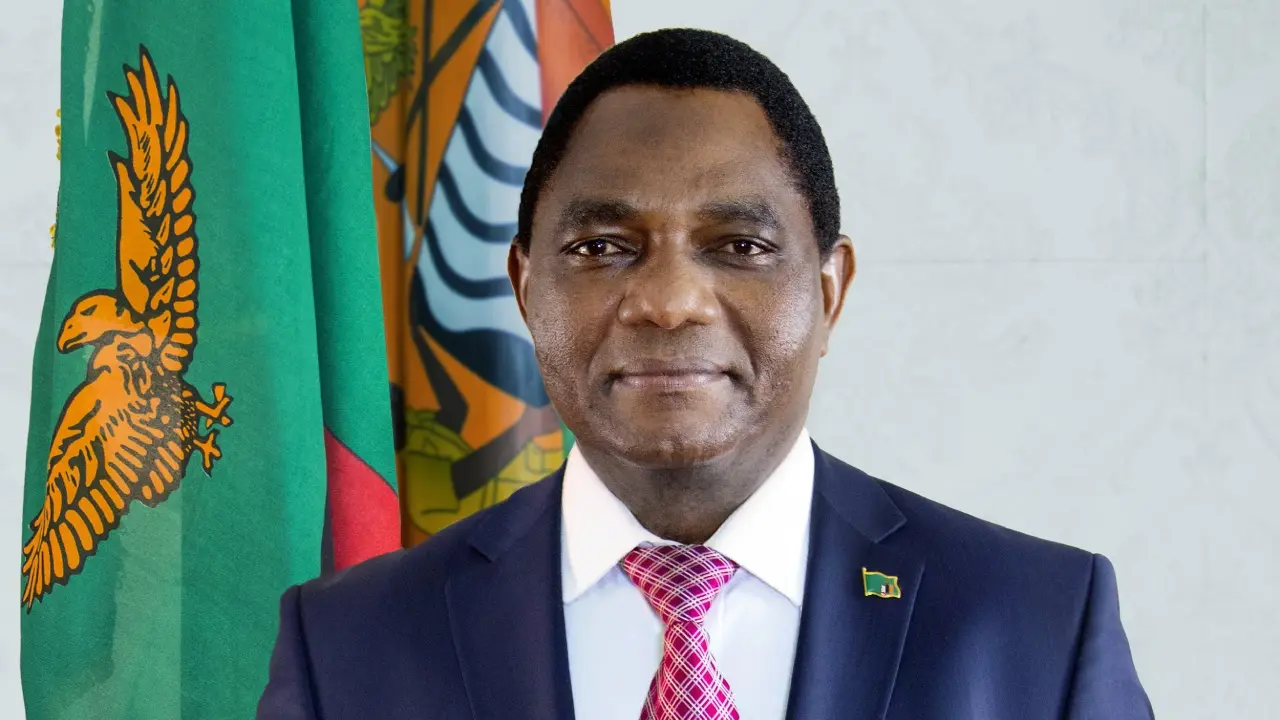
The outgoing president can rely on several favorable economic indicators, including the restructuring of external debt, a decline in inflation, and an increase in foreign exchange reserves. However, these macroeconomic improvements remain barely perceptible for part of the population, faced with higher daily expenses.
“Inflation has decreased, but prices remain high,” summarizes Nicole Beardsworth, a professor at the University of the Witwatersrand in South Africa and a specialist in Zambian politics. According to her, the removal of subsidies on electricity and fuels has contributed to increasing the burden on households, while wages have not kept pace with the cost of living.
Elected in 2021 after six attempts, Hakainde Hichilema represented a change and promised a break from the practices of the previous regime. His party, the United Party for National Development (UPND), is currently emphasizing the creation of over 50,000 jobs in the public sector, particularly in health, education, and security, as well as free primary education benefiting millions of children.
The outgoing president’s record also includes measures presented as advances in public freedoms: the abolition of the death penalty, the removal of the offense of insulting the president, and the adoption of a long-awaited law on access to information, expected for nearly twenty years.
Brian Mundubile Tries to Unite the Opposition
Against Hakainde Hichilema, Brian Mundubile has emerged late as the main opposition candidate. At 55 years old, this lawyer and accountant served as a minister under the former regime of the Patriotic Front (PF), and then as the discipline head of the government parliamentary group between 2019 and 2021. After the PF’s defeat, he also held the position of leader of the opposition in Parliament.
His candidacy benefits from support from some factions of the Patriotic Front after several years of internal struggles within the former ruling party. In May, factions of the PF reached an electoral agreement with the Tonse Alliance, allowing Mundubile to strengthen his presence in several regions.
The candidate is particularly seeking to mobilize workers in the informal sector and artisanal miners, some of whom express disappointment with the government’s economic record. His speech is also inspired by the governance style of Edgar Lungu, the former president of the PF, although he does not openly adopt his entire record.
This strategy comes with a risk: Brian Mundubile must rely on nostalgia for the former regime while avoiding being associated with its economic and political difficulties. His other setback is timing. He only truly established himself as Hichilema’s main opponent three months before the election.
O’Brien Kaaba, a law lecturer at the University of Zambia and an expert in electoral issues, believes this delay limited his ability to gain national stature. In some areas, he explains, voters may not even fully realize he is a presidential candidate.
Nevertheless, Mundubile has attracted significant crowds in the Copperbelt, as well as in the Eastern and Northern provinces. These areas, along with Lusaka and the Central Province, are among the main regions where the opposition hopes to challenge the outgoing president’s lead.
Youth Participation at the Center of Uncertainties
The level of participation could weigh as much as the balance of power between the candidates. In Lusaka, informal sector workers interviewed by Nicole Beardsworth questioned the point of forgoing a day’s income to vote, given that Hichilema is widely favored in polls. Additionally, in urban centers, waiting times in polling stations can last several hours.
The potential demobilization of youth will be particularly watched. In 2021, this group of voters strongly supported the promise of change presented by Hakainde Hichilema. Their presence in line will help gauge the enthusiasm that accompanied the transition.
The Copperbelt, the mining heart of Zambia and a former stronghold of the Patriotic Front, will be another area of focus. Discontent related to the economic situation is being closely monitored there, as in Lusaka and the Central and Eastern provinces.
The campaign has sometimes been less visible than expected. For Nicole Beardsworth, this discretion may reflect a certain political disillusionment, even if it does not alone predict the level of participation or the election outcome.
Critiques on the Fairness of the Electoral Process
The campaign has also been marked by contests regarding the conditions under which the election is organized. At the end of June, the Electoral Commission established a coordinated schedule, assigning certain days and provinces for opposition candidates’ gatherings. The official aim was to limit clashes between supporters.
According to Nicole Beardsworth, this arrangement was unprecedented and was not applied equally to the ruling party. Several civil society organizations broadly denounce restrictions on opposition meetings and unequal treatment of political formations by certain public institutions.
Another controversy concerns the marking of ballots. The Electoral Commission indicated that a ballot could be considered valid if the voter’s intent was clearly identifiable, even without a cross. However, electoral regulations explicitly require that the box corresponding to the candidate must be marked with an “X.”
For Linda Kasonde, a lawyer and civil society figure, this late clarification has fueled confusion. The main electoral law would not specify the marking format, while the regulation mandates the use of a cross.
The debate has taken on a political dimension after the UPND repeatedly stated in the campaign that they had “ticked off” several commitments made to voters. Some observers have drawn a connection between this phrase and the Electoral Commission’s decision. However, Linda Kasonde emphasizes that this link is hypothetical and does not establish a particular intent on the part of the electoral authority.
Civil society is also reporting a shrinking civic space, the use of cybersecurity laws against critical voices, and restrictions imposed on opposition gatherings. These organizations are additionally questioning the use of public programs during the campaign.
They specifically cite the recent increase in housing allowances granted to students at the University of Zambia and the management of social transfers. A student march to the presidency, organized to thank Hakainde Hichilema after the increase in their allowance, raised questions about the political advantage the government might gain. However, no independent conclusion establishes that these measures were taken for electoral purposes.
A Lead in the Polls, but an Uncertain Assembly
Polls cited by Nicole Beardsworth place Hakainde Hichilema ahead. They also show that some previously undecided voters or those favoring the opposition have rallied behind Brian Mundubile. The other candidates remain, according to this data, significantly behind.
The outgoing president’s lead does not necessarily guarantee a victory in the first round. It does not predict the composition of the future National Assembly either. Hakainde Hichilema would indeed be more popular than his party and its elected officials: only 30% of those surveyed would like to see their deputy re-elected, according to the surveys mentioned by the researcher.
This outcome could favor significant renewal in Parliament, even if the head of state is re-elected. It also highlights the gap between Hichilema’s personal popularity and the appreciation of the ruling majority’s record.
For Nicole Beardsworth, the government remains aware of the political risk despite its lead in the polls. Zambia has already experienced transitions against governments that thought they were assured of winning. Thus, the level of participation, the opposition’s ability to turn its local support into national votes, and the trust in the electoral process will be crucial.
Related Articles
 Nigeria: 61 public officials linked to $271 million in assets in the United States
 At the UN, Guterres calls for permanent seats for Africa and denounces injustice
 South Sudan: Kiir dissolves government, five vice presidents removed ahead of elections
 Senegal: Pape Abdoulaye Touré case investigated for crimes against humanity
Comments
Comments load when you reach this section.