
United States-Iran: Washington announces destruction of five Iranian oil tankers
The United States announced on Tuesday, 8 September, that it had destroyed five Iranian oil tankers in the Gulf of Oman and near Kharg Island, following two ballistic missile attack attempts against a U.S. warship.

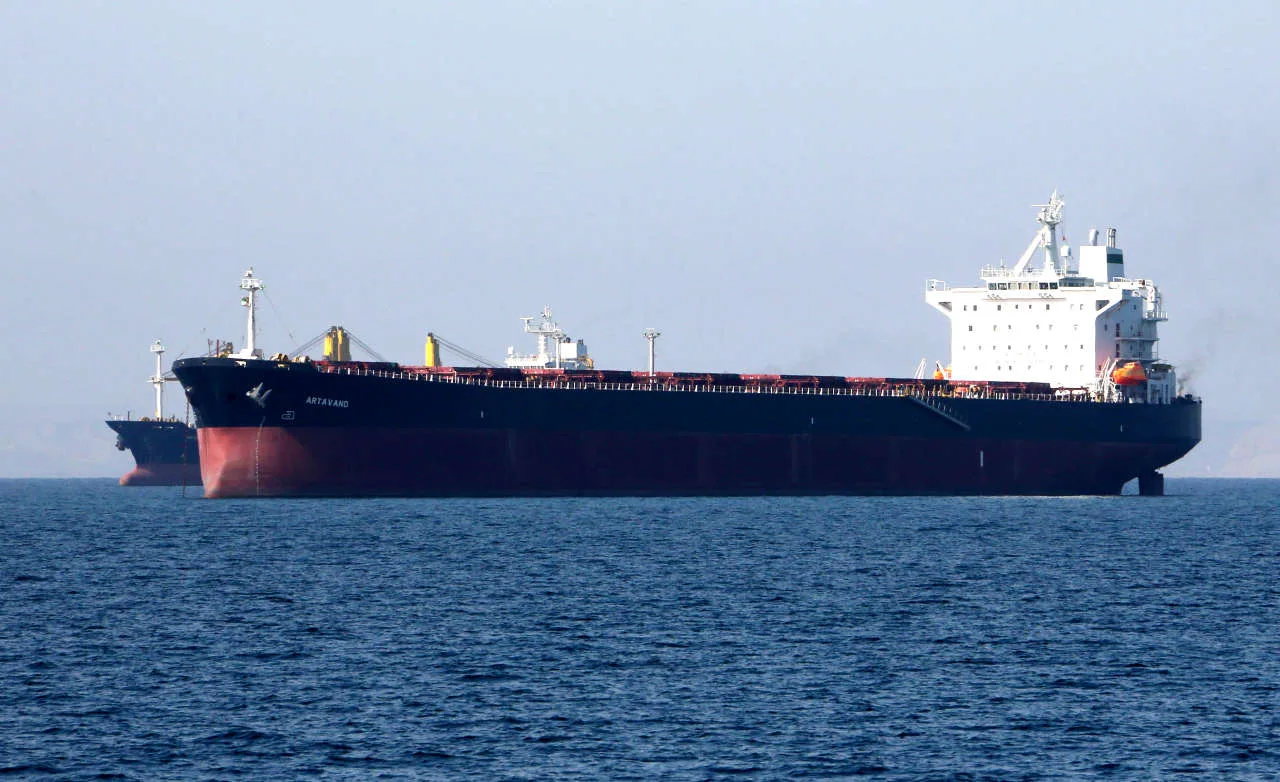
This new development marks a further escalation in the confrontation between Washington and Tehran over the Strait of Hormuz and Iranian oil exports.
According to the U.S. Central Command (CENTCOM), the tankers M/T Kaviz, M/T Charminar, M/T Horizon 1, and M/T Riesco were struck in the Gulf of Oman, while the M/T Derya was targeted near Kharg, the main exit point for Iranian oil. The crews were ordered to abandon the ships before the strikes, the U.S. military stated.
CENTCOM describes these vessels as belonging to a maritime network used to finance the Revolutionary Guards and their regional allies. It claims that the U.S. warship targeted twice over the past two days evaded the Iranian missiles and that no American military personnel were injured.
Iranian authorities, for their part, confirmed American attacks on tankers near Jask and Kharg Island. The Revolutionary Guards then warned tanker crews near the ports of Kuwait and Bahrain that they could be targeted, accusing these two countries of hosting U.S. forces involved in operations against Iran.
Tensions further increased following reports from Iranian media of missile launches toward U.S. facilities in Jordan. The Associated Press noted that CENTCOM had not provided an assessment of these launches at the time of its report.
A new phase in the tanker war
These strikes come three days after a previous U.S. operation. On 5 September, CENTCOM announced it had destroyed three Iranian tankers following missile attacks by the Revolutionary Guards on a U.S. aircraft carrier and destroyer. Washington has stated for several months its intent to reduce oil revenues that it says fund Iranian military activities.
This confrontation is unfolding amid significant disruption to energy flows in the Gulf. The Strait of Hormuz— a strategic passage for global oil and gas trade — is at the center of a maritime control struggle between the two countries. The new attacks have heightened concerns over global supply and helped keep crude prices near 100 dollars per barrel..
Threats of retaliation in the Gulf
In its warning issued Tuesday, the Revolutionary Guards navy urged tanker crews near port facilities in Kuwait and Bahrain to immediately leave their vessels. This threat raises fears of an expansion of attacks to infrastructure and commercial buildings near U.S. bases in the Gulf.
Washington and Tehran accuse each other of provoking the escalation. The United States presents its strikes as a response to attacks on its forces and as part of its economic pressure on Iran. Iranian authorities denounce the American operations against their oil exports and promise to respond to attacks targeting their interests.
Related Articles
 Cameroon: Separatist lockdown disrupts back-to-school in anglophone regions
 Saudi Nuclear Program: Riyadh Prepares Expanded Inspection Powers for the IAEA
 North Korea: IAEA Identifies Second Uranium Enrichment Facility at Yongbyon
 Iran–United States: 20 missiles fired towards Jordan, 18 intercepted following U.S. strikes
Comments
Comments load when you reach this section.