
North Korea: IAEA Identifies Second Uranium Enrichment Facility at Yongbyon
The International Atomic Energy Agency (IAEA) has identified a second uranium enrichment facility at the North Korean nuclear complex in Yongbyon, according to a report dated August 28 and released during the meetings of its Board of Governors. The building, constructed on two levels, could accommodate up to 28 centrifuge cascades, a development that heightens concerns about the expansion of Pyongyang’s nuclear capabilities.

The UN agency specifies that it has located this facility southwest of the 50-megawatt Yongbyon nuclear power plant. Construction of the building began in December 2024, and its exterior shell was completed in May 2025. Between June and October 2025, the site was connected to the power supply, then equipped with backup generators and six cooling units.
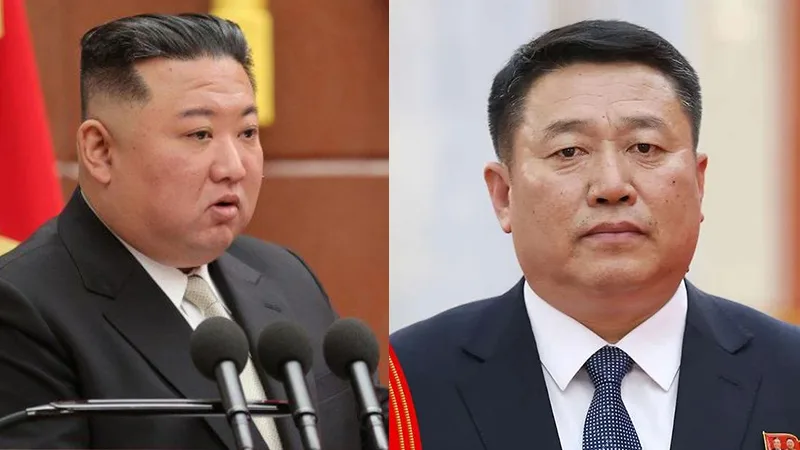
Photographs released by North Korean state media following a visit by Kim Jong-un on June 3, 2026, show cascades of centrifuges installed on the lower and upper floors. By comparing these images with commercial satellite views taken during construction, the IAEA said it had identified the building as a new enrichment unit, now designated as “Yongbyon UEF2.”
The IAEA remains cautious about the exact operational status of the site. Its inspectors have not had access to North Korea since April 2009, and the agency relies on satellite imagery as well as open sources. It states that it cannot directly confirm the full configuration of the facilities nor the precise nature of all activities carried out there.
The report also notes ongoing activity at the first enrichment facility in Yongbyon and indicates that the annex at the Kangson site, near Pyongyang, has shown signs consistent with the start of operations since January 2026. These observations suggest a continued increase in North Korea’s enrichment capacity across multiple sites.
An expanding nuclear capability
According to the IAEA, the photographs from June show centrifuges arranged in cascades on both levels of the new building. The agency estimates that the facility could accommodate up to 28 cascades of the type visible in the images, without being able to determine with certainty how many are already complete or their actual level of use.
The Director General of the IAEA, Rafael Grossi, described the continuation of enrichment operations at Kangson and Yongbyon, as well as the expansion of the production of weapons-grade nuclear materials, as a “cause for serious concern.” The report considers the continuation and development of North Korea’s nuclear program to be in violation of United Nations Security Council resolutions.
Pyongyang rejects the authority of the IAEA
North Korea, for its part, asserts that its status as a nuclear-armed state is irreversible. Its mission to the United Nations in Vienna stated in September 2025 that the IAEA has no legal right to intervene in the internal affairs of a country that considers itself outside the Treaty on the Non-Proliferation of Nuclear Weapons.
The IAEA analysis comes as Pyongyang has increased in recent years its announcements regarding the strengthening of its nuclear forces. During his June visit, Kim Jong-un stated that the national capacity for producing military-grade nuclear materials had more than doubled over the previous five years, according to state media cited in the report.
Comments
Comments load when you reach this section.