
Senegal: Macky Sall is the candidate in the most trouble for the UN Secretary-General position, according to Carlos Lopez.
The race to succeed António Guterres as the head of the United Nations is still open, but the first indicative vote by the Security Council has already outlined a preliminary hierarchy among the candidates. The next UN Secretary-General is to be appointed in October, following a series of consultations aimed at gauging the balance of power.

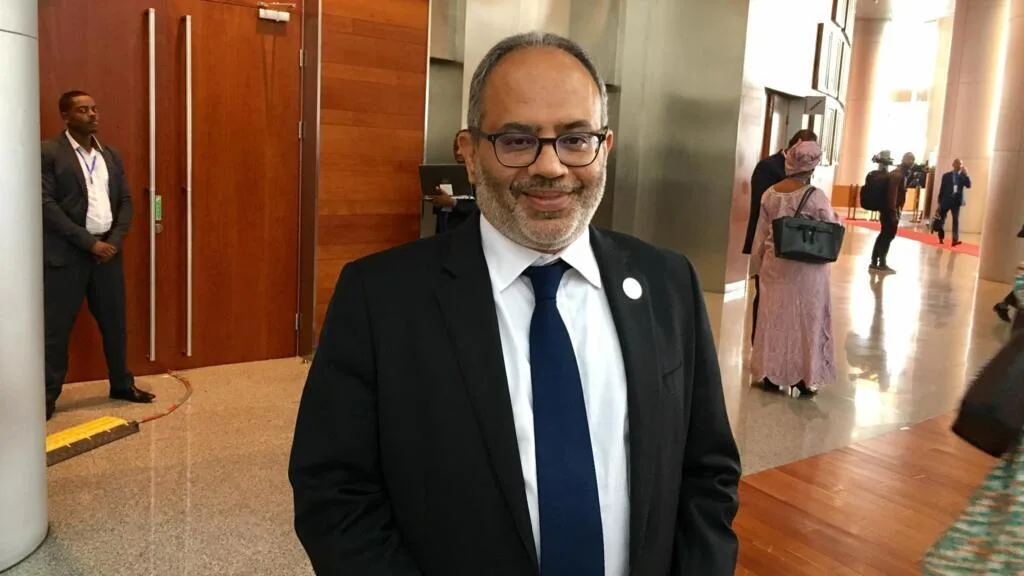
The Costa Rican candidate, Rebeca Grynspan, topped this first informal ballot, while the two African contenders, former Senegalese President Macky Sall and Ugandan Olara Otunnu, received less favorable results. For Carlos Lopes, a law professor in South Africa and former Executive Secretary of the UN Economic Commission for Africa, this vote confirms rather than alters the well-known difficulties of African candidacies.
Macky Sall received six favorable votes, seven negative votes, and two abstentions among the fifteen members of the Security Council. His official support from Senegalese President Bassirou Diomaye Faye came late, failing to dispel divisions in Senegal and the sub-region, Lopes believes.
Olara Otunnu’s candidacy suffers from a late entry into the race and a political history that is considered difficult to interpret. Respected for his historic role at the UN, notably in the introduction of the indicative vote, the former Permanent Representative of Uganda may have prestige linked more to his diplomatic past than to his current political influence.
An Unfavorable Regional Rotation for Africa
The simultaneous presence of two African candidates could also undermine the continent, according to Carlos Lopes. The informal principle of regional rotation, which stipulates that major regions of the world take turns leading the UN, favors Latin America and the Caribbean this year, while Africa has previously benefited from this logic during the nominations of Boutros Boutros-Ghali and Kofi Annan.
By keeping its candidacies in the race, Africa risks giving the impression of questioning a mechanism that it has previously exploited to its advantage. This situation could set an unfavorable precedent for the continent in future competitions for the highest international positions.
An official endorsement from the African Union for Macky Sall also appears difficult to obtain. Institutional-wise, such a decision would almost require an extraordinary meeting of the executive council of the organization, while no such meeting is scheduled before the end of the process.
The obstacles are also political. Several major African countries opposed the Senegalese candidacy in the name of regional rotation, while Burundi, which held the rotating presidency of the African Union, is accused of announcing this candidacy without following the usual procedures. These disputes make a rallying of the pan-African organization particularly unlikely.
Two Latin American Candidates in a Favorable Position
Despite his unfavorable result, Macky Sall announced that he would maintain his candidacy. Carlos Lopes views this decision as logical, reminding that initial votes mainly serve to assess the balance within the Security Council and do not yet constitute a definitive choice.
However, the former Senegalese president remains the candidate in the most difficulty after this first consultation. He will need to try to convince the members of the Security Council while Rebeca Grynspan and Guyanese Carolyn Rodrigues-Birkett already appear among the best-placed contenders.
The prospect of seeing a woman access the UN Secretary-General position for the first time is also gaining political momentum. After nearly eight decades of the organization’s existence without any woman in this role, many states now believe that correcting this historical anomaly is necessary.
According to Carlos Lopes, both Rebeca Grynspan and Carolyn Rodrigues-Birkett have built sufficiently solid profiles to hope to win. Their advancement could make this succession the first serious opportunity to entrust the leadership of the UN to a woman.




Comments
Comments load when you reach this section.