
Pascal Todjinou: “a union should not call for a vote for a president”
Pascal Todjinou, former general secretary of the General Confederation of Workers of Benin, reacted to the first steps of President Romuald Wadagni at the head of the state. In an interview with journalist Samuel Houndjo, the former union leader praised the first social decisions made by the head of state, while distancing himself from the union centers that had called for voting in favor of him.

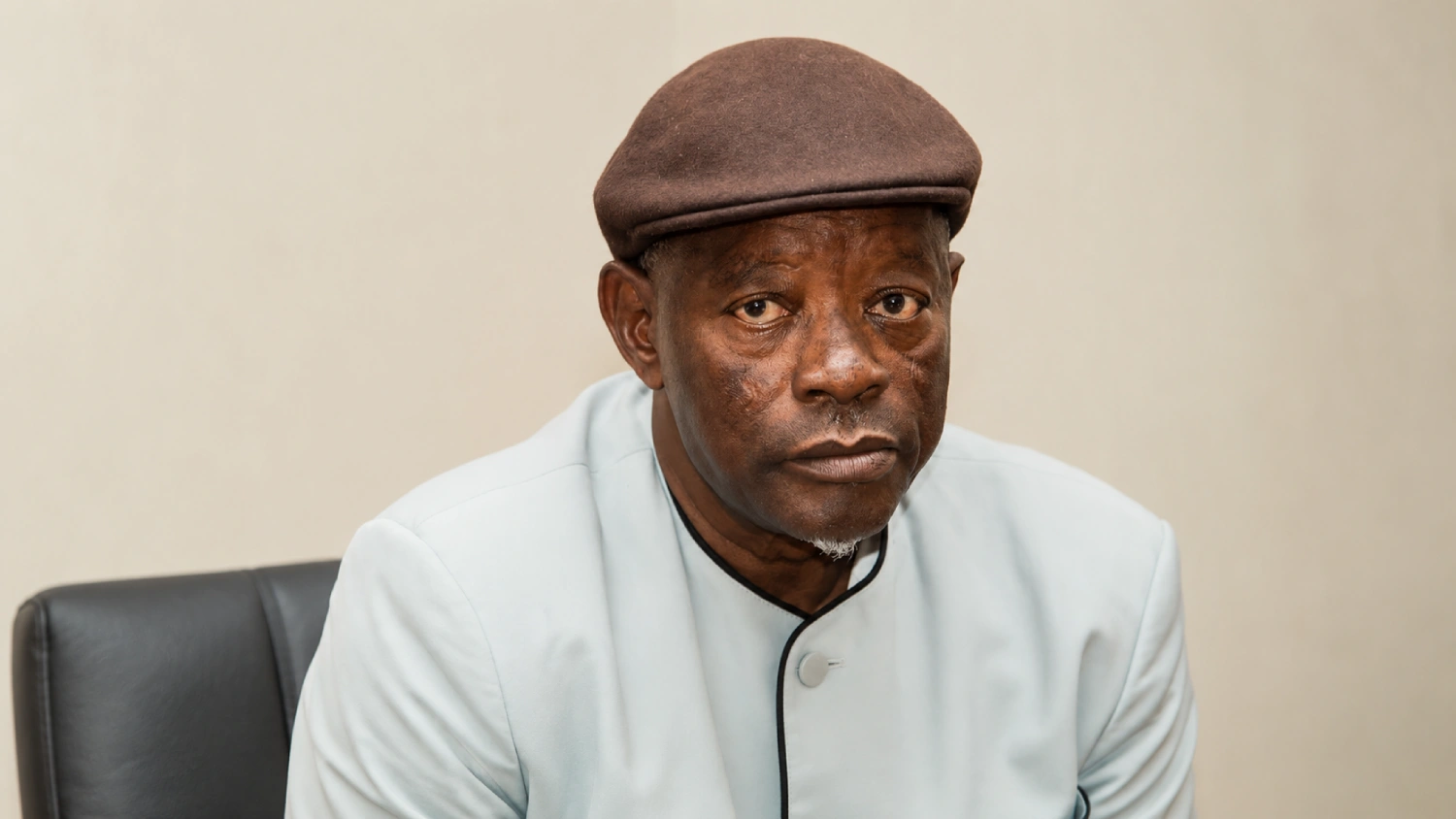
For Pascal Todjinou, guest of the day on Wednesday, June 10, 2026, on Crystal News, the first measures announced by Romuald Wadagni align with the commitments made during the campaign. He believes that the head of state has started to translate his promises into actions, particularly through the social decisions recently adopted in the Council of Ministers. “The first steps of President Romuald Wadagni are happy, useful, and significant steps,” he stated. According to him, it is important to positively acknowledge the fact that a leader begins his term with measures that correspond to his electoral commitments.
The former general secretary of the CGTB specifically cites the free education for girls, from kindergarten to high school, as a strong measure. In his eyes, this decision shows that the new government intends to give concrete expression to its promises.
Pascal Todjinou does not hide his support for Romuald Wadagni. He explains that he has made this choice because of the background of the former Minister of State, particularly his role in the rehabilitation of public finances under the regime of Patrice Talon. The former unionist believes that Romuald Wadagni contributed, for ten years, to a more rigorous management of state finances. To him, this experience is an asset for leading the country.
However, he rejects the idea of support driven by personal or financial interest. Pascal Todjinou claims he has received no compensation from the president to defend his candidacy or view his first decisions favorably. “I haven’t taken a single franc from him to do what I’m doing,” he insisted, presenting his commitment as a personal and independent choice.
When asked about other priorities mentioned in the public debate, including the issue of political prisoners and the return of exiles, Pascal Todjinou takes a nuanced position. He states that he does not make the systematic release slogan his battle, but nevertheless urges to examine the situations with restraint and discernment.
According to him, President Romuald Wadagni will need to assess these issues at the appropriate time to contribute to calming the political climate. He encourages him, in the same vein, to “unfreeze” the political and social tension in the country.
Regional diplomacy appreciated
The former general secretary of the CGTB also spoke about the first diplomatic outings of the Beninese president. He views positively the trips made by Romuald Wadagni to Nigeria, Niger, Burkina Faso, Togo, and Côte d’Ivoire.
For Pascal Todjinou, these steps are part of a regional dialogue logic. He believes that the head of state is thus anticipating his commitments regarding cooperation with neighboring countries and partners in the sub-region.
He also notes the presence of strong delegations from Niger and Mali during the inauguration of Romuald Wadagni. In his eyes, these diplomatic signals demonstrate a willingness to open up and resume dialogue with certain states in the region, in a context marked by political and security tensions.
The former unionist believes that this stance can foster peace and stability, two conditions he deems necessary for the development of the country. He thinks that the political climate does not directly produce development, but it can create the working and governance conditions necessary for public action.
Reservations about the partisan engagement of unions
Where Pascal Todjinou is more critical is regarding the position of certain union centers that called for voting for Romuald Wadagni. Even though he stands by his own support for the head of state, he believes that a union organization should not issue directives in favor of a candidate in a presidential election. For him, nuance is essential. Individually, a unionist can have a political preference and express it. But a union organization, which gathers workers from various sensitivities, should avoid aligning with a political party, camp, or candidate.
“As a unionist, I can never call my members to vote for a president,” he stated. He reminds that within a union center, there may be members from the ruling party, the opposition, leftist parties, or workers without political affiliation.
Pascal Todjinou thus believes that the union should remain a critical observer. Its role, according to him, is neither to join the ruling party nor to join the opposition, but to assess public actions based on their content. When it’s good, the union should say so. When it’s bad, it should also say so.
He thus calls on union leaders to exercise more restraint in their positions, especially when it comes to political actors. For him, the official engagement of a union center in favor of a candidate can weaken its future autonomy.
The risk of a dependency link with power
Pascal Todjinou also warns against the possible consequences of explicit union support for an elected president. According to him, a union that called for voting for a head of state could find itself in difficulty when it needs to contest a decision from the same power.
He cites past tensions surrounding the Labor Exchange as an example. He recalls that under the previous regime, access to this union space had been restricted, which he considers an infringement of union rights. In his view, such a situation should have prompted unions to exercise more caution before giving formal political support.
The former general secretary of the CGTB believes that union independence is essential for defending workers. A union politically tied to a power could be less free to denounce unfavorable measures against workers or restrictions on union freedoms.
While praising the early directions of President Romuald Wadagni, Pascal Todjinou thus calls for vigilance. He encourages the head of state to continue social measures, to strengthen dialogue, and to ease political and social tensions. But he also invites the union centers to preserve their autonomy, in order to remain true to their primary mission: to defend the interests of workers, regardless of the prevailing political power dynamics.
Related Articles
 Cameroon: the trial of 66 detainees from the post-election crisis postponed to September 10
 Guinea-Bissau: the draft Constitution strengthening the powers of the president is not unanimously supported.
 Chad: Mahamat Idriss Déby grants presidential clemency to Succès Masra
 Senate of Benin: the President of the Federation Council of Russia, Valentina Matvienko, congratulates Talon.
Comments
Comments load when you reach this section.