
In Benin, a birthday like no other
On June 20, 2026, Romuald Wadagni reaches the symbolic milestone of fifty years. In itself, the event is a private matter. However, when it involves a recently installed head of state at the top of the Republic, even a birthday becomes a public affair, a pretext for display, allegiance, and sometimes excess.

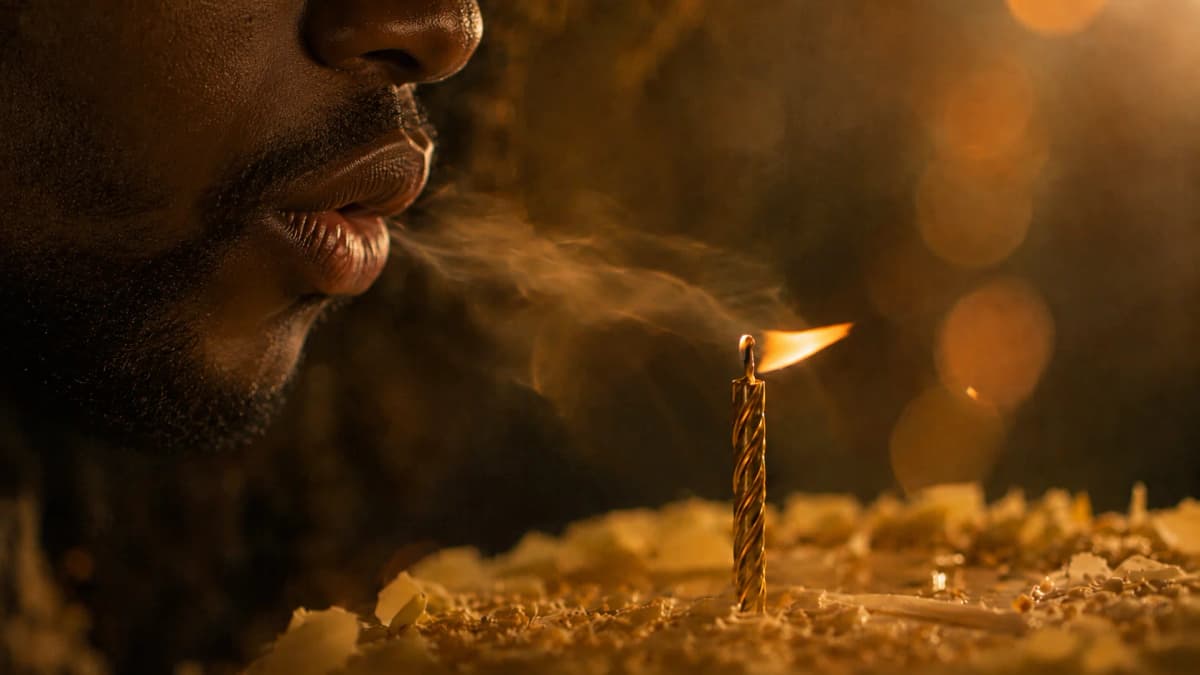
Some birthdays transcend mere counting of years. Romuald Wadagni’s falls into that special category of dates that invite, beyond protocol, a reflection on a journey. At fifty, the Beninese president embodies, for some in the public opinion, the image of a generation that has come to responsibility with a language of rigor, competence, and modernity. His career, long associated with the management of public finances, has shaped him into a methodical figure, attentive to balances, figures, reforms, and the long-term vision of the state.
This perception likely explains the momentum observed around his anniversary. For his supporters, Romuald Wadagni is not just the current holder of the highest office; he also represents a political promise, that of a young power in its energy, technocratic in its approach, and ambitious in its discourse. Whether one shares this enthusiasm or not, it must be acknowledged that the man evokes a form of support built around discipline, self-control, and a certain idea of public effectiveness.
Thus, since the morning, social media has taken on the appearance of a vast digital guestbook. Artists, businesses, mobile phone companies, public figures, enthusiastic anonymous individuals, and more or less inspired courtiers compete in phrases, visuals, montages, and lyrical flourishes to wish the president a happy birthday. Everyone wants to find the right word, the most elegant image, the most memorable phrase. Everyone wants, above all, to be seen in the grand parade of tributes.
In this profusion, there is something revealing. It reflects the times, where real or supposed closeness to power is staged in the open air. It also speaks to the political culture in which even the slightest event involving the head of state becomes an opportunity for display, positioning, and sometimes calculation. The birthday then ceases to be a simple mark of civility to become an exercise in communication.
Some messages fall into institutional courtesy. Others express sincere affection. However, in the effort to elevate the moment, some publications tend to slip into excess. Words swell, images become heavier, and intentions are too clearly discernible. What was meant to be a tribute turns, in places, into a display of zeal, where imagination, instead of elevating the discourse, dangerously drifts towards the burlesque.
The Republic does not forbid the elegance of wishes. It does not exclude recognition, nor even admiration. But it always benefits from maintaining a certain measure. Because respect for a position does not require disproportionate embellishments to be heard. And the esteem held for a public figure is not measured by the size of a visual, the intensity of a slogan, or the excess of a phrase.
Ultimately, this birthday will have shown less the president’s age than the relationship of part of society to power. At fifty, Romuald Wadagni receives well-wishes. Around him, others are mostly seeking to make their presence known. Perhaps that is the true spectacle of the day.


Comments
Comments load when you reach this section.