
Benin: from his cell, Candide Azannaï raises concerns about his safety and breaks six months of silence.
Detained since December 2025 at the Akpro-Missérété correctional facility, former minister Candide Armand-Marie Azannaï breaks his silence. In a statement to the Nation, the president of the Restoration of Hope party says he wants to alert national and international public opinion about his detention conditions, as well as what he presents as threats to his physical safety.

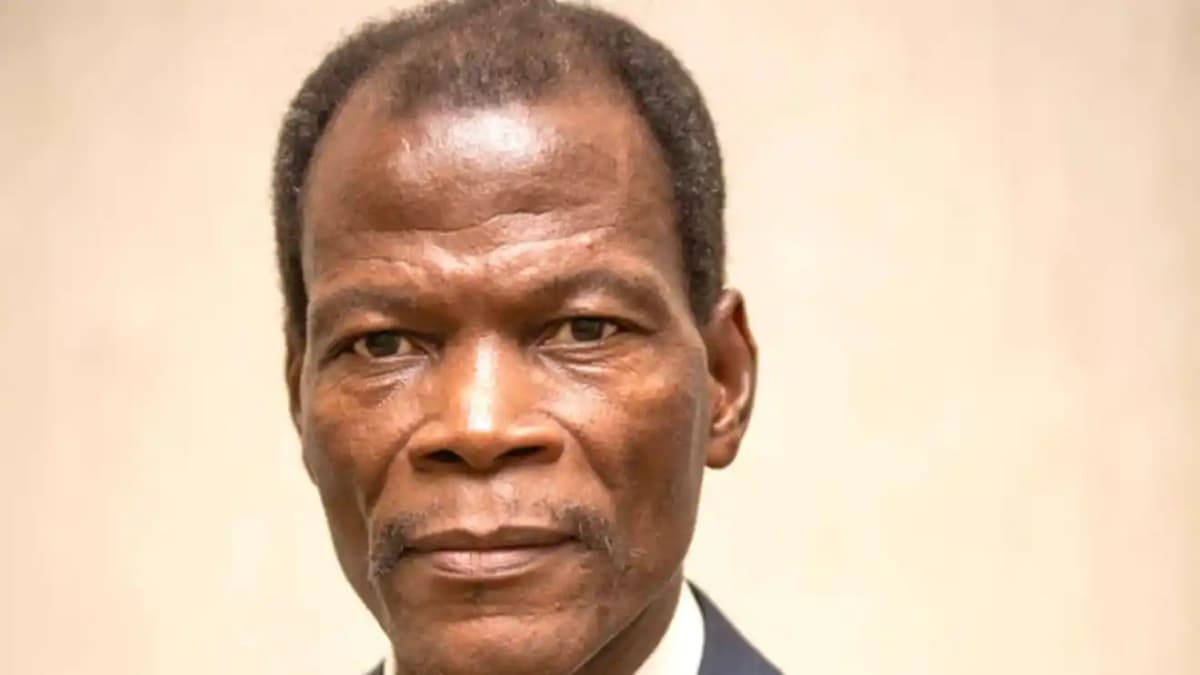
The tone is serious. The message, structured as a warning, bears a heavy title: “So that no one can say they didn’t know.” After more than six months of provisional detention, the former minister delegated to national defense claims he has chosen thus far not to communicate publicly in order not to be accused of interfering with the ongoing judicial proceedings before the Court for the repression of economic crimes and terrorism.
However, he claims that the situation has reached a point where he is now compelled to speak.
Six months of silence, then the alert
In his statement, Candide Azannaï begins by thanking the Beninese people who sent him messages of support on the occasion of his 67th birthday, celebrated on June 14, 2026. He also praises the work of the media that has reported on the developments of his case, particularly regarding his hearings on June 16, 17, and 18.
The former minister then emphasizes one point: since the beginning of the affair, his request has remained the same, namely the truth, transparency, and respect for the rights of a citizen deprived of liberty. He states that he has kept silent not out of resignation, but out of respect for the institutions, despite what he considers a profound injustice.
This statement comes just a few days after his hearing before the investigating judge of the CRIET. On Thursday, June 18, 2026, Candide Azannaï was heard for more than eight hours in connection with the proceedings against him. At the end of this hearing, he was taken back to the Akpro-Missérété civil prison.
Isolation, walking, and access to care: Azannaï’s grievances
The core of the statement focuses on his detention conditions. Candide Azannaï claims that he has been kept in isolation twenty-four hours a day since his incarceration. He asserts that, unlike the other detainees, he does not benefit from normal walking periods. He also claims to be denied access to his doctor, although his health condition is said to have deteriorated since December.
According to his account, he has repeatedly written to the Director of the penitentiary agency of Benin and the Special Prosecutor to denounce this situation. However, he claims not to know whether all his letters have actually been transmitted to the competent authorities.
The former minister also recounts a troubling episode. According to him, the manager of the correctional facility, whom he names in his statement, suggested that he run alone at 7 PM when the yard was empty, and other detainees had already returned to their cells. Candide Azannaï states he declined this offer out of caution, simply asking that his rights be respected under the same conditions as those of other detainees.
He claims that a report was then written to suggest that he had refused his walking hours, without accurately reflecting the circumstances of this proposal according to him.
Allegations of violations of dignity
Beyond isolation, Candide Azannaï discusses what he describes as repeated violations of his dignity. He claims that the manager has entered his cell multiple times without knocking, including during moments of intimacy. He states he calmly reminded them that he remains presumed innocent and that this presumption should translate into respect for his dignity and rights.
The former minister also mentions the material conditions of his cell. According to him, during works carried out in the correctional facility, his detention space remained covered with a thick layer of dust for several days, making the air difficult to breathe. He claims he requested to be moved or that the works be adjusted, but without satisfaction. He also reports a water outage that lasted nearly a week in his cell.
These serious accusations have not yet received any known official reaction from the penitentiary administration or judicial authorities. Therefore, at this stage, they should be presented as the statements of Candide Azannaï.
The journey of June 18 at the center of his concerns
The most sensitive part of the statement concerns Candide Azannaï’s transfer to the CRIET and then his return to the correctional facility on June 18. The former minister claims that on the way there, he was transported in a pick-up vehicle with tinted windows. According to him, the two people escorting him were wearing bulletproof vests while he himself was not.
On the return journey, he claims the vehicle strayed from its usual route before stopping in a location that, according to him, did not correspond to the normal route to the prison. He asserts that the manager got out of the vehicle for several moments and that he did not receive a clear explanation from the driver despite his questions.
Candide Azannaï says he remains unanswered about the reasons for this stop. He presents this episode as one of the elements that fueled his fears for his safety. According to his statement, since his return from the hearing, his cell has also been subjected to late and repeated visits, conducted under conditions he deems opaque.
A political statement as well as a judicial one
Beyond the detention conditions, Candide Azannaï places his message in the political register. He recalls that he has always called, in his own words, for peaceful and non-violent national resistance, as well as for inclusive national dialogue. He expresses the desire to preserve the legacy of the National Conference of February 1990, a major reference in Benin’s democratic life.
Pursued in a case related to the aftermath of the attempted coup in December 2025, the former minister rejects any posture of violence and presents his struggle as a demand for truth, justice, and respect for the rule of law.
In this statement, he also asserts that any violation of his physical integrity should lead to an independent, impartial, and thorough investigation. He demands that responsibilities be established without complacency if an incident were to occur during his detention.




Comments
Comments load when you reach this section.