
Spain: the president of Ceuta calls for confining migrants before their expulsion
Ten days after the massive arrival of migrants from Morocco, the president of Ceuta, Juan Jesús Vivas, proposes to limit the freedom of movement of those still in the Spanish enclave. According to local authorities, between 8,000 and 11,000 people would still be on site, while the central government emphasizes family reunification for minors.

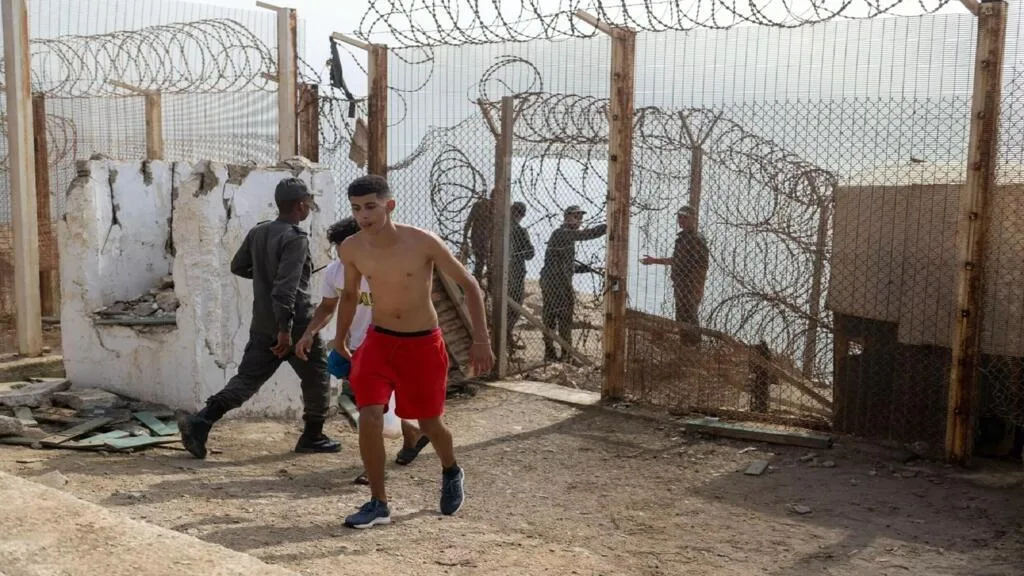
On July 30 and 31, about 72,000 people arrived in Ceuta from Morocco, according to the Spanish government. Madrid claims that most of them left quickly, but the president of the enclave estimates that 8,000 to 11,000 migrants are still present in the territory.
During a press conference on Monday, August 10, Juan Jesús Vivas stated that their freedom of movement should be restricted until their expulsion cases are processed and finalized. He proposed the establishment of a space functioning like a detention center, where migrants could be grouped together and confined.
The leader, a member of the Popular Party, the main right-wing party in Spain, described the situation as “untenable” and “unacceptable.” He demands a “state plan” aimed at restoring the normal functioning of the enclave, located on the northern coast of Africa and separated from the Spanish mainland.
The central government favors family reunification for minors
The Spanish Minister of Territorial Policy, Ángel Víctor Torres, visited Ceuta on Monday but did not announce any new expulsions. He insisted instead on the necessity of implementing family reunification for the minor migrants who arrived in the enclave.
Spanish authorities have also strengthened security measures. Additional forces from the Civil Guard, police, and army have been mobilized, according to the minister.
These announcements come after a protest organized on Sunday in Ceuta. The mobilization gathered around 5,000 people, according to the police, who demanded that authorities take action in response to the migratory situation in the enclave.
The issue now pits the central government of Pedro Sánchez, led by the left, against the president of Ceuta, who is pushing for confinement and distancing measures. The legal modalities of a possible collective restriction of movement have not been specified.



Comments
Comments load when you reach this section.