
South Africa’s reliance on imported fuels may have cost 76 billion rand
Between 2021 and 2024, South Africa’s oil bill could have been 76 billion rand lower if refined products had accounted for only 25% of its oil imports, according to an estimate published by the South African Reserve Bank.

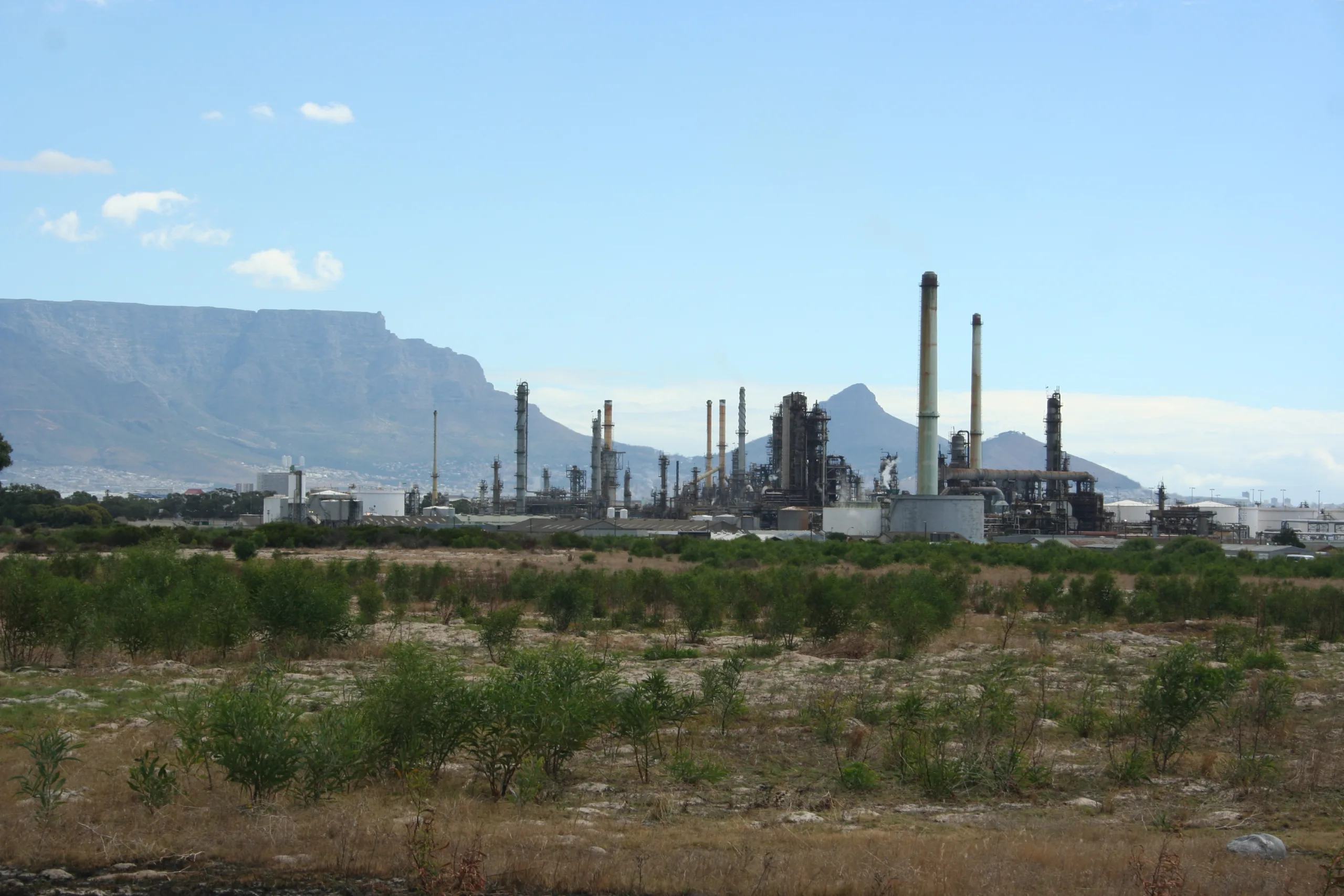
The closure or conversion of several refineries has altered the country’s energy structure. Imported refined fuels now cover more than half of domestic demand. The central bank also estimates that oil-related manufacturing output has declined by about 20% since 2019, affecting approximately 5,400 direct and indirect jobs.
Operational refining capacity has fallen to around 250,000 barrels per day, down from an installed base that exceeded 700,000 barrels per day before the wave of closures. The Reserve Bank attributes this decline to aging and costly facilities, low margins, and prolonged uncertainty regarding the investments needed to meet new cleaner fuel standards.
The Central Energy Fund aims to reverse some of this trend by rebuilding SAPREF, near Durban. The plan presented on September 9 initially involves using existing tanks for imported fuels, followed by a restart of refining at around 400,000 barrels per day, with a potential long-term increase to 650,000 barrels per day, subject to investments and approvals.
Imported fuels transmit external shocks more quickly.
The shift towards imported finished products is more expensive than purchasing crude oil intended for local processing. The Reserve Bank estimates that, from 2014 to 2024, imported refined petroleum products have been, on average, 12% more expensive per unit than crude oil. Its calculation of the 76 billion rand corresponds to a scenario in which their share would have been limited to 25% of the volumes imported between 2021 and 2024.
This figure does not represent an expense that could have been entirely eliminated. It measures the gap between the actual bill paid and what a more crude-oriented import structure would have yielded. The central bank estimates that the oil bill would have been, on average, 6.1% lower over the four years.
Dependence on finished fuels also makes the country more sensitive to fluctuations in the rand, international oil prices, and maritime disruptions. The South African Department of Mineral Resources and Energy noted in March that the two remaining operational crude refineries, NATREF and Astron Energy, as well as the Secunda coal liquefaction plant, remain dependent on imported raw materials.
This vulnerability does not automatically lead to shortages. The government indicated in March that there was no immediate risk of supply disruption. However, it increases the number of external shocks that could quickly impact the trade balance and pump prices when global oil, freight, or the rand deteriorate.
Reviving SAPREF will not be enough to recreate the old model.
The SAPREF project directly addresses this dependence, but the return of local refining will not simply restore past capacities. The Reserve Bank emphasizes that the closures also resulted from structural issues. South African refineries are relatively old and small compared to large integrated complexes built elsewhere in Africa, the Middle East, and Asia.
Uncertainty surrounding the Clean Fuels II program has exacerbated these challenges. Deadlines have been repeatedly pushed back, while the investments needed to produce cleaner fuels remain high for facilities already facing low margins. Several operators have opted to convert their assets into import or storage terminals rather than fund heavy upgrades.
CEF plans to maintain this import function during the reconstruction of SAPREF. According to its plan, the tanks and transfer infrastructure at the site will first support the arrival of finished products before the return of refining capacity. This sequence indicates that imports will remain a significant component of supply for several years.
The announced size of the project would, however, be sufficient to significantly alter the current balance. S&P Global indicates that local refining now covers only about 39% of South Africa’s demand. A capacity of 400,000 barrels per day at SAPREF would exceed the combined current capacity of the two remaining operational crude refineries.
CEF has not yet published the project’s cost or a detailed implementation timeline. The public group stated that the final phase, which could increase SAPREF’s capacity to 650,000 barrels per day, would depend on investments, regulatory approvals, and the project’s progress.

Comments
Comments load when you reach this section.