
Slap or playful tap? Macron’s Vietnam tarmac moment sparks debate on power, privacy, and perception
A short video, just a few seconds long and filmed on the Vietnamese tarmac, was enough to reignite debate over the French presidential couple’s private life—and the limits of transparency in politics. Emmanuel Macron was seen receiving a light slap on the face from his wife Brigitte. Was it an affectionate gesture or an inappropriate impulse? Some commentators argue this seemingly trivial image reveals more than it appears.
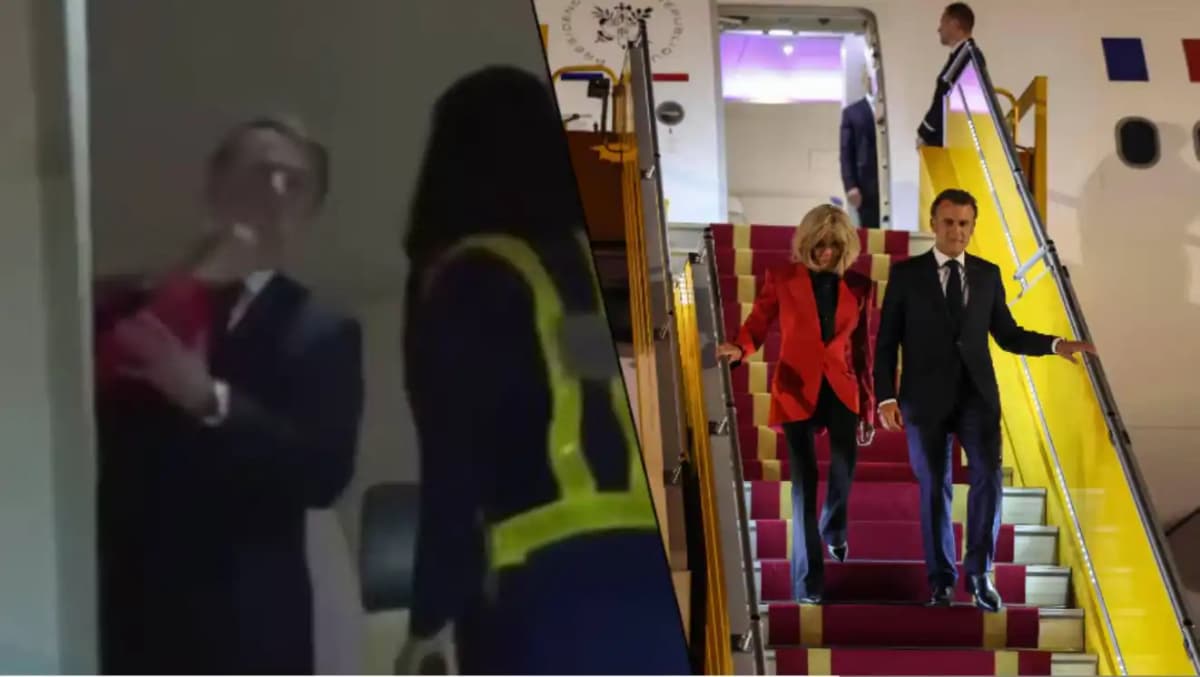
The incident—if one can call it that—took place during an official visit to Vietnam. As the couple disembarked from the presidential aircraft, cameras caught a brief motion by Brigitte Macron toward her husband: a light tap on his face or cheek. The Élysée Palace quickly described it as mere “horseplay.” The word amused some, intrigued others, and did little to calm the buzz. Presidential aides insisted it was nothing more than a moment of lighthearted teasing between spouses.
But online, the image caught fire. Some, like French journalist Vincent Hervouët on the CNews set, took it further—sparking controversy with remarks about symbols of power, political masculinity, and public perception of a head of state. “There’s this idea that the President could be a battered man,” he said, provoking outrage from other guests on the panel.
Between voyeurism and political symbolism
The furor, many argue, is less about the gesture itself and more about the context in which it is interpreted. Modern cameras follow political leaders relentlessly, capturing every smirk, sigh, and frown. The era in which presidents could maintain strict privacy is long gone. As Hervouët put it, “official life has become public.”
To him, the issue goes beyond domestic matters. “Can you imagine Yvonne de Gaulle slapping the General?” he asked, highlighting what he sees as a rupture with France’s traditional republican imagery.
It’s not merely about whether Brigitte acted tenderly or not, but rather that the President—an embodiment of national authority—was seen in a moment of vulnerability, in an inverted dynamic of power.
What might have remained a fleeting moment of spousal affection morphed into controversy, largely due to the Élysée’s reaction. Their attempt to downplay the incident only fed the media frenzy—what some call the “Streisand effect,” where trying to suppress a trivial issue inadvertently amplifies its reach.
Yet, is this really worth the uproar? Many observers say the debate has veered into absurdity. Between those denouncing a perceived erosion of presidential dignity, those questioning the couple’s authenticity, and those simply reminding that “couples have their gestures,” the discourse has become increasingly polarized.
In the age of social media, even the most mundane moment can turn into a political statement. “There’s a demand for transparency that has become unbearable,” some lament. The President is now endlessly filmed, dissected, and debated—even in his most routine actions. What was once part of a leader’s private sphere is now thrust into the national conversation.