
Sahel States Alliance: Burkina Faso reaffirms security priority over electoral calendar before the UN
The Burkina Faso has ruled out any electoral urgency within the Confederation of the Alliance of Sahel States (AES), which includes Burkina Faso, Mali, and Niger.

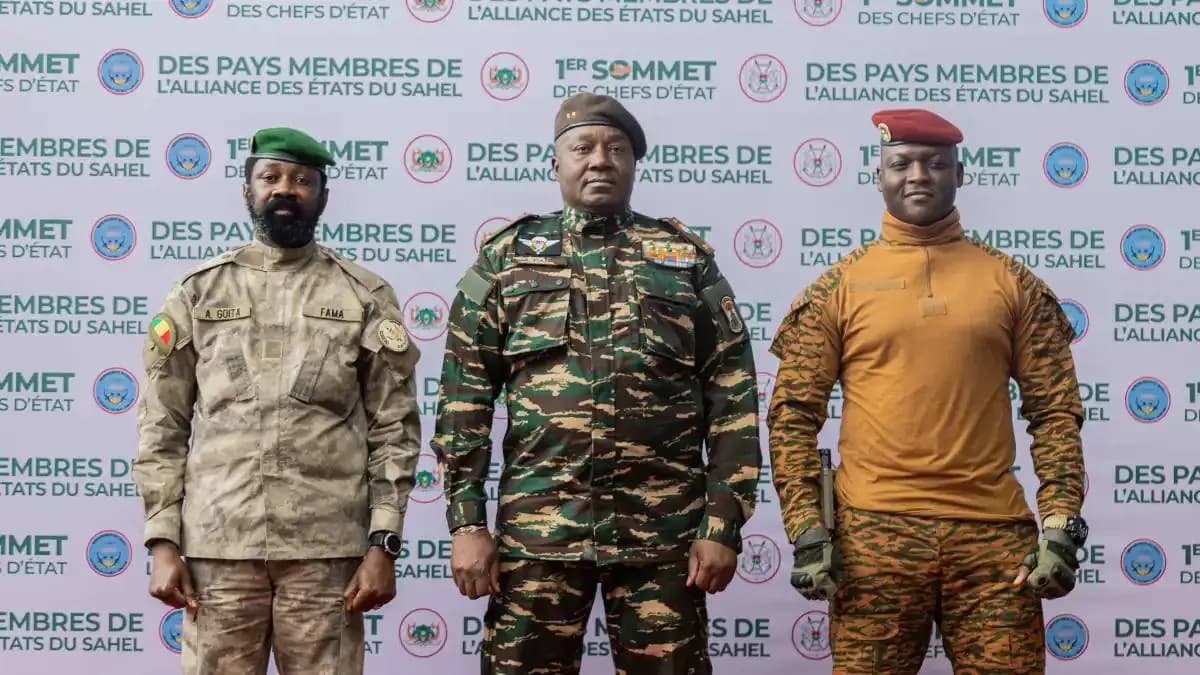
During a meeting on Thursday, August 20, 2026, in Ouagadougou with the UN Secretary-General’s Special Envoy, Sahle-Work Zewde, Burkina Faso’s Minister of Foreign Affairs, Karamoko Jean Marie Traoré, defended the postponement of electoral deadlines in favor of security imperatives.
Faced with the UN diplomat, the head of Burkina Faso’s diplomacy justified the political direction taken by the transitional governments within the confederal space. He asserted that if the current leaders’ concern had been merely to stay in power, they would have opted for quick elections. On the contrary, the focus has been on restructuring and strategically strengthening national armies in the fight against jihadist groups.
This stance is consistent with the decisions made by the three AES countries to extend their respective transition periods:
- Mali: after the indefinite postponement of the initial presidential election, the revision of the charter in July 2025 set Assimi Goïta’s mandate at five renewable years.
- Burkina Faso: the transition was extended by five years in May 2024, setting the electoral deadline for 2029.
- Niger: the authorities defined a five-year transition period extending until 2030.
This common dynamic was also reflected in the operationalization of a joint military force of 5,000 men in December 2025, embodying defense cooperation within the AES Confederation, created in July 2024.
A plea for a revision of international approaches
During the discussions, Karamoko Jean Marie Traoré urged international organizations to demonstrate neutrality and to acknowledge the progress made on the ground by the Confederation.
He criticized the regular assessments produced by certain institutions, labeling them as erroneous diagnoses, and called for a revision of the intervention principles of multinational agencies.
For her part, the former Ethiopian president Sahle-Work Zewde reminded everyone of the purpose of her evaluation mission, aimed at informing the UN Security Council about the future of the United Nations Office for West Africa and the Sahel (UNOWAS).
Consolidation of the break with ECOWAS
This meeting comes against a backdrop of a definitive break with the traditional regional institutional framework. After their final exit from the Economic Community of West African States (ECOWAS) formalized in January 2025, the three AES states continue to establish shared attributes of sovereignty, notably marked by the deployment of a common confederal passport and the adoption of an official anthem.

Comments
Comments load when you reach this section.