
Presidential race in Benin: Daniel Edah unveils a 12-pillar social project
Daniel Edah, a former candidate in the 2016 presidential election and a well-known figure in Benin’s political landscape, has officially announced his candidacy for the 2026 presidential election. In a solemn speech filled with patriotism and a call for unity on Thursday, May 29, 2025, he positions himself as the man of a collective project aimed at national reconciliation, shared economic prosperity, and rebuilding trust between the people and their leaders.
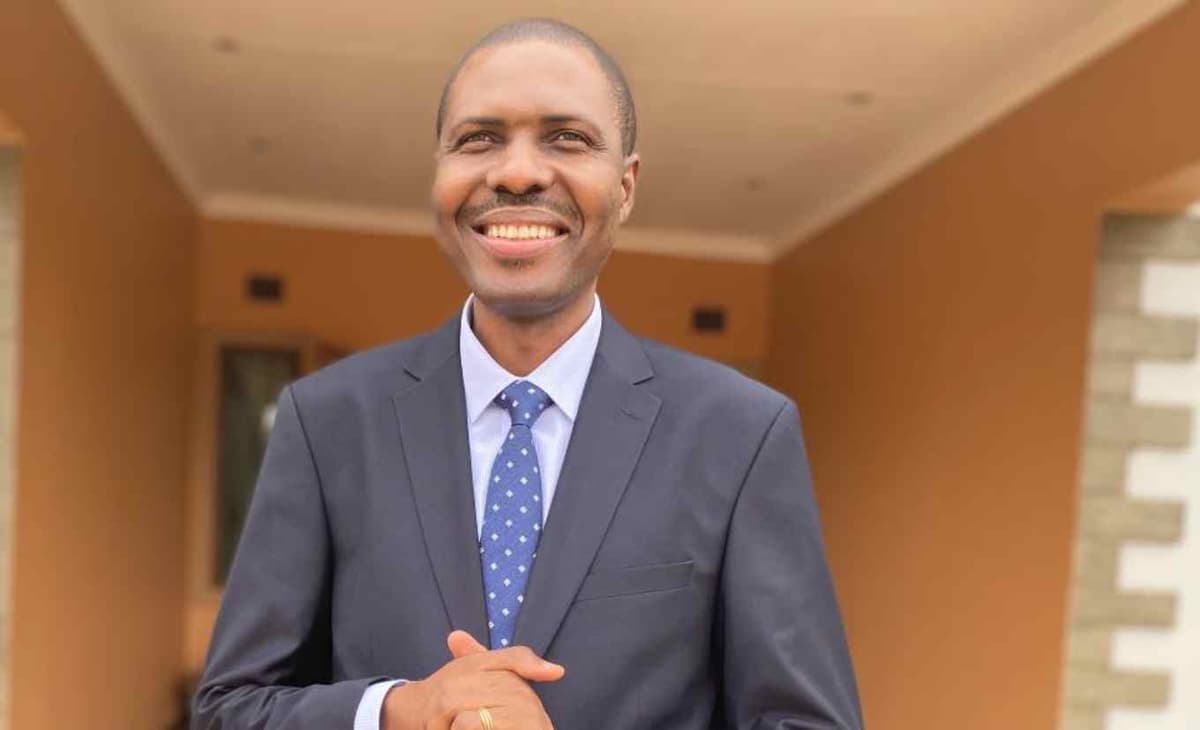
Already a bearer of a political vision in 2016, Daniel Edah is revisiting an ambition he claims has been consistent since 2014: to make Benin an economically prosperous and socially stable country, integrated into a transforming Africa. His declaration, delivered in a conciliatory tone, is primarily a call to turn the page on divisions.
“I am not here to claim personal power; I am here to serve,” he asserts.
The foundation of his program rests on what he calls a “production and transformation economy,” a strategy that focuses on decentralized industrialization, the development of local processing units, and support for entrepreneurship. According to him, this approach is the key to inclusive growth, sustainable employment for young people, and strengthening the economic fabric in the country’s 77 communes.
At the same time, Daniel Edah promises to establish inclusive governance based on transparency, justice, and accountability. He proposes, in particular, to guarantee the respect due to former heads of state, to secure the release of political prisoners, and to facilitate the return of exiles.
An Outstretched Hand for Sponsorship
Aware of the sponsorship lock imposed by the electoral code, he directly addresses the elected officials. “Sponsoring Daniel Edah’s candidacy is not about supporting a man; it is about choosing peace.” A statement that summarizes his desire to move beyond political divisions and engage in a dynamic of unity.
Notably, in the current political landscape, Daniel Edah refuses to challenge the achievements of previous regimes. On the contrary, he advocates for a culture of state continuity, citing the presidencies of Soglo, Kérékou, Yayi, and Talon as foundations on which to build.
On the security issue, particularly in the north of the country, he proposes an integrated approach combining local development, enhanced military cooperation with Sahel neighbors, and the pooling of resources within ECOWAS.
A Project Structured Around 12 Pillars
His candidacy is based on a societal project structured around 12 pillars and articulated around three main objectives: economic recovery, social cohesion, and African engagement. He intends to emphasize food and energy sovereignty, social justice, the promotion of human rights, and proactive diplomacy oriented towards fair cooperation.
Through this speech, Daniel Edah seeks to engage all social strata in a “pact of rebirth.” He addresses the youth, women, farmers, teachers, the diaspora, and even the defense and security forces, asserting that national development cannot be the task of one man alone but of a united people.
“We will do it together, and we will do it differently,” he concludes, in a speech that reflects a desire for appeasement and transformation.
Full Text of His Candidacy Speech
Beninese men and women, my dear compatriots, dear partners in our national destiny, on this solemn day, I address you with humility, conviction, and hope.
Yes, I am a candidate for the 2026 presidential election. I am a candidate with a vision, one of a Benin that is economically prosperous and socially stable within a well-integrated and thriving Africa. The same vision I have held since 2014. I am not here to divide. I am not here to humiliate. I am not here to claim personal power. I am here to serve. I am here to unite. I am here to reconcile.
Yes, I am a candidate with a project, a societal project inspired by my vision for Benin. A project for the people, a project that we will carry together. We will achieve it in 2026.
My dear compatriots, my candidacy is that of a project, a project of peace, justice, prosperity, and dignity. It is driven by an unwavering will to restore trust among Beninese, to rebuild our democracy, and to open a new era for our country, one of inclusive governance, a production and transformation economy, and a state reconciled with its people.
Regarding the production and transformation economy that we will engage in starting in 2026, it is the solution for youth employment. The prosperity of private enterprises, the prosperity of women who initiate income-generating activities, the success of young entrepreneurs, and the provision of our local economies with their essential backbone. The production and transformation economy I propose is the essential solution for inclusive economic growth, growth felt in every household, shared prosperity through decentralized industrialization, the creation of production and transformation units, and services in each of our 77 communes.
My dear compatriots, I therefore present myself to the presidential election with a political vision and a societal project inspired by the vision to establish inclusive governance, to build the production and transformation economy, and to turn the page on old quarrels. I commit to guaranteeing all former presidents of the Republic, as well as all former presidents of other Republic institutions, the respect due to their dignity and rank.
I commit to working for the release of political prisoners, for the dignified and secure return of exiles, and for the prevention of any new wave of arrests or political exile.
To those who hold the power of sponsorship, I extend my hand. A hand of dialogue and responsibility. Sponsoring Daniel Edah’s candidacy is not simply supporting a man; it is choosing a path for the country. Sponsoring Daniel Edah’s candidacy is choosing peace, political appeasement, an honorable way out of the crisis for all protagonists.
Supporting Daniel Edah’s candidacy is allowing Benin to heal its wounds without humiliation, to reconcile its children without winners or losers. My vision of an economically prosperous and socially stable Benin within a well-integrated and thriving Africa is not that of one man alone. It is that of a standing people. It takes shape in the societal project I propose to you. We will achieve it in 2026. A national pact of rebirth and collective action.
Designed around 12 structuring pillars, this project is based on three strategic objectives: economic reconstruction through the revival of local production, human-centered industrialization, technological innovation, and food and energy sovereignty; social cohesion through equitable access to education, health, justice, and culture, through the active participation of youth and women in national life, through the protection of fundamental human rights; African engagement culminating in effective regional integration, the defense of our sovereignty, and strategic cooperation with all nations in a spirit of mutual respect.
My dear compatriots, I address here the youth of Benin, young men and women of my country. You are both the present and the future of Benin. You are the strength of our country. You are my priority. I propose a pact for employment, training, entrepreneurship, and social mobility. I extend my hand to build together a future worthy of your talents, your dreams, your dignity.
My pact with and for the youth of Benin builds on the achievements of previous policies, from the democratic transition of President Nicephore Soglo to the structural reforms undertaken by President Patrice Talon, including the economic inclusion initiatives of President Boni Yayi and the productivist foundations of President Mathieu Kérékou.
My dear compatriots, I will not be one of those who fight against the legacy of the past by sabotaging or abandoning the projects they initiated in their time. Rejecting the continuity of the state is a hindrance to our development. Yes, we will not ignore any achievements of the former presidents because I deeply believe that the development of a country is an eternally open construction site on which successive generations must take turns.
I am therefore determined to bring Benin’s governance into the culture of state continuity, and together with you, we will capitalize on what needs to be capitalized. We will rectify what needs to be rectified and adjust what needs to be adjusted, always in the supreme interest of Benin. I commit to capitalizing on useful legacies, preserving national assets, and inscribing our action in the long term.
My dear compatriots, I say with strength that my candidacy carries a clear response to the security crisis in the north. In an unstable sub-regional environment, I propose a new security doctrine anchored in the local development of border areas, supported by strengthened military cooperation with our neighbors, based on collective intelligence and the pooling of resources within the CDAO, as well as synergy of action with the member countries of the Alliance of Sahel States.
To all the brotherly countries in the region, I address a solemn appeal. To meet our security challenges and live in a space of short prosperity, let us find the path of fraternity again. Let us dialogue with respect, cooperate instead of suspecting each other. Because, just like with malaria, no country will defeat terrorism alone.
To Benin’s partners, prepare for new, proactive, and audacious cooperation. We will redeploy our diplomatic framework to adapt to the ambition of the production and transformation economy we will build. We will work with you better than in the past, with clarity, sovereignty, and mutual interest.
My dear compatriots, the 2026 presidential election will not be a battle of egos. It will be a date with history. And I extend my hand to you. I propose a pact of national reconciliation, a pact of justice, a pact of progress, a pact of dignity.
We will do it in 2026. This is not a vague promise. It is a contract between you and me. A contract sealed in truth, nourished by your sufferings, inspired by your courage. This project, we will not carry it alone, we will not do it alone. We will do it with you, and we will do it differently, with all the forces of the country, with the Beninese from the cities, the countryside, and abroad, with the youth, women, and our elders, with farmers, fishermen, and breeders, with artisans and transporters, including, of course, students, with civil servants and traders, with entrepreneurs and industrialists, with defense and security forces, with teachers, doctors, athletes, artists, with the African diaspora and Afro-descendants, with believers of all religious confessions and the guardians of our traditions, with traditional leaders, trade unions, as well as civil society organizations.
We need everyone because it is together that we will succeed. We will do it by rebuilding trust between the people and their leaders. We will do it by practicing governance of listening, transparency, and accountability. We will do it by breaking away from clans, blind loyalties, logics of vengeance, and reprisals. We will do it by opening the way to the competition of ideas, projects, and results. We will do it by training a new generation of leaders. We will do it with leadership of merit, integrity, competence, and proximity, leadership rooted in the realities of the people.
We will do it by reinvesting the state with a spirit of service and not domination. Every resource, every position, every decision must serve the common good. We will do it by valuing the skills of the Beninese and the talents of the diaspora. We will do it by mobilizing the energies of the private sector, youth, women, and local communities. We will do it with determination, but also with patience, humility, and endurance because we know that changing things takes time. But nothing resists the will of a united people.
We will do it together, and we will do it differently than in the past for a reconciled Benin, for a just and equitable Benin, for a strong Benin, for a sovereign and respected Benin, for a Benin that heals, educates, protects, and feeds its children. For a Benin proud of itself and turned towards the future, for a Benin that looks at Africa not as a burden but as a promise.
Together, we will do it, and it will be beautiful. Long live the Republic! Long live Benin. God bless Benin. Thank you.
Related Articles
 Benin: Éric Houndété explains why he remains the LD party’s interim president.
 Benin: Ouassangari contests Houndété’s retention as interim president of the Democrats.
 2026 presidential election: Romuald Wadagni’s policy platform praised for its tone of openness
 Benin: Daniel Edah officially launches the creation of his party « Nous le Ferons ».