
Paris is getting ready to turn the page on Biya in Cameroon.
On October 4, 2025, the French section of the National Front for the Salvation of Cameroon (FNSC) organized in France a conference in support of Issa Tchiroma Bakary’s candidacy, ahead of the Cameroonian presidential election scheduled for October 12. Presented as a diaspora initiative, this meeting nevertheless raised many questions about the real involvement of Paris, as signs of a French diplomatic realignment multiply.
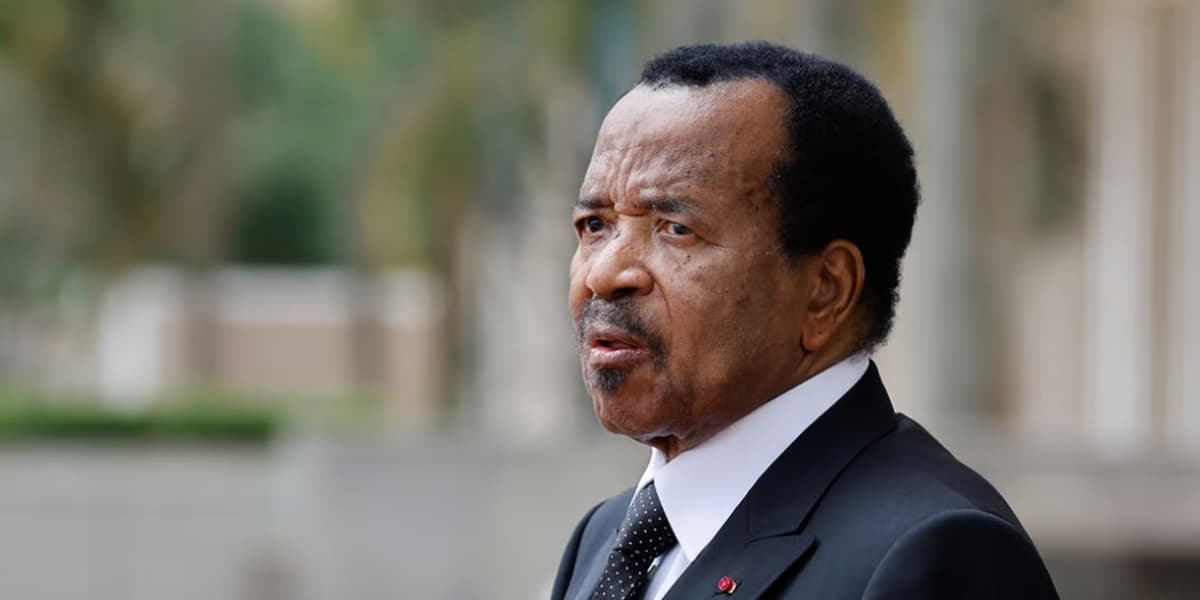
According to several observers, France seems to be distancing itself from President Paul Biya, who has been in power for more than four decades. Paris would no longer bet exclusively on the outgoing head of state, but would be looking to prepare for the post-Biya era, by forging ties with opposition figures.
In that logic, Issa Tchiroma Bakary appears as a compromise candidate: a declared opponent of the regime, he nevertheless remains favorable to the preservation of French interests in Cameroon, notably in the economic and security fields.
Issa Tchiroma stands out for a moderate position: opposed to abandoning the CFA franc, he supports close cooperation with France in the fight against terrorism.
Polls point to him as one of Paul Biya’s most credible challengers, with some evoking the possibility of a scenario similar to Senegal in 2024, where the opposition scored a surprise victory. But unlike the Senegalese renewal, a Tchiroma victory would not mean a radical break. On the contrary, it could ensure the continuity of French influence in Cameroon.
In June 2025, Issa Tchiroma reportedly met in secret the French ambassador in Yaoundé, shortly after a virulent speech against the Biya regime. Such an interview, in a tense electoral context, raises questions about Paris’s true intentions.
Recently, on October 9, the French ambassador met Maurice Kamto, another major opposition figure, although he is excluded from the race. This meeting revived suspicions of a growing French support for the opposition, to the detriment of the presidential camp.
If Issa Tchiroma is seen by some as a “pawn of France”, Paris is careful not to show too visible a backing. Open involvement could alienate Cameroonian youth, nearly 40% of voters of whom reject any postcolonial interference.
This strategy of discretion fits within the logic of French “soft power”: to influence without exposing itself, to shape the transition without appearing as the mastermind.
Thus, as the vote approaches, the Cameroonian presidential election takes on the air of a geopolitical theatre, where France, in search of a docile successor to Paul Biya, plays a decisive role behind the scenes. For many observers, these elections look less like an exercise in sovereignty than like a new “French show” on the Cameroonian political stage.
Related Articles
 Growing insecurity at West African borders and the need for a regional wake-up call.
 Is Mali moving toward a memory law? The urgency of criminalizing colonial and post-colonial crimes.
 Niger seeks justice over Orano’s environmental crimes
 AU-EU Summit: when the question of reparations for historical crimes is forgotten