
Niger: Niamey looks to Algiers to strengthen its oil sector
Niger and Algeria strengthen their cooperation in the oil sector. Three memorandums of understanding were signed in Algiers between Sonatrach and Sonidep, covering exploration, drilling, and distribution of petroleum products, at a time when Niamey seeks to diversify its energy partnerships and better capitalize on its hydrocarbon potential.

Niger and Algeria signed three memorandums of understanding in Algiers on Tuesday, June 2, regarding oil exploration, drilling activities, and the distribution of petroleum products. These agreements were concluded between subsidiaries of the Algerian group Sonatrach and the Nigerien Petroleum Company (Sonidep), during the working visit of Niger’s Minister of Petroleum, Hamadou Tini, leading a delegation of ministry officials and Sonidep executives.
The first memorandum associates the National Geophysical Company (Enageo) with Sonidep for the acquisition and processing of seismic data on Nigerien territory, in order to enhance exploration capabilities. The second memorandum provides for the creation of a joint venture between the National Drilling Company (Enafor) and Sonidep for oil and gas drilling work in Niger. The third memorandum engages the National Company for the Marketing and Distribution of Petroleum Products (Naftal) alongside Sonidep for the distribution of petroleum products, including a component of expertise transfer and the establishment of a joint company dedicated to the production, storage, and distribution of bitumen.
According to the CEO of Sonatrach, Rachid Hachichi, these agreements open “promising perspectives in strategic areas,” particularly in strengthening geophysical studies and seismic data processing. The General Director of Sonidep noted that this partnership will allow Niger to benefit from Algerian experience in hydrocarbons.
An accelerated bilateral strengthening context since early 2026
The signing on June 2 is part of an accelerated rapprochement between Algiers and Niamey since the coup d’état of July 26, 2023. President Tiani made an official visit to Algeria in February 2026, during which the two countries reaffirmed their commitment to consolidating their cooperation. On the same day as the signing of the MoUs in Algiers, Tiani hosted the Beninese President Romuald Wadagni in Niamey to normalize Benin-Niger relations and sign a joint communiqué on the reopening of the border – signaling the Nigerien regime’s ability to handle multiple distinct diplomatic initiatives simultaneously.
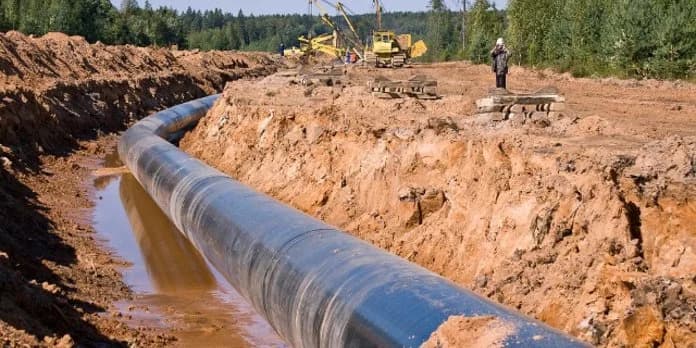
Tini’s visit to Algiers was also held in the context of the fifth ministerial meeting of the steering committee for the Trans-Saharan Gas Pipeline (TSGP), which brings together the ministers in charge of hydrocarbons from Algeria, Niger, and Nigeria. This infrastructure project, conceived in the 1970s but long delayed, plans a 4,128-kilometer pipeline connecting gas fields in Nigeria through Niger to Algeria, where the gas would join the European network. No concrete timeline was announced following the meeting.
An emerging producer seeking to capitalize on its potential
Niger remains a modest oil producer: about 30,977 barrels per day in 2024, with reserves estimated at 150 million barrels in 2025 according to Worldometer – compared to several million barrels per day for Algeria. The country, however, aims to accelerate the enhancement of its potential. In May 2026, it created a new public company to take over the management of its pipelines and signed an agreement with CNPC for the resumption of oil exports via the 1,980-kilometer Niger-Benin pipeline linking Agadem to the Sèmè-Kpodji terminal. The Algerian agreement on drilling and seismic data fits into the same logic of building capabilities and reducing dependence on foreign operators.
For Algeria, whose hydrocarbon sector accounts for an average of 92% of exports and 43% of budget revenues according to the IMF, strengthening African partnerships aligns with a strategy of continental energy integration led by Sonatrach, which invested more than one billion dollars in May 2026 in the development of the Hassi Bir Rekaiz field.
Comments
Comments load when you reach this section.