
Niger: after a night of heavy rains, Niamey faces its vulnerabilities
Heavy rains accompanied by strong winds fell overnight from Friday to Saturday in Niamey, causing flooding in several neighborhoods, according to witnesses. No official toll was yet available on Saturday midday, but this event revives concerns in a capital regularly hit by flooding and destructive runoff, amid climate change, rapid urbanization, and insufficient drainage.

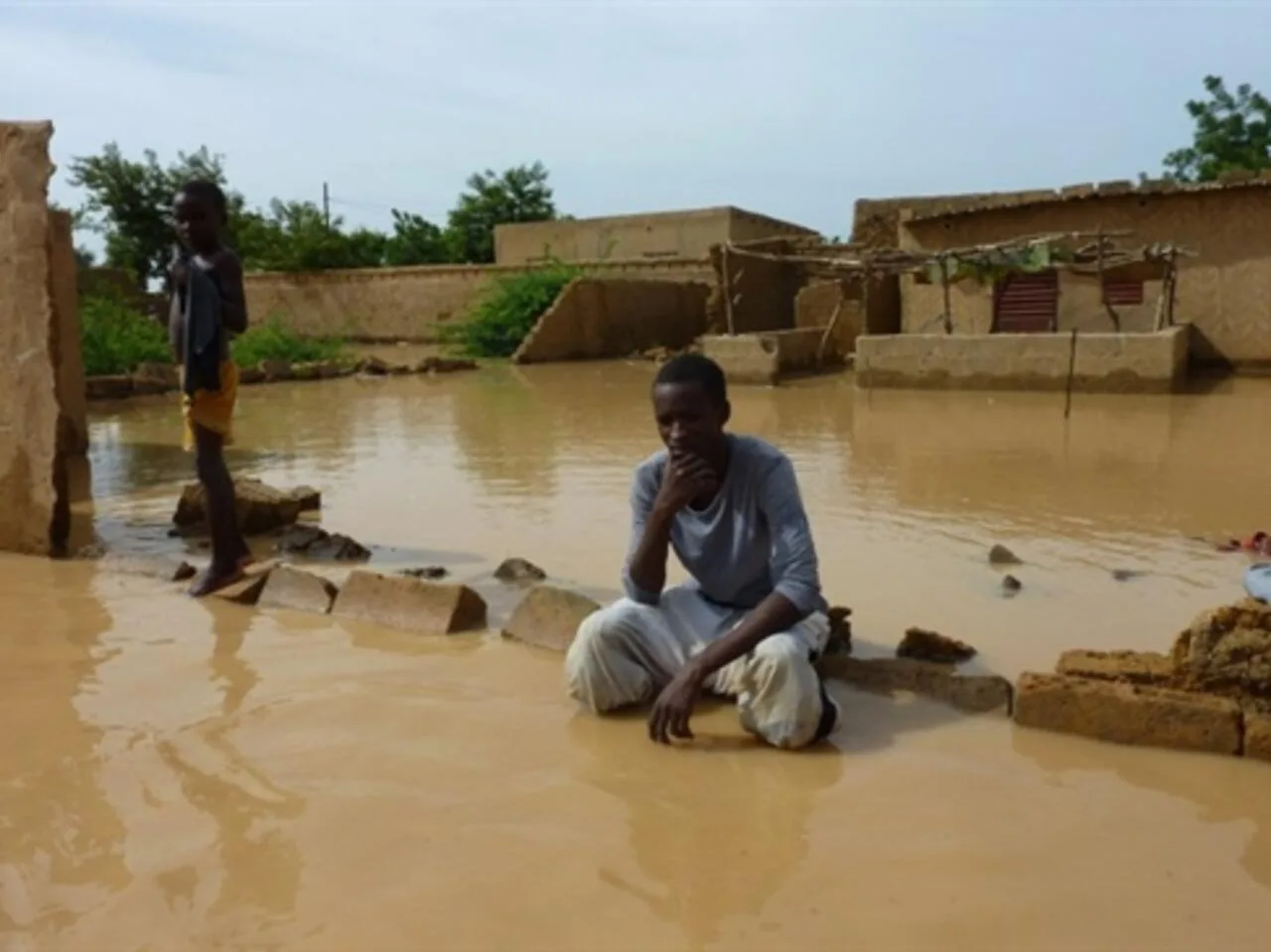
Heavy rains accompanied by sustained showers and strong winds fell overnight from Friday to Saturday in Niamey, the capital of Niger. According to several witnesses, this bad weather caused flooding in several neighborhoods and significant material damage. No official assessment had yet been made public by the Civil Protection, the municipality of Niamey, or the national authorities by Saturday midday. In the absence of an institutional statement, the available information should therefore be treated with caution. However, testimonies report submerged streets, difficulties in traffic, and damage in some homes.
This episode occurs at the beginning of the rainy season, a particularly sensitive time in Niger. In several cities across the country, and notably in Niamey, intense rains can quickly lead to floods, collapses of precarious houses, road closures, and population displacements.
Niamey has not experienced its first flooding episode. In recent years, the Nigerien capital has been regularly exposed to heavy rains, rising river Niger waters, and destructive urban runoff. In 2024, the floods reached an exceptional scale in the country. According to the UN Office for the Coordination of Humanitarian Affairs, as of October 16, 2024, the severe weather had affected 1,438,627 people, or 195,697 households, and caused 391 deaths nationwide. The damage included destroyed homes, livestock losses, ravaged crops, and damaged infrastructure.
The final toll later communicated by the Nigerien authorities reported 396 deaths and more than 1.5 million people affected across the country. These figures confirmed the severity of one of the most destructive rainy seasons in recent years in Niger. Niamey was particularly affected. In August 2024, the capital found itself almost isolated from the rest of the country after several key roads were submerged or cut off. The situation severely disrupted supply and movement, exposing thousands of families to precarious living conditions.
Extreme Rains, Rapid Urbanization, and Insufficient Drainage
Flooding in Niamey is not solely due to a one-off meteorological phenomenon. It is also the result of an accumulation of urban and environmental vulnerabilities. The Nigerien capital is undergoing rapid growth, often difficult to manage. Neighborhoods have developed in low-lying areas, near waterways, in valleys, or on land exposed to runoff. This urban expansion increases the populations’ exposure to flood risks.
Scientific studies on Niamey have highlighted for several years the combined role of urbanization, occupation of flood-prone areas, soil degradation, and inadequate drainage infrastructure. A recent study dedicated to Gounti-Yéna, an active tributary of the river Niger that traverses the agglomeration, notes that this area is home to over 90 neighborhoods, some of which regularly suffer from flooding due to rainwater runoff.
The impermeabilization of soils also exacerbates the problem. When natural surfaces are replaced by housing, roads, compacted soils, or poorly drained areas, rainwater infiltrates less easily. It runs off faster, accumulates in low points, and causes sudden flooding. In several neighborhoods, the absence or inadequacy of drains, their blockage by waste, or poor maintenance increases the risks. Rainwater is not evacuated in time, quickly turning streets into torrents and weakening homes.
The Sahel is particularly exposed to the effects of climate change. Climate studies show a trend toward intensification of extreme phenomena: rains are becoming more irregular, more concentrated, and more violent. This evolution complicates risk management in Sahelian cities, where infrastructures have not always been designed to absorb such large volumes of water in a short time.
In Niamey, this dynamic translates into more frequent or destructive flooding episodes. Researchers have already documented significant floods of the river Niger in the 2000s and 2010s, notably during the events of 2003, 2010, 2012, and 2013. These events highlighted the city’s vulnerability to the combination of local rains, contributions from Sahelian tributaries, and human occupation of risky areas.
The situation is even more concerning as the poorest populations are often the most exposed. Many live in fragile structures, in neighborhoods poorly served by sanitation, or in areas where emergency services have difficulty intervening in the event of rapid water rise.
Economic and Health Consequences
Floods not only destroy homes. They also affect roads, schools, health centers, markets, places of worship, and economic activities. In the affected areas, families can lose their belongings, administrative documents, food stocks, work tools, or means of livelihood in just a few hours.
The health consequences are also significant. Standing water promotes contamination of wells, water supplies, and living surfaces. It increases the risk of waterborne diseases, particularly in neighborhoods where access to drinking water, latrines, and sanitation facilities remains limited.
Humanitarian organizations regularly warn about this risk. In 2023, an ACAPS note on flooding in Niger reported a high risk of epidemics after heavy rains, in a context where tens of thousands of homes had been damaged or destroyed and access to essential services was compromised.
These impacts are long-lasting. After each flood, poor households must rebuild, find new housing, replace their belongings, and sometimes face interruptions in children’s education or loss of income-generating activities. The repeated cycles of flooding thus weaken families’ resilience.
For the episode that occurred overnight from Friday to Saturday, the authorities have not yet published a consolidated assessment. It remains impossible at this stage to confirm the number of affected neighborhoods, the extent of the damage, the existence of potential victims, or the number of displaced families.
An official assessment is, however, expected to measure the actual extent of the situation and organize a potential emergency response. In this type of disaster, the first hours are crucial to identify the most affected areas, evacuate people in danger, secure fragile homes, clear blocked roads, and prevent health risks.
Previous episodes have shown that damage can evolve rapidly after the rain, particularly when fragile houses collapse, waters stagnate, or roads become impassable. Caution remains necessary in exposed neighborhoods.
Preventing Rather than Suffering
The repetition of flooding in Niamey raises the question of prevention. Experts have recommended for several years to strengthen the mapping of risk areas, control the occupation of flood-prone spaces, improve drainage systems, and develop early warning systems.
These measures also require better coordination between the state, the city, civil protection services, humanitarian actors, and local communities. Residents of exposed neighborhoods must be able to receive rapid alerts, identify evacuation routes, and know what behaviors to adopt in cases of rising waters.
Investment in sanitation is also central. Clearing drains, managing waste, creating retention basins, and protecting low-lying areas can reduce the impact of heavy rains. In the long term, urban planning must integrate climate risk as a permanent factor, not just a seasonal emergency.
In Niamey, the rain from last night reminds us of a now-recurring reality: the Nigerien capital is on the front line against flooding. Without sustainable urban adaptation, each start of the rainy season risks reviving the same concerns, with the same consequences for the most vulnerable populations.
Related Articles
 Patrice Talon announced in France for a meeting with the dioceses of the Celestial Church of Christ
 Benin: activist Thibaut Ogou arrested, imminent presentation before the prosecutor
 Spain: what the calls to cross the Ceuta border on August 15 are hiding
 Burkina: several prominent figures brought before the courts for the assassination of Norbert Zongo
Comments
Comments load when you reach this section.