
Mobile internet in Benin: anger after the end of the unlimited plans at 5,000 and 10,000 FCFA.
The unlimited Internet packages at 5,000 and 10,000 FCFA have disappeared from the offers currently provided by MTN Benin and Moov Africa Benin. Subscribers now have to pay at least 15,100 FCFA to benefit from a monthly plan that allows browsing after the main data volume is exhausted. This development has sparked a new wave of anger, but the criticism directed at the operators partially overlooks the central role of the Electronic Communications and Postal Regulatory Authority in regulating prices.

Affordable mobile Internet is moving further away from Beninese consumers. Monthly plans with “fair use,” previously available at 5,000 and 10,000 FCFA with MTN Benin and Moov Africa Benin, are no longer included in the new commercial rates of both operators. To maintain a so-called unlimited plan over a 30-day period, subscribers now need to budget at least 15,100 FCFA. This amount represents an increase of 5,100 FCFA compared to the old 10,000 FCFA plan and more than triple the price paid by users of the 5,000 FCFA plan.
At MTN Benin, the cheapest monthly offer in this category is priced at 15,100 FCFA. It includes an initial volume of 20 GB+, after which the subscriber continues to browse at a reduced speed of 1 Mbps until the validity period expires. Other plans are listed at 20,000, 25,000, and 30,000 FCFA, with offers that can go up to 100,000 FCFA depending on the data volume, speed, and browsing conditions applied.
Moov Africa Benin has a similar pricing structure. Its first unlimited plan is also set at 15,100 FCFA for 30 days, with an initial volume of 25 GB+ and a reduced speed of 1 Mbps after the main data allocation is consumed. The operator then offers additional plans at 15,500, 20,000, 25,000, and 30,000 FCFA, as well as more expensive offers for users with higher data and connection speed needs.
This change contrasts with the prices still noted a few months earlier. In its Mobile Internet Price Observatory as of March 31, 2026, the Electronic Communications and Postal Regulatory Authority, Arcep Benin, still mentioned monthly plans with “fair use” at 5,000 and 10,000 FCFA from MTN and Moov Africa.
At 5,000 FCFA, both operators offered around 11.6 GB of data. Once the initial volume was consumed, subscribers could continue browsing at a speed reduced to 1 Mbps.
For 10,000 FCFA, MTN provided 23.3 GB, compared to 23.2 GB at Moov Africa, with the same principle of reduced speed after the main data allocation was exhausted. These offers represented a relatively accessible solution for students, freelancers, teachers, small businesses, and regular users of digital platforms.
A price increase beyond just the operators’ commercial choices
On social media, the disappearance of these packages has caused confusion and dissatisfaction. The criticism mainly targets MTN Benin and Moov Africa Benin, accused of removing offers that have become essential for part of their subscribers. However, this interpretation does not fully take into account the functioning of the Beninese telecommunications market. Operators do not have absolute freedom to set their prices. Their offers are subject to the rules established by Arcep, which can regulate retail prices by imposing ceilings, but also price floors.
The Digital Code notably authorizes the regulator to impose pricing obligations on operators with significant market influence. The stated goal is to prevent anti-competitive practices, cross-subsidies, price-cutting effects, or abnormally low offers that could weaken a competitor.
In practice, this mechanism limits telecommunications companies’ ability to freely reduce their prices or maintain certain promotions. An operator cannot sustainably market a plan that does not comply with the conditions and thresholds defined by the regulator.
According to elements that have fueled the controversy, the pricing regulation of data would now be understood to be between 1.2 and 3.1 FCFA per megabyte, depending on the characteristics and duration of the plans. Based on this, 300 MB could be marketed in a range from 360 to 810 FCFA. For 500 MB, the price would range from 600 to 1,250 FCFA. One gigabyte of data could, depending on the concerned plan, cost between 1,228 and 2,048 FCFA, whereas some promotional offers previously allowed obtaining this volume for around 500 FCFA.
The simultaneous removal of the 5,000 and 10,000 FCFA plans at MTN and Moov Africa nevertheless reinforces the feeling of limited price competition. The pricing grids of both operators remain very close, despite the arrival of Celtiis in the Beninese market in October 2022.
The entry of Celtiis, backed by the Beninese Society of Digital Infrastructures, was supposed to end the historical duopoly formed by MTN and Moov Africa. It has indeed modified market shares and strengthened competition in network coverage, digital services, Mobile Money, and connection quality.
This opening, however, has not led to a lasting price war. The current offerings from the three operators remain largely aligned, which keeps consumers feeling that the increase in players has not produced the expected decline in data costs. Competition now seems to focus more on technology, speeds, geographic coverage, and associated services rather than on the number of gigabytes accessible for 500, 1,000, or 5,000 FCFA.
For households, the issue of purchasing power remains central. With a guaranteed minimum inter-professional wage set at 52,000 FCFA, a monthly plan of 15,100 FCFA represents about 29% of the minimum wage. For a worker earning the legal minimum, a student, or a young entrepreneur, the cost of a monthly Internet plan thus becomes comparable to certain essential expenses. This burden is compounded by costs related to calls, housing, food, transportation, and electricity.
This increase comes at a time when the Internet is no longer a secondary service. Connection has become essential for following courses, searching for jobs, developing a business activity, communicating with clients, making payments, accessing financial services, or completing certain administrative procedures.
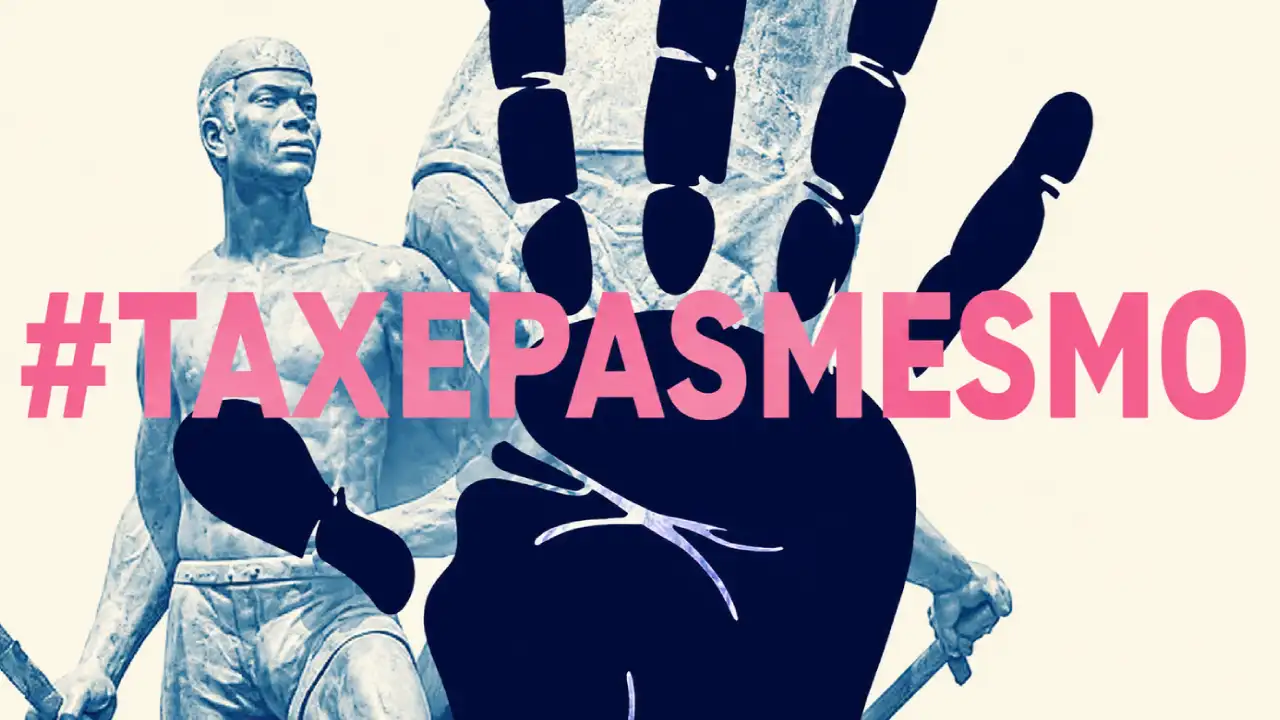
The 2018 precedent revives the #TaxePasMesMo movement
The current anger directly recalls the crisis of 2018. Decree No. 2018-341 of July 25, 2018, introduced a 5% contribution on electronic communications as well as a tax of 5 FCFA per megabyte consumed on certain social media platforms, namely Facebook, WhatsApp, Twitter, Viber, and Telegram.
This measure caused a sharp increase in the cost of certain digital uses and triggered the #TaxePasMesMo movement. A petition gathered several thousand signatures, while civil society organizations and Internet users called for the withdrawal of the measure. Facing popular pressure, the government ultimately repealed the measure in September 2018. Eight years later, the recall of this hashtag illustrates the persistence of concern over fragile Internet access in Benin.
The framework of 2026, however, presents a particularity. The increase is visible in the operators’ commercial grids, but its origin cannot be reduced to a unilateral decision by MTN or Moov Africa. It falls within a pricing framework defined by the regulator and, more broadly, within the public orientations applied to the electronic communications sector.
This does not absolve operators from their responsibilities entirely. MTN, Moov Africa, and Celtiis maintain some flexibility in designing packages, bonuses, validity durations, promotions, proposed volumes, and quality of services. They are also obligated to communicate clearly about the conditions of so-called unlimited offers, particularly regarding initial volumes, speed reduction, and limitations applied after the main data allocation is consumed.
At this stage, the official platforms of MTN Benin and Moov Africa Benin display the new pricing grids without publicly explaining the specific reasons for the disappearance of the 5,000 and 10,000 FCFA packages.
Arcep Benin has also not detailed the criteria that led to this change nor clarified whether the removal of the old plans results directly from a new pricing decision in the elements made public around this controversy.
For consumers, the debate thus exceeds just the operators. It now concerns the rules imposed by the regulator, the real costs borne by businesses, the taxation applied to the sector, and the place that public authorities intend to give to Internet access in a country where digitalization is presented as a lever for economic and social development.




Comments
Comments load when you reach this section.