
Mali: the Supreme Court confirms the ten-year prison sentence of Bouaré Fily Sissoko.
The Supreme Court of Mali has rejected the appeal of former Minister of Economy and Finance, Bouaré Fily Sissoko. Sentenced to ten years in prison in the case of the presidential plane and military equipment acquired in 2014, she remains incarcerated. Her lawyers announce their intention to bring the case before the African Court on Human and Peoples’ Rights.

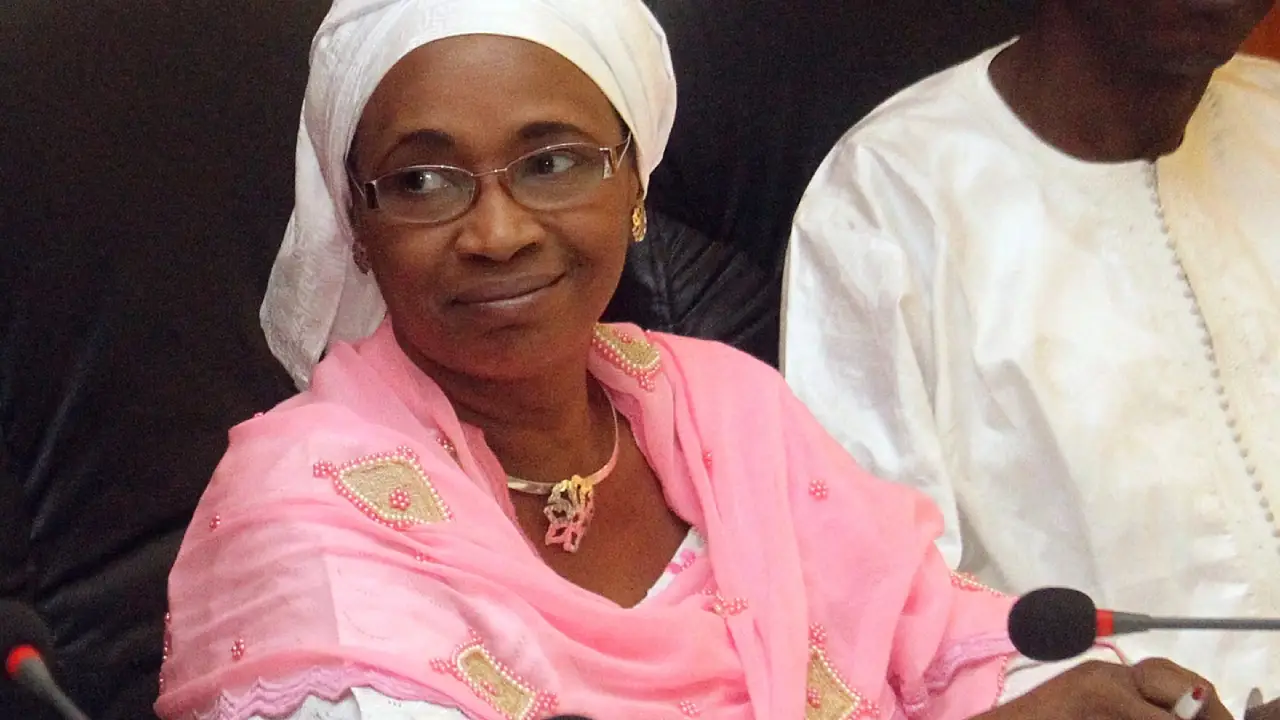
The conviction of Bouaré Fily Sissoko has become final in the Malian judicial order. On Tuesday, August 4, 2026, the Supreme Court rejected the appeal filed by the defense against the ten-year prison sentence imposed on the former Minister of Economy and Finance.
This decision confirms the verdict issued on July 8, 2025, by the special assize court of Bamako. Bouaré Fily Sissoko had been found guilty of forgery, use of forgery, and damaging public property in the case concerning the acquisition of a presidential plane and military equipment under the presidency of Ibrahim Boubacar Keïta. She was also fined 500,000 FCFA.
The former minister, who has contested the charges from the start of the proceedings, remains detained following the rejection of her latest appeal before national courts.
The defense denounces an unfair trial
In the wake of the decision, Bouaré Fily Sissoko’s lawyers announced their intention to approach the African Court on Human and Peoples’ Rights. They assert that their client did not benefit from the necessary guarantees for a fair trial.
The defense particularly criticizes the speed with which the ruling was rendered. According to her lawyers, the Supreme Court rejected the appeal less than ten minutes after the debates, a timeframe they consider insufficient given the complexity of the case.
The former minister’s counsel also raises a question of bias. They claim that the judge who participated in the proceedings that led to her conviction now serves as the acting president of the Supreme Court and presided over the hearing concerning the appeal.
These statements come from the defense and have not yet received a detailed public response from the Supreme Court. The rejection of a cassation appeal means that the court did not accept the legal arguments presented to annul the conviction; it does not constitute a complete new judgment of the facts.
The announcement of an appeal before the African Court is legally feasible. Mali has ratified the protocol establishing this court and accepted, under Article 34-6, that individuals and non-governmental organizations can bring cases directly to it. However, a request is still subject to several admissibility conditions, including the exhaustion of domestic remedies.
The African Court, based in Arusha, Tanzania, would not directly re-judge Bouaré Fily Sissoko as a criminal appellate court. Instead, it would need to determine whether the Malian procedure respected the rights guaranteed by the African Charter on Human and Peoples’ Rights, particularly the right to a fair trial.
A case open for over a decade
The case dates back to 2014, during the presidency of Ibrahim Boubacar Keïta. The Malian government acquired a plane intended for the president’s travel and entered into several contracts for military equipment without following the ordinary bidding procedures.
The purchase of the aircraft was valued at nearly 20 billion FCFA. The operations related to the plane and the military contracts raised questions about their cost, budgetary allocation, and the conditions for awarding the contracts.
The International Monetary Fund temporarily suspended its disbursements to Mali, awaiting clarifications regarding these extrabudgetary expenditures. This decision intensified pressure on Ibrahim Boubacar Keïta’s government and firmly placed the case in the Malian public debate.
Bouaré Fily Sissoko was placed in provisional detention in August 2021. Her trial opened in September 2024 before being suspended to allow for the testimony of several officials from the former regime. It resumed in 2025 and resulted in her conviction after several weeks of hearings.
The former minister faced several health issues during her detention. In April 2025, she was hospitalized after a cardiac incident, just days after a request for temporary release on medical grounds was denied.
With the rejection of the cassation appeal, her defense must now shift its challenge from the national criminal arena to the regional human rights protection arena.


Comments
Comments load when you reach this section.