
Law on traditional chieftaincy: reservations even within the parliamentary majority
Despite its adoption by a large majority, the new law governing traditional chieftaincy continues to be debated in the National Assembly. Nassirou Bako Arifari, a member of the Bloc Républicain (BR) and a deputy from the presidential camp, has made no secret of his concerns, denouncing the legislation as “imperfect” and in need of “several re-readings”.
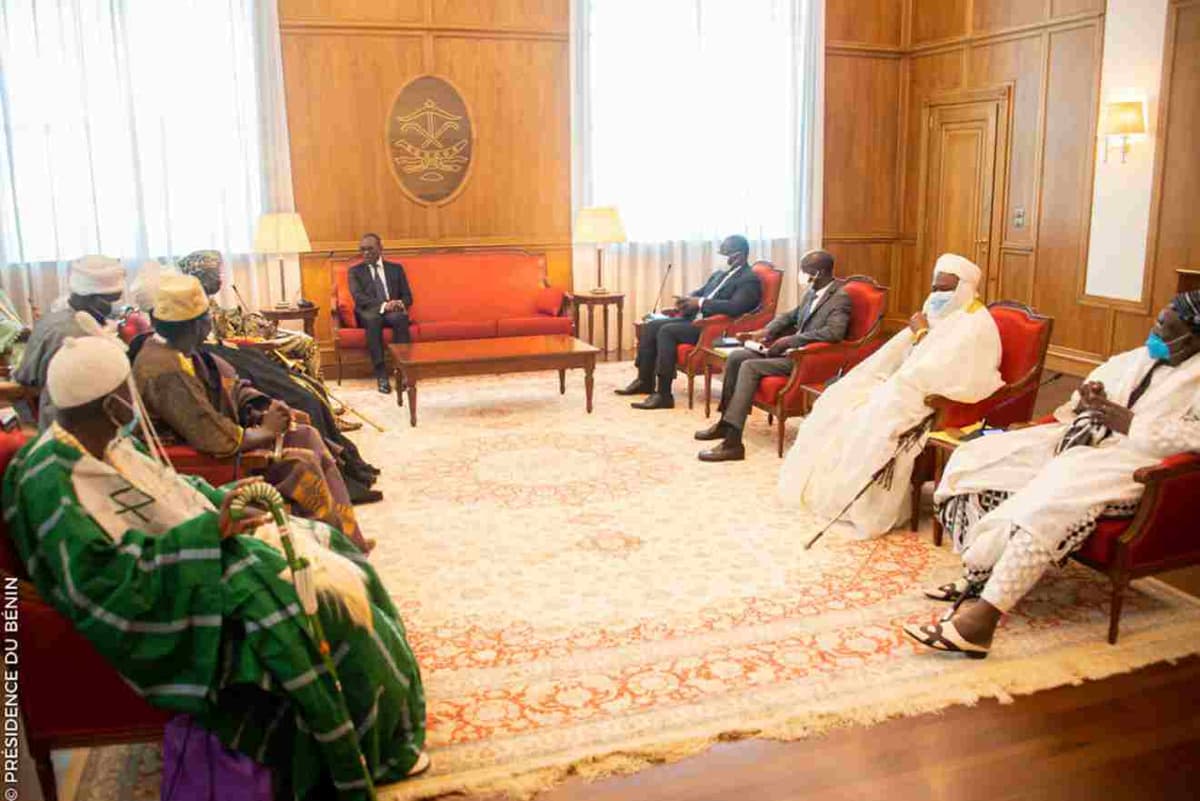
One of the points raised by the elected representative concerns the classification of kingdoms recognized by the law. In his opinion, certain choices are arbitrary and do not take into account the country’s historical and cultural realities.
” When I talk about kingdoms, we have well-defined cultural areas. I’ve seen that 16 kingdoms have been listed, but Allada and Kétou are included on the basis of colonial criteria. Yet the same colonial administration has signed protectorate and friendship treaties with other royal entities. What is to be done with these treaties, which recognize their sovereignty ?
The case of the Dendi community
The other sensitive point concerns the Dendi community, whose royal or imperial organization does not correspond to the model of other traditional chieftaincies.
“The Dendi have never been subject to a local authority in Benin. Yet this law classifies them as a chieftaincy rather than a kingdom,” laments Bako Arifari. He cites as examples Karimama, recognized since 1895, and Banikoara, whose specific customary organization has, in his view, been poorly integrated into the text.
A risk of future conflicts?
For the MP, this law, if left unchanged, could lead to tensions on the ground.
” Let’s be careful. We’re going to create serious problems of precedence and unnecessary conflicts “, he warns.
In particular, he calls for an urgent revision of article 14, which defines the modes of succession within chieftaincies. ” This article is a serious mistake. It must be completely removed ,” he says.
While this law aims to officially structure traditional chieftaincy in Benin, these criticisms highlight flaws that could complicate its implementation. Will a re-reading of the text be necessary to allay concerns? Only parliamentarians will be able to settle the question and provide clarification for the populations concerned.
Related Articles
 Theft at the University of Abomey-Calavi: a fake soldier sentenced to two years’ imprisonmentDeath of a woman at CHUD-O: three health workers sentenced to 24 months in prison
 Death of an eight-month-pregnant woman in Abomey-Calavi: her partner and his father were remanded in custodyA Beninese man has been sentenced to 30 years in prison for the murder of his Togolese business partner