
Japan and Benin strengthen their academic dialogue on peace.
During an academic visit to Benin, Professor Shinoda Hideaki of Tokyo University of Foreign Studies led a seminar at UAC this Saturday on peace issues. The Japanese researcher highlighted the central role of trust and universities in training a new generation of actors committed to stability and international cooperation.
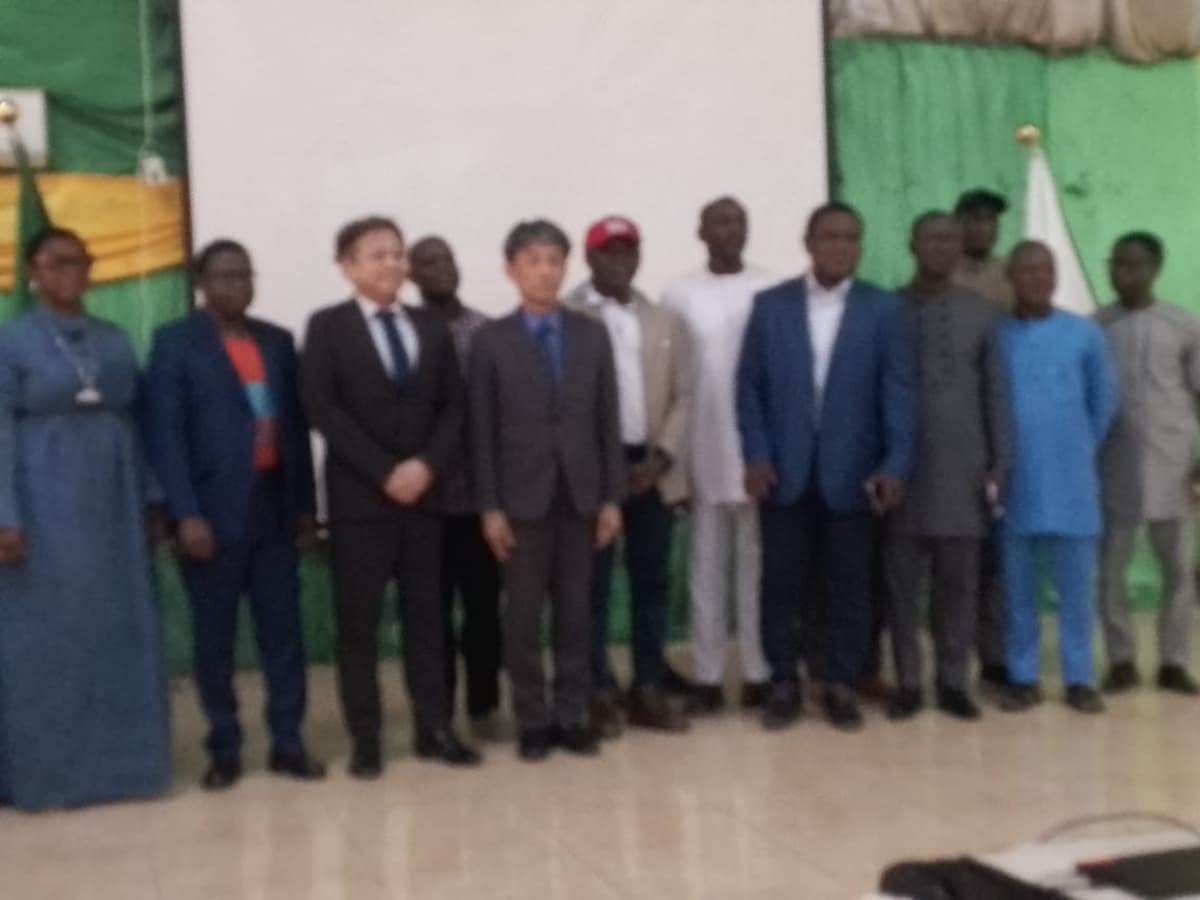
While in Benin for a seminar on peace issues, the Japanese professor Shinoda Hideaki of Tokyo University of Foreign Studies emphasized the need to strengthen intellectual cooperation between the two countries. This initiative is part of the long-standing friendship and partnership Japan maintains with Benin and, more broadly, with several countries in the West African subregion.
“Peace is one of the major themes of our engagement”, he stressed, recalling that Japan is multiplying cooperation initiatives aimed at promoting stability and development. The objective of this seminar is clear: to create a framework for exchanges bringing together students, faculty-researchers, diplomats and institutional leaders to collectively reflect on the policies and mechanisms that foster peacebuilding.
According to him, mutual understanding between peoples constitutes an essential step in facing contemporary challenges. “If we can discuss peace-related questions together and get to know each other better, we will be able to find better ideas for the future”, he affirmed.
Trust, keystone of the process
In an international context marked by multiple tensions, the professor insisted on a central element: trust. “There is nothing more important than obtaining and maintaining the trust of the populations”, he explained, while acknowledging that this objective remains complex, notably in West Africa where security, economic and social challenges are numerous.
For him, the consolidation of peace passes through honesty, intellectual rigor and the regular organization of spaces for dialogue. Academic forums thus play a decisive role in avoiding misunderstandings and strengthening the credibility of public actions.
The university, a laboratory of peace
Asked about integrating peace values into university programs, the speaker highlighted the major responsibility of higher education institutions. “Universities have great potential and a great responsibility”, he stated. They must, according to him, encourage debates, develop critical thinking and provide students with the tools necessary to analyze public policies. Historical case studies, such as Hiroshima, can also nourish reflection and illuminate future generations.
In his view, building peace is a long-term process, with no immediate solution or absolute guarantee. But by equipping young people with the skills necessary for constructive debate and civic engagement, the university becomes an ideal framework to train actors capable of contributing sustainably to stability and social cohesion. A strong message addressed to Beninese youth: peace is not decreed, it is built, patiently, through knowledge, dialogue and trust.
Related Articles
 The death of Benoît Illassa, a singular voice in Benin’s political life, fades away.
 Services trade: Benin accelerates its strategy within the AfCFTA framework.
 Morelle Alliance for Humanity: a new identity to broaden solidarity efforts
 Abomey-Calavi: Nathanaël Koty met with the special prosecutor of the Criet to strengthen the fight against land grabbing.