
Ivory Coast: the government reports 59 deaths after heavy rains
The Ivorian government presented a heavy report on Wednesday, July 1, 2026, regarding the severe weather affecting the country since the beginning of the rainy season. At the end of the Cabinet meeting held in Abidjan, government spokesman Amadou Coulibaly announced 59 deaths related to torrential rains and flooding.

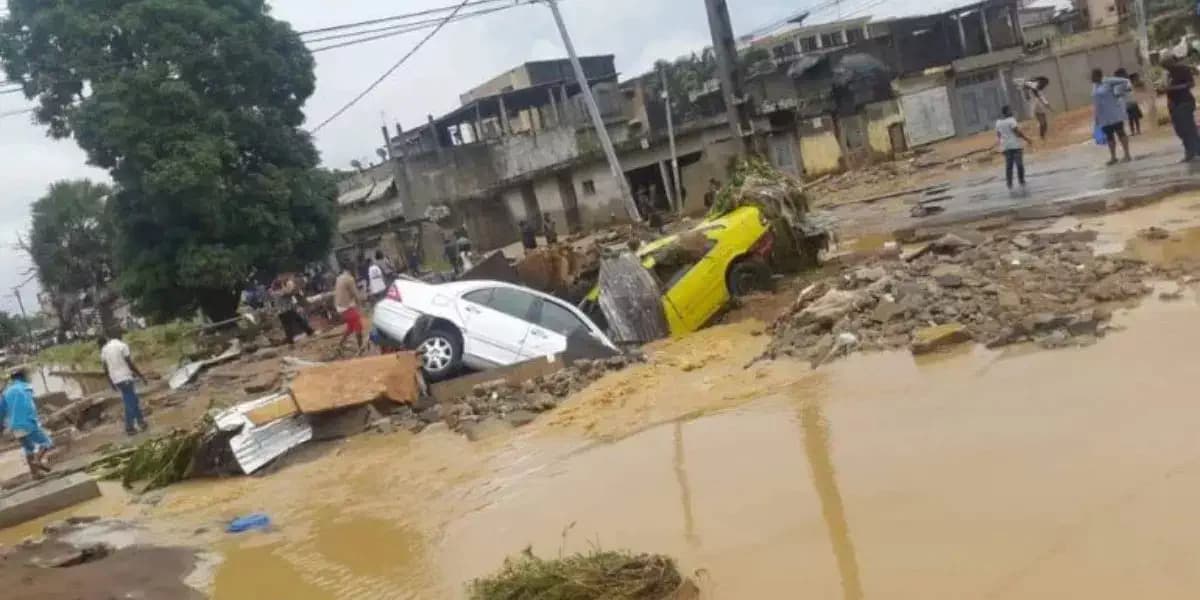
This report comes as Côte d’Ivoire experiences a particularly deadly rainy season. The heavy rainfall recorded in recent weeks has led to flooding, landslides, collapses, and significant material damage, notably in the autonomous district of Abidjan.
According to Amadou Coulibaly, the Cabinet expressed sadness over a “particularly high” human toll, while the rainy season is still in its early stages. The government expressed its condolences to the bereaved families and urged people to follow the safety precautions issued by the authorities.
Attécoubé, one of the most affected communes
Among the most affected areas is the commune of Attécoubé in Abidjan. The government spokesman indicated that around twenty deaths have been recorded there. According to the explanations provided by the executive, several victims were in areas already identified as hazardous from which populations had been displaced.
The government states that some people had returned to previously evacuated sites, despite the known risks of flooding or landslides. This situation highlights the issue of occupying at-risk areas in the Ivorian economic capital.
In Abidjan, many neighborhoods are regularly exposed to flooding during the rainy season. The heavy rainfall weakens precarious housing, saturates drainage systems, and causes land movements in vulnerable areas.
The government calls for compliance with instructions
In light of this new tragedy, the Ivorian executive insists on the necessity of adhering to preventive measures. Amadou Coulibaly reminded that populations living in areas identified as dangerous must leave when authorities issue evacuation instructions.
The government supports that no deaths have been recorded in some at-risk areas where residents have accepted to relocate or move. For the authorities, this observation shows that preventive measures can help reduce loss of life when followed.
The appeal particularly targets populations living in low-lying areas, hillside slopes, flood-prone zones, and sites exposed to landslides. These spaces are among the most vulnerable during heavy rains each year.
Significant material damage
Beyond the human toll, the severe weather has caused extensive material damage. Roads have been submerged, neighborhoods flooded, homes damaged, and infrastructures affected. Reports of fallen trees, wall collapses, and partial destruction of buildings have also been recorded.
This damage disrupts traffic, access to homes, economic activities, and rescue operations. In some areas, standing water also makes it more difficult to return to normal conditions quickly.
Ivorian authorities are regularly faced with this type of situation during the rainy season. Each year, flooding causes loss of life and property, particularly in precarious or densely populated neighborhoods.
A recurrent urban issue
The tragedy reignites the debate over the rapid urbanization of Abidjan and the occupation of spaces unsuitable for habitation. The population growth in the economic capital has led to the expansion of many neighborhoods into areas exposed to natural risks.
For several years, the government has conducted eviction operations in certain sectors deemed dangerous. These operations are often justified by the need to prevent disasters related to rainfall. But they also provoke social tensions, especially when they involve vulnerable households struggling to find sustainable relocation solutions.
The report announced on Wednesday shows that the issue remains far from resolved. Despite warnings, prohibitions, and evacuations, people continue to live or return to threatened areas.
A season of rain under close watch
With 59 deaths already recorded, Ivorian authorities fear an increase in the toll if the rains continue with the same intensity. The government therefore calls for caution and urges citizens not to underestimate weather alerts.
Emergency services, local authorities, and civil protection structures are called to maintain surveillance in sensitive areas. Prevention, evacuation of dangerous zones, and raising awareness among residents now appear as immediate priorities.
For the Ivorian executive, the current tragedy should serve as a warning. The rainy season continues, and upcoming rainy episodes could further expose thousands of people if safety instructions are not followed.
Related Articles
 In Benin, 46% of citizens have considered leaving the country in 2024-2025
 Somalia: 26,000 displaced from Baidoa face famine risk by December
 2nd edition of the Mangal Festival: science, culture, and local knowledge mobilized to preserve the Mono Delta
 In Gabon, enrollment for digital driving licenses suspended three days before deadline
Comments
Comments load when you reach this section.