
In Benin, a failed coup d’état — but one that raises many questions
Sunday, April 7, 2025, Benin woke up shocked by an attempted coup that was quickly foiled. A group of soldiers briefly occupied the national television to announce the fall of President Talon, before being neutralized by loyalist forces. Although calm has returned, this episode—unprecedented in more than 50 years—raises many questions about the political climate, tensions within the army, and the vulnerabilities of a democracy long seen as stable.
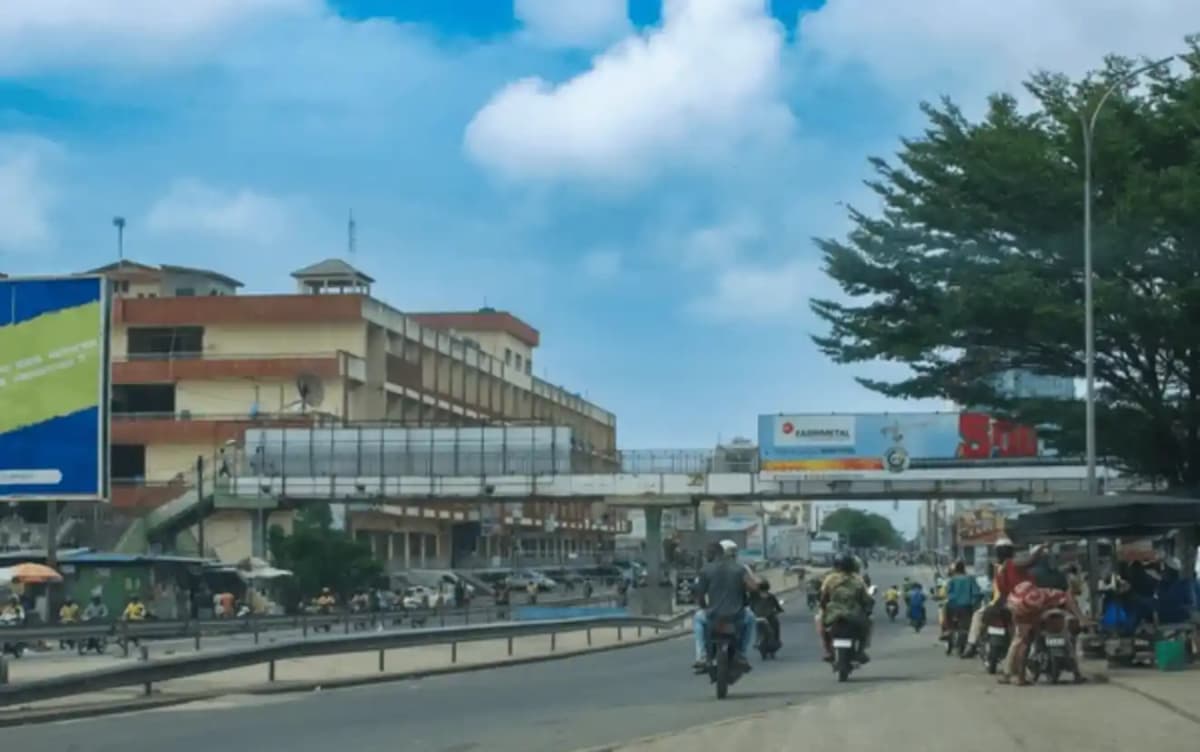
Sunday, December 7, 2025, Benin narrowly avoided tipping into a military coup. In the early hours of the day, gunfire rang out near President Patrice Talon’s residence in Cotonou. A few minutes later, a small group of armed soldiers appeared on the national public channel (ORTB/SRTB), announcing that they had “removed the president from his duties” and proclaiming the creation of a “Military Committee for Rebuilding,” with Lieutenant-Colonel Pascal Tigri at its head. The putschists’ message boiled down mainly to three points. They accused the government of “neglecting soldiers who fell at the front and their families” and denounced the “ongoing deterioration of the security situation in northern Benin” as well as military promotions they considered unfair. By imposing their discourse on state television, these eight to ten soldiers briefly claimed to dissolve the institutions and suspend the Constitution.
However, the response from loyalist forces was swift. According to Interior Minister Alassane Seidou, the Beninese army, “faithful to its oath,” managed to “maintain control of the situation and foil the mutineers’ maneuver.” During the afternoon, the isolated rebel soldiers were cornered and their last pockets of resistance were suppressed, with around a dozen soldiers arrested in connection with the coup attempt. President Talon, speaking that evening on national television, said the situation was “completely under control” and vowed that this “outrage will not go unpunished.” His entourage also indicated that he was safe and that the Beninese state had progressively regained the upper hand over what turned out to be “a small, isolated group of soldiers.”
Internal political circumstances
If the coup was aborted within a few hours, the reasons that pushed these soldiers to revolt reflect a tense political and security climate. On one hand, Benin remains a democracy reputed to be stable, but criticisms against the head of state have accumulated in recent years. Patrice Talon, president since 2016 and re-elected in 2021, has been accused by his opponents of taking an authoritarian turn and of locking down the political field ahead of the April 2026 presidential election. The main opposition party has been sidelined for the next election, which has strengthened many Beninese people’s distrust of the integrity of the electoral process. In this context, figures in power have already been prosecuted – two former allies of Talon were convicted for plotting a coup in 2024 – feeding rumors and concerns about power maneuvers. As some analysts recently pointed out, the “political landscape [is] locked in favor of Patrice Talon’s camp” and the presidential record on public freedoms raises serious reservations.
On the other hand, the authorities face a major security challenge. Northern Benin, exposed on the border to the Sahel, is regularly the scene of deadly jihadist attacks. The alleged putschist Tigri and his colleagues stressed the “ongoing deterioration of the security situation in the north” and the “neglect of soldiers who fell at the front.” This situation may have fostered resentment within certain military units, in particular the National Guard, which provided the majority of the mutineers. Some observers question command failures or possible complicities, since the group’s reaction seemed improvised and disconnected from Beninese realities, as a Guinean editorial notes: “The mutineers appear to have been seduced by the now-familiar scenario of hitherto unknown soldiers suddenly seizing power… in a context where neither ECOWAS nor international partners react with the firmness of old.”
Formerly the Republic of Dahomey, the country experienced a series of coups in the 1960s and ’70s, at an almost continuous pace until the last military overthrow in 1972 under Mathieu Kérékou. Since then, Benin has successfully carried out several democratic transitions with the return to multipartism in 1990, which led to successive peaceful presidential and legislative elections, making the country a model of stability in the sub-region.
It is therefore remarkable that the last successful coup in Benin dates from 1972. For more than five decades, no rival managed to interrupt the democratic path, despite tensions and controversial reforms. This long trajectory probably explains the vigor of the response to the December 2025 attempt: “It is no doubt [this] long tradition of stability… that helped stop the attempt,” accurately summed up an African editorial.
National reactions
Within the Beninese political class, the coup attempt was unanimously condemned. On the authorities’ side, President Talon and his ministers immediately praised the loyalty of the armed forces that restored order. In his evening address, Talon thanked “the soldiers and their leaders who remained republican and loyal to the homeland” and reaffirmed his commitment that the instigators of the mutiny would answer for their act. The presidential entourage stressed that “adventurers” had wanted to sow chaos, but that “the regular army had retaken control of the situation.”
On the side of political parties, and more broadly civil society, the reaction was cautious but firm and no notable leader supported the putschists. Although the institutional opposition has recently denounced the government’s authoritarian drift, it has for now limited itself to welcoming the rapid restoration of republican legality and calling for calm. Likewise, the country’s religious and trade union organizations urged citizens to show restraint and to place their trust in the loyal military institutions.
But behind the scenes, some observers emphasize, it will be difficult for both the ruling majority and the opposition to ignore the internal divisions revealed by this failed coup. On the judicial front, Benin could see high-profile trials as Talon himself has promised, “this outrage will not go unpunished.”
International reactions
The attack on Benin’s constitutional order prompted near-unanimous condemnation on the international stage. At the regional level, the Economic Community of West African States (ECOWAS) early on showed its determination. That same evening, it announced the “immediate deployment” of its standby force on Beninese territory, composed of troops from Nigeria, Sierra Leone, Côte d’Ivoire and Ghana, to “preserve the constitutional order.” This decision, welcomed by Cotonou, is the first mobilization of this kind in a long time and demonstrates the neighbors’ willingness not to tolerate new overthrows of government. As a sign of active support, Nigeria — the region’s military power — specified that it had sent fighter jets to secure Benin’s airspace and had deployed ground troops to assist the loyal army in retaking strategic installations.
More broadly, the failed coup was immediately described as a “serious threat to stability” by international institutions. The UN, through its Special Representative for West Africa and the Sahel, firmly condemned the coup attempt, calling it contrary to the Constitution and democratic values. The African Union expressed its “deep concern,” recalling its “zero tolerance” for unconstitutional changes of power and calling on the putschists to “return immediately to their barracks.” The European Union also denounced the attack on Benin’s democratic order, demanding immediate respect for constitutional legality. These international reactions take place in a very sensitive regional context, marked by several recent coups in Mali, Burkina Faso, Niger, Guinea and Guinea-Bissau.
Issues and uncertainties
Despite the failure of the mutiny, many questions remain unanswered. Who truly orchestrated this “mutiny”? Did it benefit from covert support, military or civilian? What does this crisis mean a few months before the presidential election? Beninese people fear that the authorities will exploit the incident to further harden the handling of the security crisis or to tighten their political grip. Already, some observers note the paradox that even though “Benin [was] one of the most stable democracies in West Africa,” soldiers were tempted to defy legal authority.
Should this be seen as the consequence of a latent social or identity fracture, or simply the contagious effect of a fashion for coups in Africa? And why is it under Patrice Talon’s regime that this issue becomes recurrent in Benin? What will be the consequences for the future functioning of the armed forces and for the balance of power in Cotonou? Finally, beyond national borders, Nigeria’s maneuvers and those of regional troops recall the country’s close security interconnection, raising the question of sovereignty: to what extent will Benin be able to rely on its allies while preserving its political independence?
The failed coup of December 7, 2025 therefore remains full of lessons, even in failure. It remains to be seen whether this experience will lead to strengthened national cohesion or, on the contrary, to new lines of fracture in Benin’s young democracy.
Related Articles
 Daniel Edah: 4 reasons that make him the opposition’s candidate in 2026
 Benin: Facing the youth, Patrice Talon with an open heart but closed ears
 Presidential Election 2025 in Côte d’Ivoire: these candidacies that conceal another political calculation
 Ivory Coast: 3 confessions of failure behind Alassane Ouattara’s candidacy