
For his first steps, Romuald Wadagni impresses the Beninese.
Ten days after his inauguration, Romuald Wadagni is already setting his pace at the helm of Benin. Government formed in twenty-four hours, accelerated diplomatic tour in the sub-region, health promise materialized with one billion FCFA for vital emergencies; the new head of state is looking to establish a presidency of action, visible and direct.

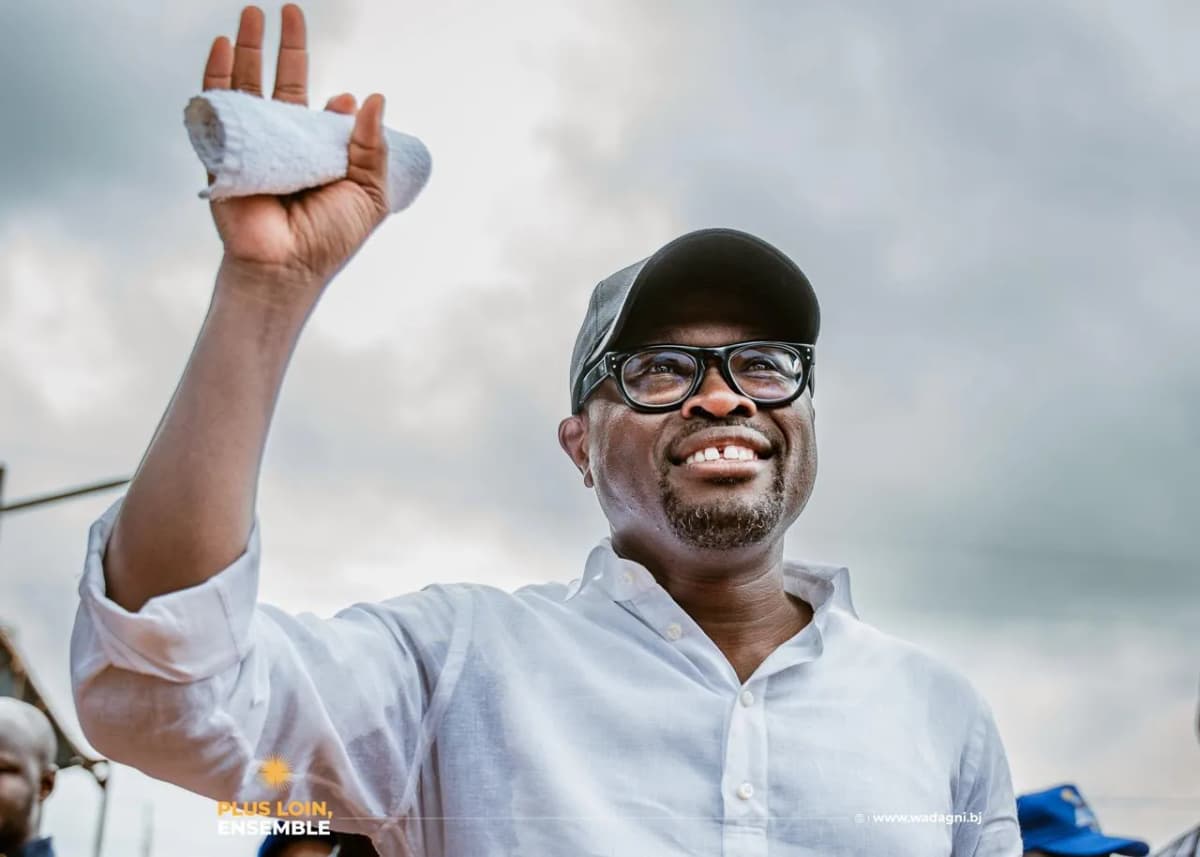
Ten days. That’s how long it took Romuald Wadagni to turn an election into visible governance. Sworn in on May 24, 2026, in the multipurpose hall of the Palais des Congrès in Cotonou, the fifth president of the Republic of Benin has proceeded at a rarely observed pace. A government formed within twenty-four hours, a diplomatic tour of five capitals in two days, a campaign health promise fulfilled in the Council of Ministers just ten days after the inauguration. For a head of state whose public image has long been that of a finance technician – competent yet cold, efficient but lacking in charisma – the start of his term produced the opposite effect of what his critics expected.
The first signal was diplomatic. By choosing Abuja and not Lomé for his first official trip abroad, Wadagni broke with the tradition established by his predecessor and sent an immediate geo-economic message that Nigeria, Benin’s main trading partner and the largest economy in sub-Saharan Africa, deserves priority. Tinubu was the first to congratulate him after the April 12 election. Wadagni responded by personally traveling on Monday, June 1, making a same-day round trip – no overnight stay, no heavy protocol – to lay the foundations for a relationship that both countries are working to elevate to their mutual interests.
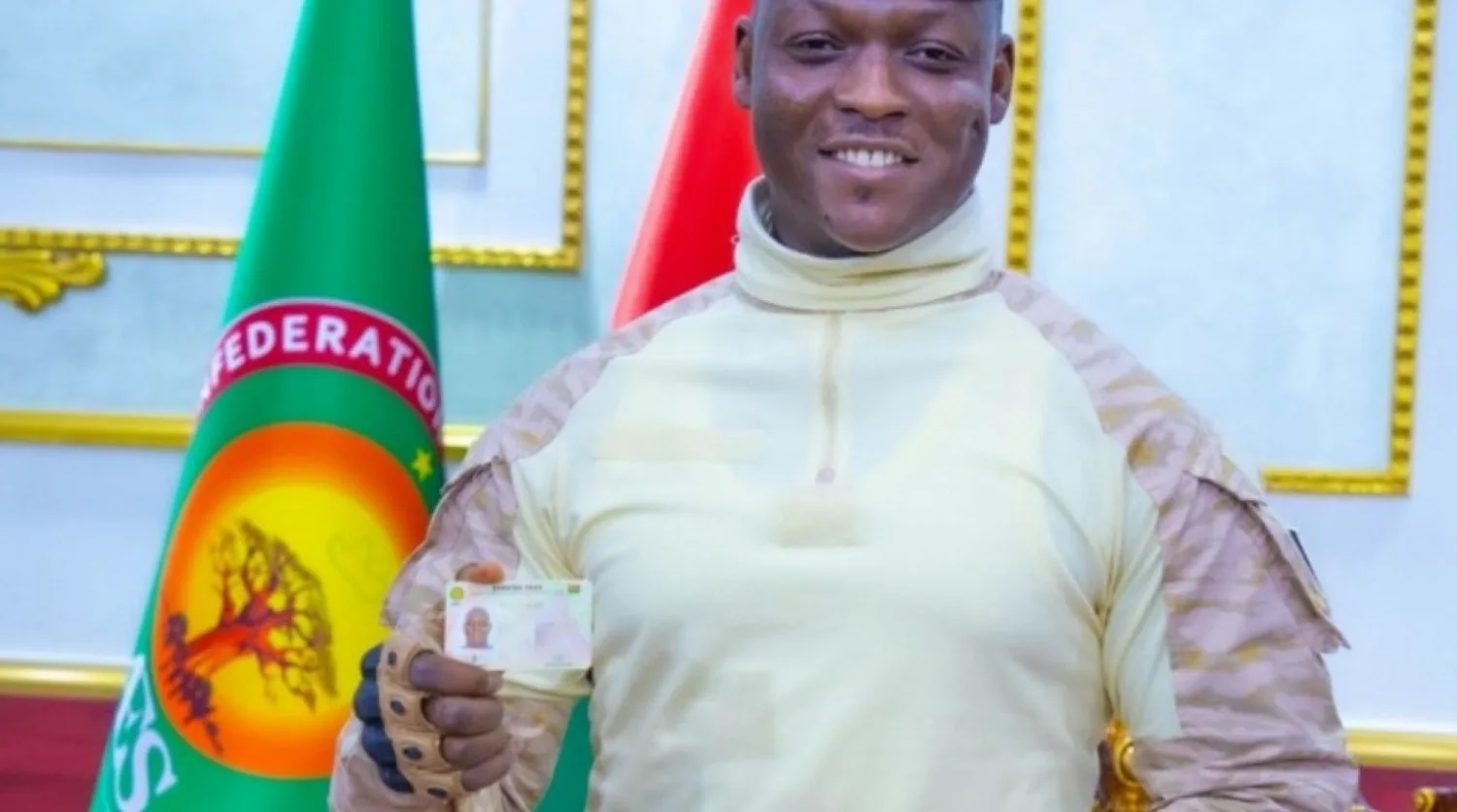
But it was on Tuesday, June 2, that the heart of the diplomatic display took place. Romuald Wadagni successively visited Niamey and Ouagadougou on the same day. Two capitals of the Alliance of Sahel States, two countries with which Benin’s relations had been reduced to their lowest tension level in decades. In Niamey, General Tiani was awaiting him on the tarmac. A joint communiqué was signed, providing for an expert committee within fifteen days to prepare for the reopening of the border closed since August 2023. In Ouagadougou, Captain Traoré followed the same solemn protocol. A second communiqué of fifteen points was adopted: cross-border security, revival of the Cotonou port corridor, convening the fifth Joint Commission. The two Sahelian heads of state accepted the invitation to visit Cotonou.
The method rather than the speech
What stands out in these first days is less the content of the decisions – often expected, aligned with the logic of the situation – than their pace and form. Wadagni did not deliver a grand programmatic speech. He acted. He multiplied short and targeted formats: face-to-face meetings at the airport rather than state visits in grand fashion, monthly Council of Ministers instead of weekly, personal publication on Facebook to announce a government decision even before the official communiqué. The communication is direct, in the first person, in a style that contrasts with the distanced institutional tone of his predecessor Patrice Talon.
The use of his personal Facebook page to announce the one billion FCFA allocated for vital emergencies is emblematic of this method. Even before the minutes of the Council of Ministers on June 3 were published, Beninese people learned directly from their president, in his own text and in his own words, that they would no longer die at the entrance of emergency services for lack of prior payment. It is a campaign promise reformulated as a decision, presented not as a technical act but as a moral commitment. “Because a human life has no price. Because health is a fundamental right.” The vocabulary is simple, the sentences short. The message resonates.
This promise was the most striking of the presentation of the societal project on March 21 at the Palais des Congrès. “From now on, systematically, automatically, for vital emergencies, you will be treated first,” Wadagni stated casually, without notes, in a TED-style thirty-minute format. Ten weeks later, the decision is made. This type of coherence between promise and action – as symbolic as it may be at this stage – is rare enough to be noted.
What remains to be done: the essential
It would be unwise to take the first ten days as indicative of the entire term. The allocation of one billion for emergencies is a kick-starter measure. It requires, to produce a lasting effect, a redesign of reception protocols in all healthcare facilities, staff training, a deferred recovery mechanism, and recurring financing. These tasks will take time and money that the country does not easily possess: Benin has not had an active IMF program since 2024, public debt stands at 53% of GDP, and the relationship with international financial institutions remains unresolved.
Diplomatically, the joint statements signed in Niamey and Ouagadougou are commitments in principle. What will make them real is the holding of the expert committee within fifteen days, the actual resumption of oil exports via the Niger-Benin pipeline, and the date that the embassies will eventually set for Tiani and Traoré’s visits to Cotonou. Good diplomatic intentions have a limited lifespan if they do not translate into measurable actions.
The composition of his government has already caused internal ripples. The UPR and the Republican Bloc, his two coalition parties, have quietly expressed dissatisfaction with the low representation of activists in the technocratic cabinet. The CSTB has condemned the disappearance of the Ministry of Labor. The measure on Communication – creating a ministry while appointing a government spokesperson with ministerial rank – has been identified as a redundancy in the organizational structure. These irritants do not threaten the mandate, but they reveal that building a stable government majority, even in a context where the National Assembly has no opposition, is not a given.
A distinctive style
What is indisputable is that Wadagni began his term by making visible choices. In a country where national politics is often perceived as a palace affair distant from daily concerns, the combination of the billion for emergencies and normalization with Niger and Burkina serves as an introduction to power designed to be felt, not just analyzed.
If what follows holds to the first days, the seven-year term will begin with rare political credit. If it does not, the raised expectations will become the first burden for a president who has ignited the flame but has yet to demonstrate he can keep the fire going.
Comments
Comments load when you reach this section.