
El Niño: UNDP calls for proactive measures against climate risks in West and Central Africa
The United Nations Development Programme (UNDP) urges governments, donors, and humanitarian partners in West and Central Africa to urgently strengthen anticipatory measures in response to El Niño. In a statement released in Dakar on September 15, the agency highlights that the climatic phenomenon could exacerbate the risks of rainfall deficits in certain areas, while forecasts remain mixed according to different models.

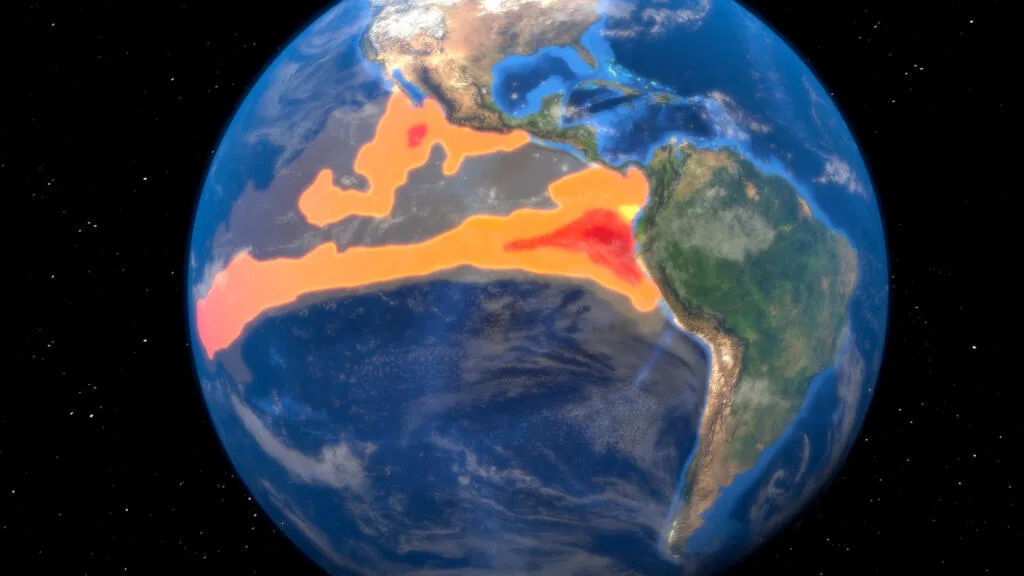
The Regional Climate Centre for West Africa and the Sahel (AGRHYMET CCR-AOS) reports in its regional outlook PRESASS 2026 an expansion of areas with a high probability of below-average rainfall for the period of August-September-October. However, the UNDP emphasizes the uncertainty surrounding regional forecasts: some models predict below-normal rainfall in parts of the Sahel, while others anticipate wetter conditions in Central and Eastern Sahel.
This uncertainty leads the UN agency to call for tailored responses for each country rather than a uniform assessment of the situation. Climate risks vary across the Sahel, the Lake Chad basin, and the coastal economies of the Gulf of Guinea.
The UNDP also reminds that food insecurity affecting certain populations in the region cannot be attributed solely to El Niño. According to data from the Harmonized Framework cited by the agency, 41.8 million people were classified in phase 3 or higher, indicating a crisis or worse, in West Africa and the Sahel between October and December 2025. Projections for the lean season from June to August 2026 raised this figure to 52.8 million people.
These figures pertain to populations facing acute food insecurity and do not imply that all of West Africa is affected in the same way. The UNDP identifies conflicts in Central Sahel, the Lake Chad basin, and Eastern Democratic Republic of Congo as the main drivers of displacement and humanitarian needs in the affected areas.
Different impacts across regions
Climate shocks can, however, worsen existing challenges by increasing pressure on water, pastures, and agricultural land, disrupting transhumance routes, or complicating humanitarian access. Therefore, the UNDP recommends cross-referencing climate indicators with data on conflicts, displacement, and access to vulnerable populations.
The situation differs in coastal countries. In Côte d’Ivoire and Ghana, two major global cocoa producers, monitored risks include both rainfall deficits, excessive humidity episodes, and crop diseases. The UNDP recommends specific monitoring of the cocoa belt to adapt anticipatory measures to the conditions actually observed.
Finally, the agency calls on governments and donors to mobilize anticipatory financing mechanisms before conditions potentially deteriorate. It specifically requests reliance on AGRHYMET forecasts and triggers that combine climate indicators, conflict levels, and humanitarian access constraints.



Comments
Comments load when you reach this section.