
ECOWAS Summit: a turning point between political crises and economic recovery
The heads of state and government of the Economic Community of West African States (ECOWAS) met for an ordinary summit in Abuja on Sunday, 14 December. At the heart of the agenda were recent regional upheavals – a coup in Guinea-Bissau, a foiled putsch in Benin, the crisis in the Sahel – as well as major economic challenges for the sub-region. For many leaders, the meeting took place in a climate of “zero tolerance” toward unconstitutional changes, reaffirming ECOWAS’s commitment to restoring legitimate civilian authorities.
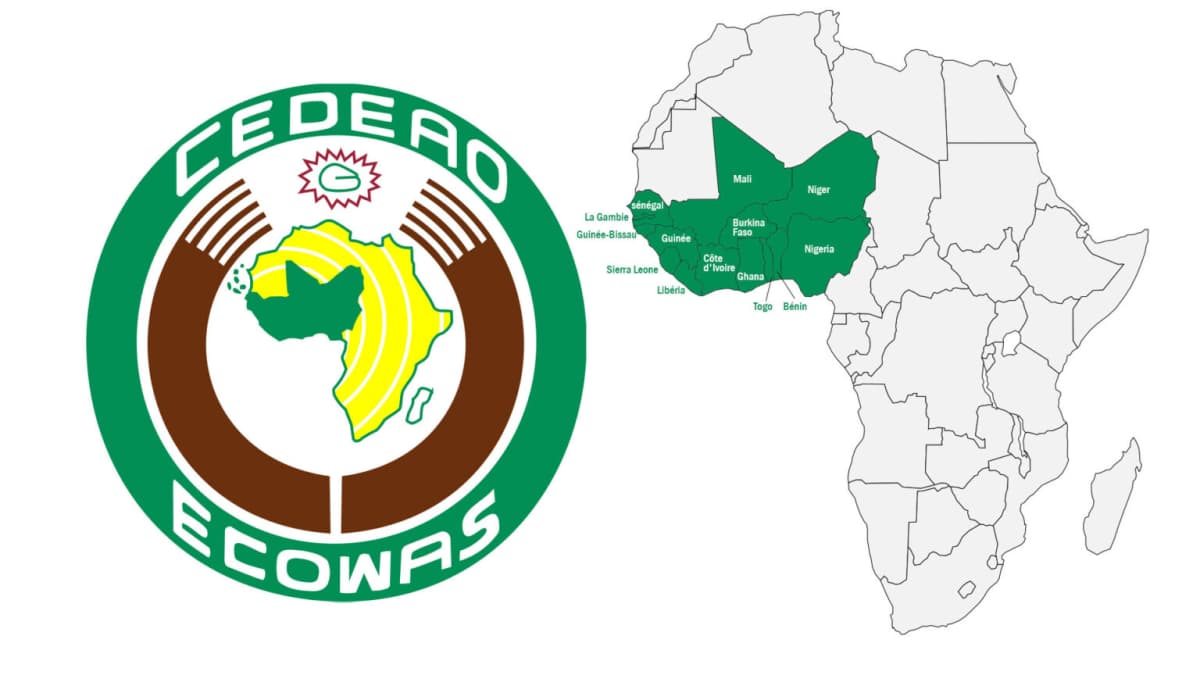
The heads of state and government of the Economic Community of West African States (ECOWAS) met for an ordinary summit in Abuja on Sunday, 14 December. At the heart of the agenda were recent regional upheavals – a coup in Guinea-Bissau, a foiled putsch in Benin, the crisis in the Sahel – as well as major economic challenges for the sub-region. For many leaders, the meeting took place in a climate of “zero tolerance” toward unconstitutional changes, reaffirming ECOWAS’s commitment to restoring legitimate civilian authorities.
The summit was held amid strong turbulence. The heads of state took stock of the Bissau-Guinean crisis triggered on 26 November, when the army overthrew President Umaro Sissoco Embalo. They reaffirmed that the presidential election of 23 November, initially won by Embalo, had been judged “free and transparent”, and called for a swift return to constitutional order. At the same time, the attempted coup of 7 December in Benin was condemned outright.
West African leaders welcomed the rapid intervention of loyalist forces (with the support of Nigerian, Ivorian, Ghanaian and Sierra Leonean troops) that made it possible to restore the government, emphasizing the need to preserve stability ahead of Benin’s 2026 presidential elections. Diplomatically, the summit took place while dialogue remains broken with the Alliance of Sahel States (AES) – an informal coalition of Mali, Burkina Faso and Niger that left the organization in 2023. Sahelian ministers expressed their discontent in November, and the absence of representatives from these countries in Abuja reflects a persistent rift within the West African region.
Main political decisions
The leaders reaffirmed their firm commitment to the democratic process. The final communique read by the President of the Commission, Omar Alieu Touray, stresses ECOWAS’s “zero tolerance” for any coup d’état. For Guinea-Bissau, the heads of state unanimously rejected the military transition program proposed by the junta and demanded the restoration of a civilian government as quickly as possible. They called for a short transition that includes local political forces, and demanded the immediate release of all political detainees linked to the coup. To guarantee this return to constitutional order, the conference confirmed it would authorize its regional force to protect civilian institutions and political leaders in Guinea-Bissau. In case of non-compliance with directives, anyone obstructing the transition faces “targeted sanctions”.
In Benin, the foiled coup was condemned unequivocally. ECOWAS welcomed the rapid mobilization of its standby force; some 200 Nigerian and Ivorian soldiers had already been deployed to Cotonou in a role of “support, clearing and mopping-up” after the failed coup. Additional reinforcements (Ghana, Sierra Leone) were announced to support operations, reflecting regional solidarity. The heads of state hailed these interventions as an example of successful collective action and pledged to maintain diplomatic pressure on any attempt to destabilize.
Security and economic issues
Security, particularly in the Sahel, was the other major focus of the summit. The leaders recalled that the three Sahelian countries (Mali, Burkina Faso, Niger) formed the AES after leaving ECOWAS, which has hindered joint crisis management. They stressed the cross-border nature of jihadist threats and, as Sierra Leonean President Julius Maada Bio pointed out, “no border can isolate us from violence”.
The need to continue discussions with the AES on security cooperation was affirmed, even in the absence of the Sahelian military regimes. At the Abuja summit, ECOWAS reiterated its commitment to facing these challenges, and the final communique included an in-depth review of regional security reports (attempted coups, conflict zones, etc.).
Economic issues were also among the priorities. Delegations were to review ECOWAS’s 2025 annual report and debate strengthening free movement and intra-regional trade. In this context, several flagship initiatives were adopted or relaunched, the most notable concerning air transport. The Commission announced that, as of 1 January 2026, all non-aeronautical taxes will be removed and passenger and security charges reduced by 25%. This tax reform aims to cut the cost of airfares in West Africa by about 40%, improving regional connectivity.
ECOWAS also organized five thematic meetings (e-commerce, services, agriculture, environment, food security) in the days preceding the summit to accelerate regional economic and agricultural integration. Finally, the heads of state renewed their support for the Trade Liberalization Scheme (STC/ETLS) – the West African free-trade program – to boost intra-zone trade.
Diplomacy and projects
Most member states were represented at a high level. Besides Julius Maada Bio (Sierra Leone, current chair of ECOWAS) and John Mahama (Ghana) mentioned earlier, participants included Gambian President Adama Barrow as well as Presidents Bassirou Diomaye Faye (Senegal) and Faure Gnassingbé (Togo). President Diomaye Faye arrived in Abuja on 13 December and was received with military honors. Ivory Coast was represented by its Vice President Tiémoko Meyliet Koné. By contrast, Nigerian President Bola Tinubu, under pressure at home, delegated his Vice President Kashim Shettima this time. With the presidents of Guinea and Guinea-Bissau suspended, neither Conakry nor Bissau had official representatives at the summit. Overall, the heads of state stressed the importance of maintaining community unity to face multiple challenges.
Several concrete initiatives were agreed. As announced by Dakar that day, Senegal will preside over the ECOWAS Commission for the 2026–2030 period, a first for the country. This mandate will need to implement the decided reforms and carry the vision of regional integration promoted by its president Bassirou Faye. Moreover, the summit approved the allocation of key Commission portfolios among member states (for example, Nigeria becomes vice-president of the Commission) and approved strategic partnerships (notably support for Ghana’s candidacy for the presidency of the African Union Commission in 2027). Beyond the organization itself, the summit encouraged funding for cross-cutting projects: plans include support for education and training programs, particularly for youth, as Julius Maada Bio emphasized in his closing address.