
Burkina: entrepreneurship will soon be a mandatory subject in university curricula.
Burkina Faso wants to make entrepreneurship a mandatory discipline in both bachelor’s and master’s degree programs starting from the 2026-2027 academic year. This reform, part of the presidential initiative for quality education for all, aims to better prepare students for self-employment in a country where the labor market remains dominated by the informal sector.

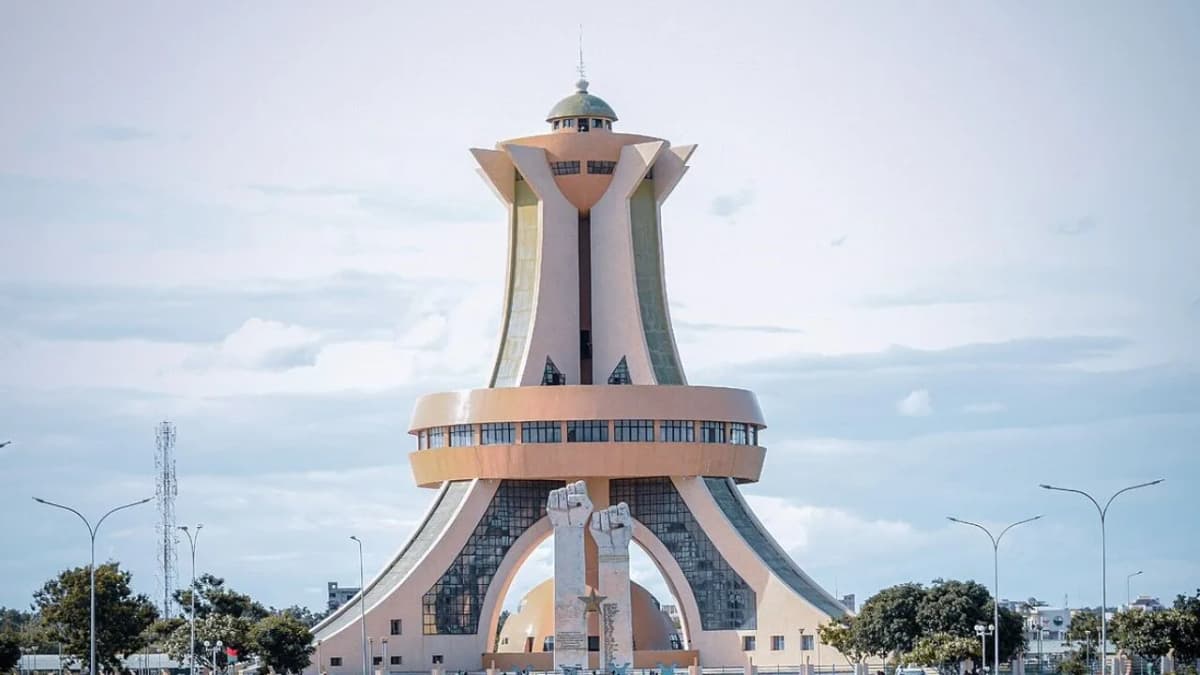
Burkina Faso plans to establish entrepreneurship as a compulsory cross-cutting discipline across all bachelor’s and master’s degree programs. This direction emerged from the work of 36 expert committees convened from Tuesday, June 9, to Thursday, June 11, as part of the presidential initiative for quality education for all (IPEQ), with the findings presented at Joseph Ki-Zerbo University in Ouagadougou under the auspices of the Directorate General of Higher Education. The information was reported by the Ecofin Agency based on the official communiqué.
Entrepreneurship would thus join a set of new cross-cutting modules aimed at all programs, alongside English, sports, national languages, and civic and patriotic education. These teachings would apply to both public institutions and private higher education institutions (IPES). Part of this foundation had already been established by two decrees that came into effect on October 1, 2025, with the application to curricula, which also includes computer science and the arts, being postponed to the 2026-2027 academic year to allow for a redesign of the programs.
The Director of the Cabinet of the Ministry of Higher Education, Research and Innovation, Honorat Roger Charles Nébié, presented this revision as a step aimed at “endogenizing and harmonizing” the content of higher education. The Director General of Higher Education, Gnidouba Roger Lanou, linked the reform to a decree from 2018 and to the desire to introduce elements of professionalization and civic values, mentioning the goal of “building the citizen of tomorrow.”
Launched in 2024 at the initiative of the transitional president, Captain Ibrahim Traoré, the IPEQ aims for a comprehensive transformation of the Burkinabè educational system. It includes an infrastructure component, with the announced construction of amphitheater complexes and administrative buildings, as well as this pedagogical component of revising content.
A labor market dominated by the informal sector
The reform comes in a context where the integration of graduates remains challenging. According to the National Semi-Annual Employment Survey (ENES) from the National Institute of Statistics and Demography (INSD), the national unemployment rate stood at 3.5% in the second half of 2024, down from 5.3% in 2023.
However, this overall rate masks disparities based on education level. The INSD notes that unemployment increases with the level of education, with university graduates having an unemployment rate about twice that of individuals with a primary education. Furthermore, the economy remains largely informal, with 93.5% of jobs classified as informal in 2024, while the formal sector employs only 6.7% of the active population nationwide.
It is this gap between educational level and job prospects that the curriculum revision seeks to bridge by directing training towards creating activities rather than solely focusing on seeking salaried employment.
A university oriented towards self-employment
The introduction of entrepreneurship into the programs extends existing initiatives. In January 2024, Joseph Ki-Zerbo University hosted the launch of the Student-Entrepreneur Status of Faso and a pre-incubation hub, with support from the University Agency of La Francophonie, to assist student-led projects.
The effectiveness of the measure will depend on the educational resources mobilized and the training of facilitators, as entrepreneurship requires support distinct from traditional academic teachings. The new cross-cutting modules are set to be implemented starting from the 2026-2027 academic year.
Related Articles
 Patrice Talon announced in France for a meeting with the dioceses of the Celestial Church of Christ
 Benin: activist Thibaut Ogou arrested, imminent presentation before the prosecutor
 Spain: what the calls to cross the Ceuta border on August 15 are hiding
 Burkina: several prominent figures brought before the courts for the assassination of Norbert Zongo
Comments
Comments load when you reach this section.