
Benin: what will Romuald Wadagni’s 12 ministerial advisers really be used for?
Romuald Wadagni appointed twelve ministerial advisers to the Presidency of the Republic by decree signed on June 5, 2026. While this new list signifies a desire for institutional continuity, it also raises questions about the true role of these figures, their relationship with full ministers, and the political cost of a structure placed directly under the authority of the head of state.

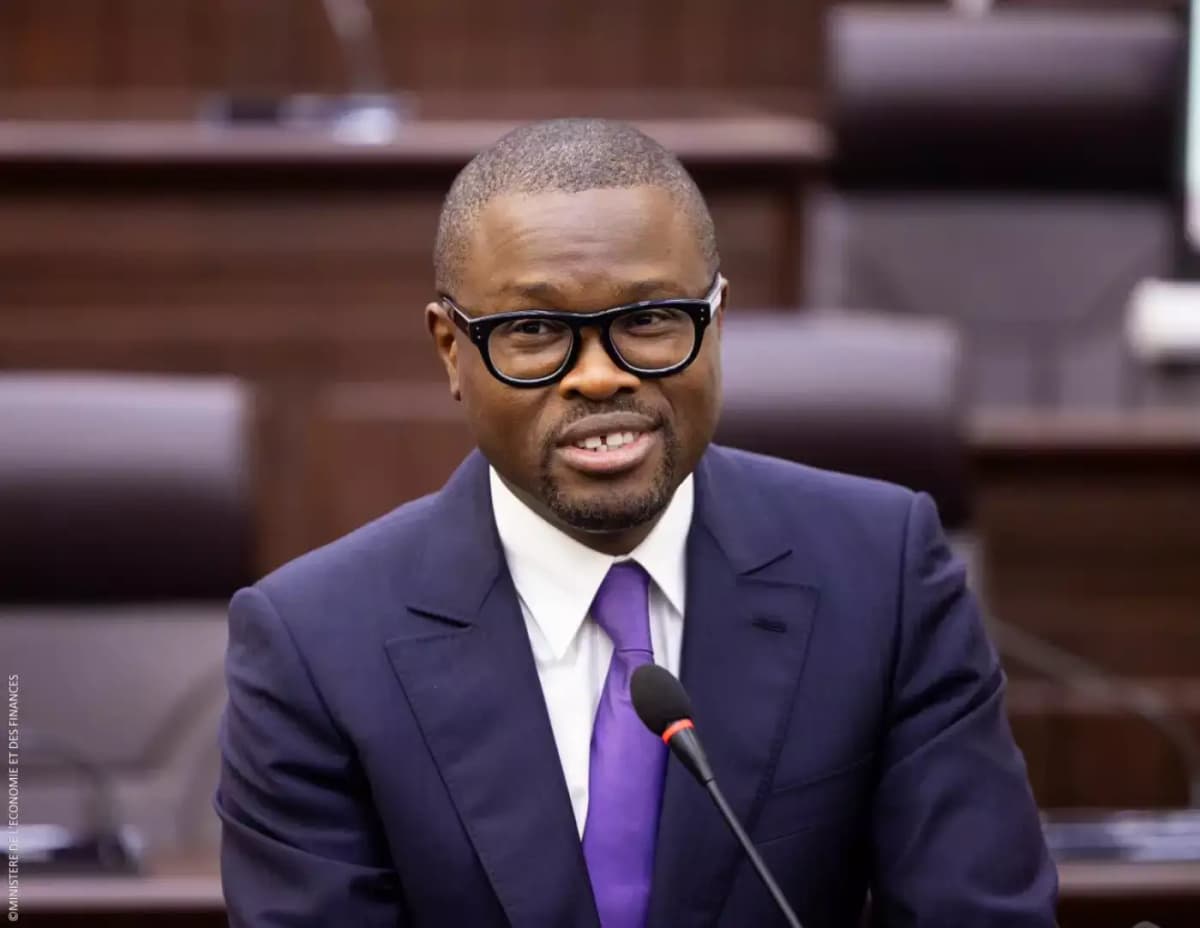
By decree n°2026-358 signed in Cotonou on June 5, 2026, President Romuald Wadagni appointed twelve ministerial advisers to the Presidency. This decision comes two days after the signing of two other texts, decrees n°2026-351 and n°2026-352 of June 3, 2026, which respectively address the responsibilities, organization, and functioning of the College of Ministerial Advisers, as well as defining their areas of intervention.
Read: Benin: Wadagni maintains the posts of ministerial advisers and makes new appointments
This new list overrides the one established by decree n°2025-003 of January 6, 2025, signed under Patrice Talon. However, the number of ministerial advisers remains unchanged. Twelve figures are appointed, with a structure that largely mirrors the major sectors of government action. The same architecture, but with new faces and some significant reappointments. The College of Ministerial Advisers thus navigates through a change of regime while raising new questions about its actual role within the state apparatus.
According to the decree of June 5, Jeanne Adanbiokou Akakpo is appointed ministerial adviser for Infrastructure and Living Environment. She is also designated coordinator of the College. Comlan Patrice Nombime Agbodranfo is appointed for Economic Affairs, Eudoxie Dakpé for Justice and External Relations, Bio Guéra Sacca Kina for Agriculture, Mariam Djaouga Sacca for Family and Social Action, while Ayibatin Jonas Hantan takes on Sports, Culture, Arts, and Traditional Chiefdom.
The list also includes Rosine Dagniho for Health, Rachidi Gbadamassi for Defense and Security, Romaric Ogouwale for Energy, Water and Mines, Nicaise Kotchami Fagnon for SMEs, Employment Promotion, and Vocational Training, Paulin Gbénou for Preschool and Primary Education, as well as Mahamadou Dahouda for Higher Education, Scientific Research, and Technical Training.
A presidential institution with contours still under discussion
The College of Ministerial Advisers is not an institution provided for by the Beninese Constitution. It is based on presidential decrees, which means that its organization, responsibilities, and even its existence are directly linked to the regulatory power of the head of state. In practice, the president can therefore create, modify, or abolish it without the intervention of the National Assembly.
In itself, the presence of advisers to the head of state is not exceptional. In several presidential regimes, heads of state surround themselves with collaborators tasked with analyzing, coordinating, or monitoring certain public policies. What further fuels the debate in Benin is the title of “minister” attributed to these advisers. In Beninese administrative and political tradition, the title of minister generally refers to an identified governmental responsibility exercised in public and subject to discussion before the national representation.
However, the ministerial adviser benefits from the rank and prestige attached to this title without being a full minister. They do not have an autonomous governmental portfolio and are not directly exposed to the same level of political responsibility as a government member. This situation creates a gray area between strategic advice, administrative follow-up, and political influence.
The founding decree of 2024 already indicated the extent of the role of these figures. Ministerial advisers could contribute to defining government policy, monitor the implementation of public policies, provide strategic advice to the President of the Republic, and represent the government in certain bodies, including inter-ministerial meetings. This last responsibility is significant, as it distances the institution from a mere advisory role. An adviser participating in inter-ministerial forums or representing the government can thus have a concrete impact on public action.
The decrees of June 3, 2026, should clarify the exact scope retained by Romuald Wadagni. Their full publication will be crucial to determine whether the new head of state has maintained the model inherited from Patrice Talon, restricted it, or strengthened it.
A structure that aligns with the contours of the government
The new composition of the College shows a clear correspondence with the main ministerial sectors. Infrastructure, economy, justice, foreign relations, agriculture, family, health, defense, security, energy, water, mines, employment, vocational training, and education are covered by ministerial advisers.
This organization presents the image of a parallel sectoral monitoring mechanism placed at the Presidency of the Republic. Each major sector of the government appears to have its counterpart at the presidential palace. The education sector even benefits from two distinct advisers, one for preschool and primary education, the other for higher education, scientific research, and technical training. This choice indicates that the education sector remains regarded as strategic in the conduct of public action.
However, this architecture raises a central question. Are ministerial advisers meant to assist ministers in implementing presidential priorities, or do they constitute a mechanism for direct control of government members’ actions from the Presidency? The line between coordination and surveillance can be thin, especially when advisers have direct access to the head of state and an area of intervention corresponding to that of full ministers.
The case of Higher Education illustrates this ambiguity well. Sèdami Mèdégan Fagla, the current Minister of Higher Education and Scientific Research, had herself been appointed ministerial adviser in this sector under Patrice Talon in December 2024. Having become a full minister in the Wadagni government, she now faces a ministerial adviser charged with the same sectoral field, Mahamadou Dahouda. This turnaround illustrates the institutional tension that this structure can produce.
Reappointments that signify political continuity
The list signed by Romuald Wadagni does not mark a total break with that of Patrice Talon. Several figures are reappointed in identical or similar sectors. Rachidi Gbadamassi retains Defense and Security. Bio Guéra Sacca Kina remains in Agriculture. Ayibatin Jonas Hantan stays in the field of Culture and Sports. Romaric Ogouwale retains Energy, Water, and Mines. Mariam Djaouga Sacca remains positioned in a social sector close to the one she previously occupied.
These reappointments send a signal of continuity. They suggest that the new president deemed it useful to maintain certain profiles in fields considered sensitive or strategic. In the early days of a mandate marked by the desire to implement a new method while preserving some gains from the previous governance, the College of Ministerial Advisers thus appears as an instrument of controlled transition.
The retention of Rachidi Gbadamassi in Defense and Security is particularly noteworthy. A former mayor of Parakou and several times a deputy, he is a well-known political figure from northern Benin with a foothold in a region directly concerned by security issues related to border threats. His reappointment can be interpreted as a desire to keep a political and strategic relay at the Presidency in a sensitive sector.
This appointment comes at a time when the government already includes a delegated minister to the President of the Republic responsible for national defense, Gildas Habib Bignon Agonkan. As a former ambassador of Benin to Niger, he possesses diplomatic experience that is useful in a context where relations between Cotonou and Niamey remain a major issue. The simultaneous presence of a delegated minister for Defense and a ministerial adviser for Defense and Security calls for clarification of roles, particularly regarding coordination, access to information, and operational conduct of presidential priorities.
A debate that is also budgetary and political
The appointment of the twelve ministerial advisers takes place in a particular budgetary context. During the first Council of Ministers on June 3, 2026, the Wadagni government presented a revised budget of 4.086,620 billion FCFA, compared to 3.783,984 billion FCFA in the initial finance law. This overall increase of 8% is accompanied by an announced decrease of 9.8% in personnel expenses, without calling into question the planned recruitments.
The timing of this budgetary announcement alongside the establishment of the new regulatory framework for the College of Ministerial Advisers raises questions. The twelve appointments necessarily represent a burden for the state, even if their exact cost has not yet been publicly detailed. There is not necessarily a contradiction between the announced reduction in personnel expenses and the appointment of ministerial advisers, as savings may be made in other political or administrative posts. But the lack of precise explanation on this point leaves a gray area in government communication.
The debate is also political. Since the formation of the first Wadagni government, voices have been raised within the presidential majority to criticize the low representation of political profiles in an executive deemed very technocratic. Members and leaders of the UP le Renouveau and the Republican Bloc have expressed their frustration with the composition of the government team. In this context, the College of Ministerial Advisers can be seen as a space for political compensation, allowing certain figures to be associated with governance without changing the formal structure of the government.
This interpretation remains a hypothesis, but it is supported by the very wording of the decree of June 5. Its article 3 provides that other ministerial advisers may be appointed as needed. Therefore, the number twelve is not a ceiling. Further appointments may occur subsequently by simple presidential decree, without the need for deliberative approval.
This open clause is undoubtedly one of the most important elements of the text. It provides the head of state with significant political and administrative flexibility. It may allow the adjustment of the setup to the priorities of public action, but also expand the circle of figures associated with presidential governance.


Comments
Comments load when you reach this section.