
Benin: “We treat first, we discuss later,” Wadagni takes action for vital emergencies
Only ten days after his inauguration, Romuald Wadagni took a strong first step of his mandate in the health sector. The government decided to allocate one billion CFA francs to public hospitals to allow for the immediate treatment of vital emergencies, without prior payment or administrative blockages.

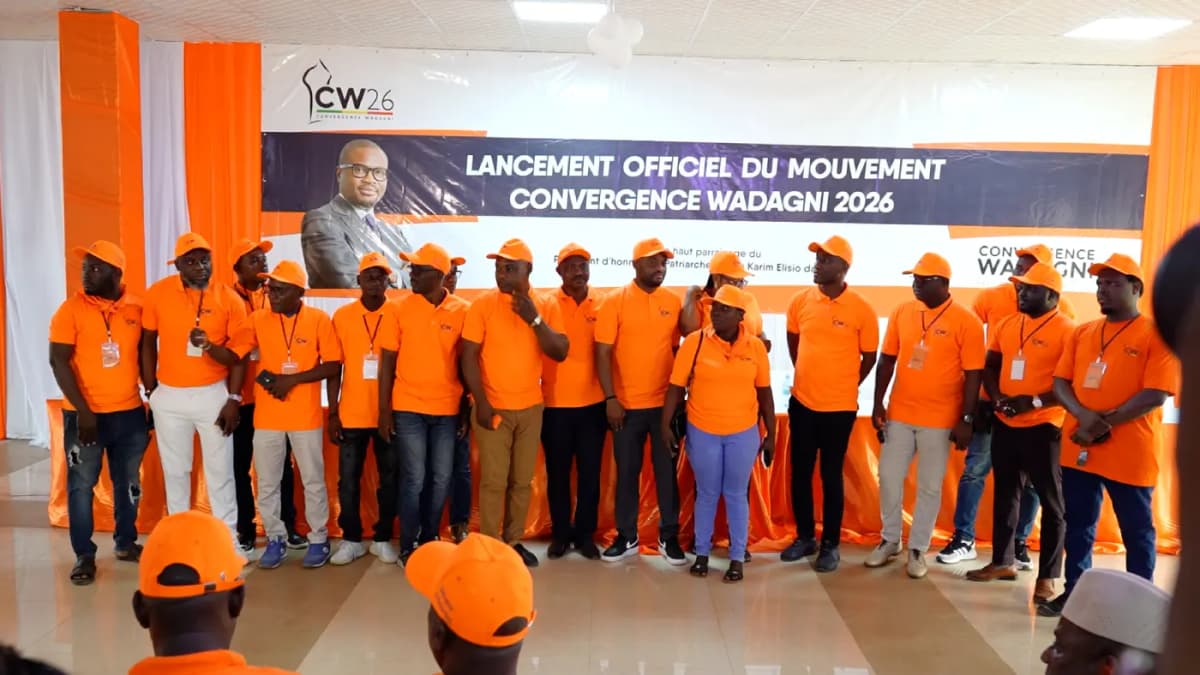
Ten days after his inauguration, President Romuald Wadagni translated the most memorable campaign promise of his social project, presented at the Palais des Congrès in Cotonou on March 21, 2026, into an administrative act. The Council of Ministers on Tuesday, June 3, decided to allocate an exceptional grant of one billion CFA francs (approximately 1.5 million euros) to public hospitals, enabling them to build up the necessary stock of inputs for the immediate treatment of vital emergencies without any prior payment conditions.
During the campaign, Wadagni described the reality of emergencies in these terms: “Today, when you have a vital emergency and you go to hospitals, they demand that you pay first. Even the administrative formalities to see who you are can make you lose your life.” He stated the commitment directly: “From now on, systematically and automatically, for vital emergencies, you will be treated first. There will no longer be any deaths in Benin related to waiting for formalities, waiting to pay, waiting to bring the bill, no.”
The decision of June 3 translates this commitment into a concrete operational mechanism. Across the entire national territory, public health facilities must be capable of receiving and treating, without delay, any patient whose life is at risk, regardless of their ability to pay or administrative formalities. The allocated billion will serve as the initial funding for the necessary stocks—medications, consumables, resuscitation equipment—so that healthcare teams can act as soon as the patient arrives without being hindered by lack of supplies.
A promise at the heart of the social project
The systematic management of vital emergencies was included in Wadagni’s official program published on his campaign site wadagni.bj as one of the “major innovations” in the health sector, alongside the electronic patient file, the strengthening of ambulances, and the construction of an international hospital center in Parakou. The chosen model is “deferred payment”: the patient is treated first, and payment follows according to their capacity.
This measure addresses a reality documented by studies on access to healthcare in Benin: the refusal of treatment due to insufficient prior payment in public facilities is an identified factor of preventable deaths by the World Health Organization in its assessments of the Beninese healthcare system. The rate of universal health coverage in Benin remains among the lowest in the sub-region, with a significant portion of the population having no access to any health insurance mechanism.
The sequence of the mandate in terms of health
The allocation of one billion is a starting measure, not a sustainable funding solution. Its inclusion in a sustainable policy will require a revision of the reception protocols in health facilities, training personnel on new procedures, and implementing the deferred recovery mechanism announced during the campaign. These tasks fall under the Ministry of Health led by Ibrahima Sy, who has been retained in his position since the Sonko government.
Among the other commitments of the health program are: the deployment of 250 ambulances, 2 MRI machines, and 7 scanners across the territory, the widespread use of an electronic patient file, and the creation of a social SAMU. The decision on June 3 represents the first measurable realization of the seven-year term in this sector.
Related Articles
 Ormuz against blockade: Washington and Tehran discuss a phased agreement
 Senegal: DAF acknowledges cyberattack, assures no data was compromised
 Benin: ORANA launches industrial production of orange and pineapple concentrates in Za-KpotaOfficial: Marcellin Bocovè elected president of the Beninese Football Federation
Comments
Comments load when you reach this section.