
Benin: unanimously adopted, what the revised finance law 2026 changes
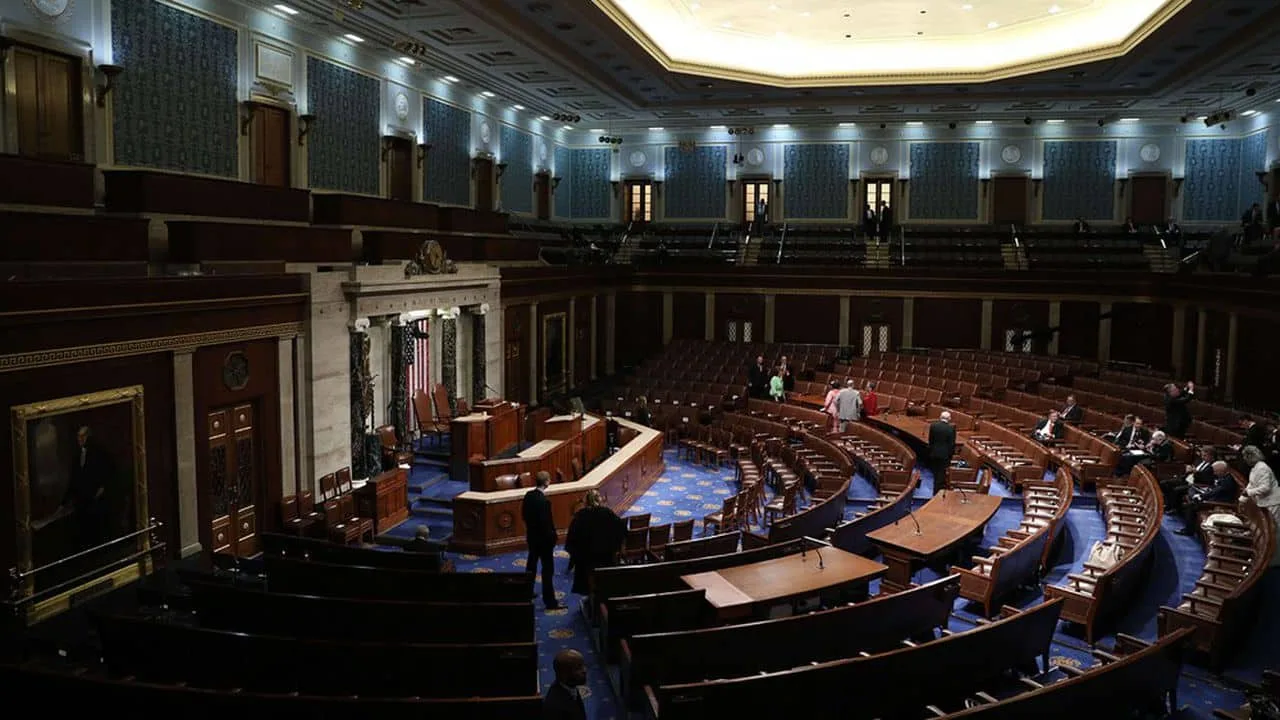
The National Assembly of Benin adopted on Friday, in a plenary session at the Governor’s Palace in Porto-Novo, the amending finance law for the management of 2026. The vote, secured unanimously by the deputies present and represented, sanctions a revised budget up by 8%, amounting to over 4,148 billion CFA francs compared to 3,700 billion initially planned in the original finance law.


The budget collective comes at the beginning of the term of President Romuald Wadagni and reflects the first orientations of his government. It primarily aims to provide the newly created or restructured ministries with the necessary means to carry out their missions, while intensifying interventions in social and productive sectors.
The economic growth rate is maintained at 7.5%, continuing the strong performances recorded over the last decade. The overall budget deficit is set at 487 billion CFA francs, or 3.1% of GDP, a level that the government presents as compatible with Benin’s community commitments within the UEMOA.
Capital expenditures reach 1,572 billion CFA francs in commitment authorizations, an increase of 8.5% compared to the initial law. Ordinary expenditures for ministries are set at 1,777 billion CFA francs. The ceiling for jobs paid by the state is maintained at 102,740 full-time equivalents.
Social measures at the heart of the text
Several provisions reflect the government’s priority in favor of purchasing power and access to basic services. Tuition fees are made free for girls in general secondary education. An electricity and clean water connection program is extended to health centers. Coverage for vital emergencies without prepayment is included in the budget, as well as strengthening the local social safety net and measures for vulnerable young children.
The law also provides for increased support for the agricultural sector, with 90 billion CFA francs in subsidies, and measures for street children, especially in the northern and border areas.
A modernized tax system
On the fiscal front, the adopted text introduces several structural measures. The most commented on in commission concerns the taxation of undistributed distributable profits. Companies that do not reinvest their profits within three years of their realization will be subject to taxation. To encourage voluntary compliance, a reduced rate of 7.5% will apply to regularized past situations before December 31, 2026. After this period, the standard rate will apply, along with penalties.
Furthermore, digital platforms – hosting, online sales, money transfers – fall under withholding tax, imposing obligations on platform operators. Capital gains from the sale of shares in Beninese companies become taxable, regardless of the seller’s residence. The on-site tax verification timeline is reduced from three to two months for companies with annual revenue below two billion CFA francs. The digitalization of verification notices and procedural acts is established with full legal effect.
Only one amendment was adopted in the commission, initiated by Deputy Gérard Benoshi, to strengthen the coherence of the provisions related to this digitalization. The Ministry of Economy and Finance had given a favorable opinion on it.
Special accounts abolished, one account renamed
The law also proceeds with a cleaning of the special allocation accounts of the Treasury. Three accounts are abolished: the Financial Management Modernization Fund, the Arts and Culture Development Fund, and the Sports Development Fund. Their available balances are transferred to the general budget.
The account “Disaster Prevention and Management” is renamed “Disaster Prevention, Management, and Vulnerability” and will be funded, for 2026, by 56.2% of mobile telephony fees. Finally, the criteria for allocating financial contributions from the state to local authorities now integrate the adaptation and mitigation dimension concerning the effects of climate change.
A vigilant Economic and Social Council and a swift plenary debate
Consulted in accordance with constitutional provisions, the Economic and Social Council issued a favorable opinion while making fourteen recommendations. The institution notably calls on the government to define a plan to return the deficit below 3% of GDP by 2027-2029, to publish semi-annual reports on the viability of public debt, to establish geolocalized digital traceability for agricultural subsidies, and to conduct semi-annual budget execution reviews in the presence of the CES and the Court of Auditors.
The plenary debates were brief, with the two parliamentary groups – the Republican Bloc and the Progressive Union for Renewal – agreeing to limit their interventions to fifteen minutes each. Deputies from both sides generally supported the text, praising the continuity with the economic trajectory initiated under the presidency of Patrice Talon, while calling for heightened vigilance in the execution of expenditures and the monitoring of social measures.
The finance committee, seized in-depth, transmitted four recommendations to the executive: ensuring follow-up on street children with a priority given to northern and border areas, clarifying and popularizing the vital emergency coverage program, extending school social measures to university works, and ensuring equitable distribution of investments throughout the national territory.



Comments
Comments load when you reach this section.