
Benin: the challenges facing the tenth fully homogeneous legislature
Following the legislative elections held on January 11, 2026, Benin’s National Assembly will be renewed in a matter of weeks. The 10th legislature will be installed in a political context marked by strong institutional expectations and multiple challenges.
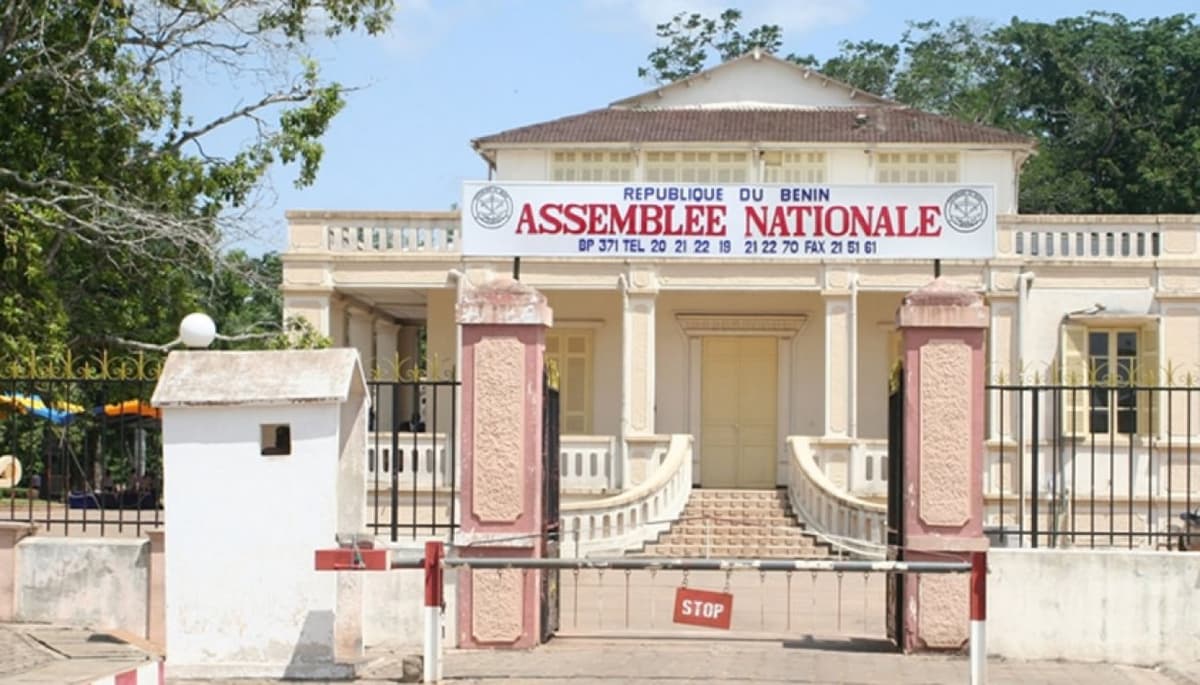
The election, which gave a clear majority to the parties backing the current government, assigns this parliament a central role in the country’s upcoming political and institutional era.
The parliamentary configuration resulting from this, largely dominated by parties aligned with the presidential camp, places the institution at the heart of a decisive moment for Benin’s democratic governance.
Beyond the distribution of seats, what is now expected is the Parliament’s capacity to fully assume its constitutional functions.
The National Assembly is called to legislate effectively, but also to exercise credible and rigorous oversight of the government’s actions. This dual mission constitutes the first maturity test for the new term.
The question of legislative work is immediately pressing. The coming years must be marked by the examination of structural texts touching on the economy, local governance, social justice, and the modernization of the State.
In this framework, majority discipline cannot substitute for the quality of parliamentary debate. The robustness of the laws passed will depend on the ability of MPs to go beyond partisan reflexes and to prioritize the public interest.
Another central issue concerns the Assembly’s role as an institutional counterweight. In a political landscape that is not very pluralistic within the chamber, the temptation of a parliament that merely goes along is real. However, oversight of the executive, evaluation of public policies, and accountability are indispensable pillars of the rule of law.
The credibility of the tenth legislature will be measured by its willingness not to renounce these prerogatives. This requirement is reinforced by recent institutional developments. The constitutional and electoral adjustments made in recent years have altered the balance of power and the national political calendar.
In this context, Parliament must play a strategic interface role, able to ensure the coherence of reforms while maintaining a clear and stable democratic framework.
The question of representativeness also remains in the background. The relatively low turnout recorded in the election raises questions about the link between citizens and their representatives. The tenth legislature will need to mend this link, notably through more visible parliamentary work, increased on-the-ground presence, and a better pedagogy of legislative action.
Finally, the partial renewal of the chamber, with the arrival of new profiles alongside experienced figures, offers an opportunity to recompose parliamentary practices. It remains to be seen that this diversity translates into a rise in collective competence and an institutional culture based on rigor, transparency, and accountability.
The tenth legislature thus moves forward on a narrow line. It enjoys a comfortable majority, but this numerical strength also presents a challenge. For in a democracy, the legislative power is not judged by its docility, but by its ability to produce solid law, to oversee without complacency, and to faithfully represent the Nation.
The constitutional reform adopted in 2025, which changes the length of mandates and also introduces new elements into the balance of institutions, adds an additional dimension to the obligations of the 10th legislature. Parliament will need to engage in the necessary adjustments and clarifications to ensure the coherence of the institutional framework and to respond to the aspirations of political actors and civil society.
The other challenge of the tenth legislature is to dust off the proposed general amnesty bills for political prisoners such as Joël Aïvo, Reckya Madougou and others, as well as the return of exiles once the political truce is activated.
All of these challenges underscore the importance of constructive dialogue between political parties, state institutions, and civil society in order to make this new legislature a driver of stability, growth, and democratic strengthening in Benin.
Related Articles
 Benin: Éric Houndété explains why he remains the LD party’s interim president.
 Benin: Ouassangari contests Houndété’s retention as interim president of the Democrats.
 2026 presidential election: Romuald Wadagni’s policy platform praised for its tone of openness
 Benin: Daniel Edah officially launches the creation of his party « Nous le Ferons ».