
Benin: the ban on exporting raw cashew nuts “struggles to produce its effects”
The ban on exporting raw cashew nuts has not yet produced the expected industrial effects in Benin, according to expert Jim Fitzpatrick. Despite the aim to stimulate local processing, a large portion of the harvest continues to leave through neighboring countries, revealing the limitations of a policy still facing smuggling, insufficient funding of factories, and competition from foreign buyers.

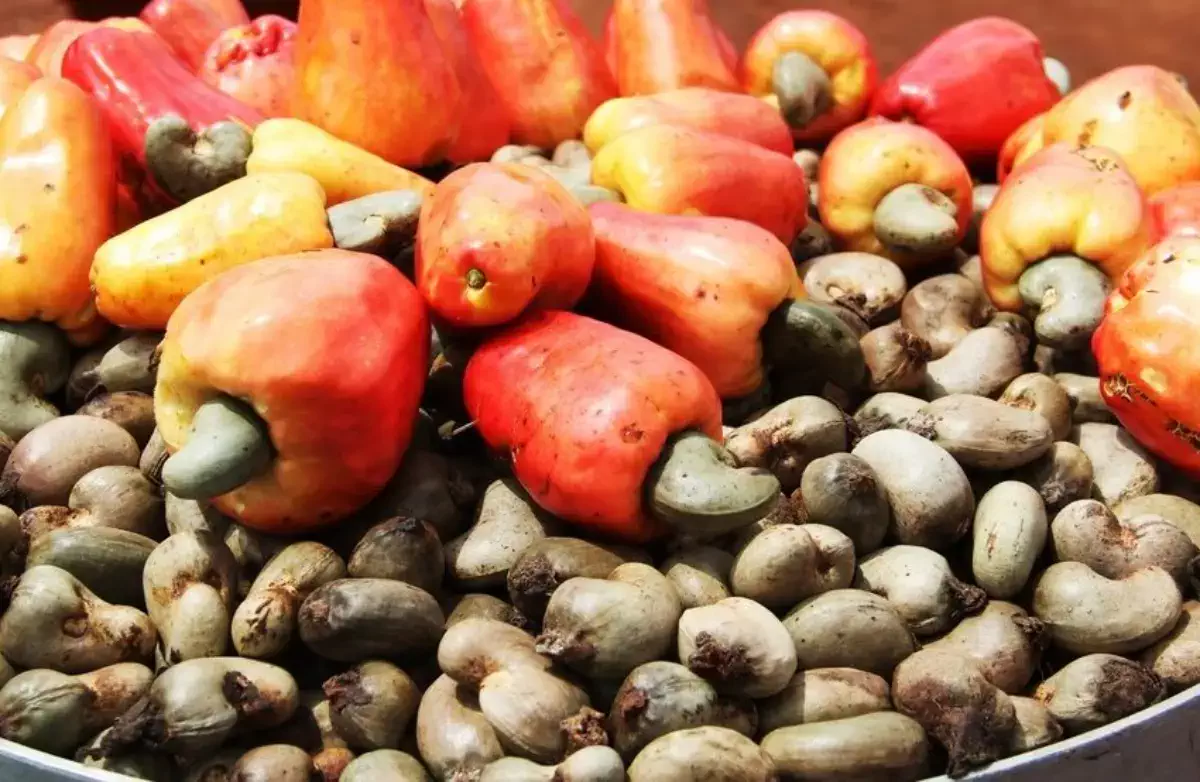
The Beninese ban on exporting raw cashew nuts, effective since April 2024, has not yet led to the local processing industry it was meant to generate, Jim Fitzpatrick, a consultant specializing in the global nut market, stated in an interview with Agency Ecofin. He argues that a significant part of the harvest continues to leave the country through neighboring ports.
The measure stems from a decree issued in March 2022, which came into effect on April 1, 2024, prohibiting the export of raw cashew nuts as well as soybean grains to reserve the raw material for local processing units, particularly in the Glo-Djigbé Industrial Zone (GDIZ), located in the Zè municipality north of Cotonou. A derogatory regime allows certain licensed exporters to ship the product through the port, once the needs of local processors are met. Cashew nuts rank as Benin’s second export product after cotton.
According to Jim Fitzpatrick, the installed capacities are significant but the country does not absorb the entire harvest, which he estimates to be between 170,000 and 180,000 tons per year, with more recent official data indicating production in the range of 200,000 to 225,000 tons. The expert claims that less than 30% of last year’s harvest was processed locally, with the remainder being redirected to Togo or Nigeria, then re-labeled and sold in India as cashew nuts of Beninese origin. “Nearly 70% of the harvest was diverted to Togo or Nigeria,” he said.
The consultant believes that the ban has criminalized part of the trade and poses a risk to producers, who might abandon cashews for other crops if prices from the farms were to drop. He adds that deploying military forces along the border has not put an end to smuggling. This circumvention via the ports of Lomé and Nigeria has been well documented in the regional supply chain.
A Policy Without Equal in the Region
Benin is the only country in West Africa that completely bans the export of raw nuts. Other suppliers impose export taxes or allocate priority supply periods to local factories. Ivory Coast, the leading regional processor, handled 600,000 tons in 2025, accounting for nearly 82% of the almonds produced in West Africa, compared to 15,000 tons for Ghana.
However, the expert’s observations need to be nuanced. According to estimates from the N’kalô advisory service, processing increased by 51% in West Africa in 2025, with Benin being among the countries that raised their volumes, doubling its processed quantities within the year. Some observers believe it is still too early to assess the impact of a measure that has been in effect for just over two years.
The GDIZ, managed by Sipi-Bénin in partnership with ARISE IIP, hosts five units with a capacity of at least 100,000 tons per year, aiming to extend to 200,000 tons. At the national level, the International Cashew Council reported an installed capacity of 130,800 tons for 2023, with only 17,700 tons actually processed into nuts that year, representing about 14% of capacity.
The low usage rate is attributed by industry players to difficulties in accessing financing for processors and competition from foreign buyers. Léopold Lokossou, president of the Cashew Industry Interprofessional Organization, defended the ban, recalling that several factories had to close due to lack of raw materials and that the measure aims to secure their supply and create jobs.
For the 2024-2025 season, the government anticipated a harvest of 225,000 tons, an increase of 11.9%, and set the purchase price for producers at 375 FCFA per kilogram, about 0.57 euro, compared to 425 FCFA, or nearly 0.65 euro, in Ivory Coast.


Comments
Comments load when you reach this section.