
Benin: Pascal Todjinou worries about the extent of the new Senate’s powers
Installed on July 30 in Porto-Novo, the Beninese Senate continues to raise questions about its role and the scope of its prerogatives. Guest on the Crystal News program “Grand Angle,” former union leader Pascal Todjinou focused particularly on the sanctioning powers of the new chamber and their possible consequences on union action.

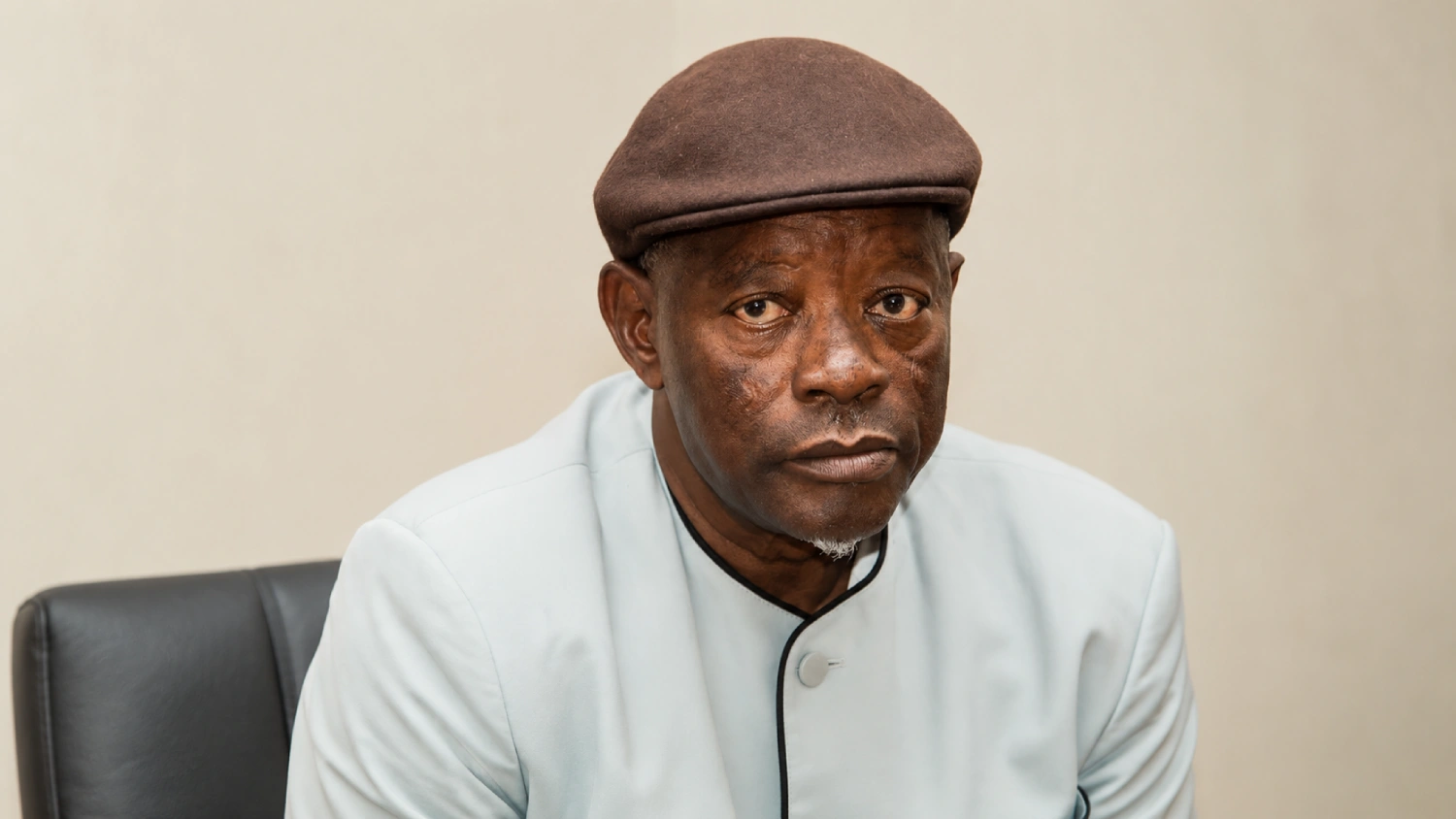
The Beninese Senate has not yet finished sparking debate. A few weeks after its official installation, questions now focus less on the existence of this new institution and more on the exact extent of its powers.
Guest on Sunday, August 30, 2026, on the Crystal News program “Grand Angle,” Pascal Todjinou offered a critical reading of the internal regulations of the upper chamber.
The former general secretary of the General Confederation of Workers of Benin (CGTB) says he discovered a particularly dense text, composed of 103 articles, some provisions of which, in his view, deserve to be better explained to the public.
From opposition in the Senate to the question of its powers
Pascal Todjinou recalls that he was not originally in favor of creating the Senate. However, he says he has since changed his view and now recognizes the institution’s usefulness, particularly regarding its constitutional mission to regulate political life.
But this recognition stops where, in his opinion, the powers granted to senators, which he considers particularly significant, begin. The former unionist notably believes that the Senate now has sanctioning power that deserves special attention. He mentions the institution’s ability to “punish” and “strip” certain political actors, with exceptions notably concerning the President of the Republic, the President of the National Assembly, and the President of the Economic and Social Council.
« You see that power! The Constitutional Court did not have that “, he said during the program.
This comparison leads him to ask a broader question: what place remains for the Constitutional Court in this new institutional balance?
“What is the use of the Constitutional Court?”
This is probably the strongest question of his intervention.
« I wonder today about the usefulness of the Constitutional Court with the advent of the Senate”, declared Pascal Todjinou.
The question deserves to be put back into the context of the functioning of the new institutional framework. The Senate was not designed as a simple additional legislative chamber. The revised Constitution notably assigns it a mission to regulate political life and safeguard several fundamental interests of the Republic.
The debate now focuses on the articulation between these new prerogatives and those of the institutions that already existed.
For Pascal Todjinou, this articulation becomes particularly sensitive when the Senate’s powers can affect political actors or the exercise of certain public freedoms.
Unionism, another subject of concern
The former union leader then broadens his criticism to an issue that clearly matters to him: the relationship between the Senate’s powers and trade unions. For him, the union movement should not be equated with partisan political activity.
Unionism, he recalls, contributes to democratic pluralism by allowing workers to express their demands and highlight dysfunctions in labor relations.
« Union action […] participates in democracy, participates in plurality of opinion“, he explained.
That is precisely why he finds any provision that could place union activity in the same category as political activity worrying.
« When it is said that union activities have also been equated with political activities, one can only conclude that it is total confusion “, he believes.
An institutional debate now
Pascal Todjinou’s statement comes as the Senate gradually enters its operational phase. The first 25 senators were officially installed on July 30, 2026, in Porto-Novo. The internal regulations were then adopted and submitted for conformity review by the Constitutional Court before the institution’s effective start of operations.
His intervention thus helps shift the debate. The question is no longer just why Benin established a Senate, but also to understand how far this institution can go in exercising its new prerogatives.
A question likely to remain at the center of public discussions in the coming months, as the new Beninese bicameralism begins to take shape.



Comments
Comments load when you reach this section.