
Benin: opposition demands parliamentary investigation following Paulin Akponna’s revelations
The declarations of Paulin Akponna, then Minister of Energy, Water and Mines, about an alleged siphoning off of billions of CFA francs within the Ministry of Energy, Water and Mines continue to shake up the Beninese political sphere. This Wednesday, June 25, 2025, twelve deputies from the main opposition party, Les Démocrates, submitted a resolution in Parliament aiming at the creation of a parliamentary investigation commission. The goal is to shed light on the management of public funds in a strategic sector, following the remarks made a few days earlier by the former minister during a visit to Parakou.
While visiting the North, Paulin Akponna publicly condemned what he called a “crime against the Republic”. Entire neighborhoods in Parakou were deprived of water and electricity, even though tens of billions had been mobilized by the state since 2016 to solve these problems. The minister pointed the finger at the “siphoners of the national budget”, without naming names, but implying that political officials who were in charge of this sector have taken the resources. This statement implicitly targets former minister Séidou Adambi, also a member of the Republican Bloc.
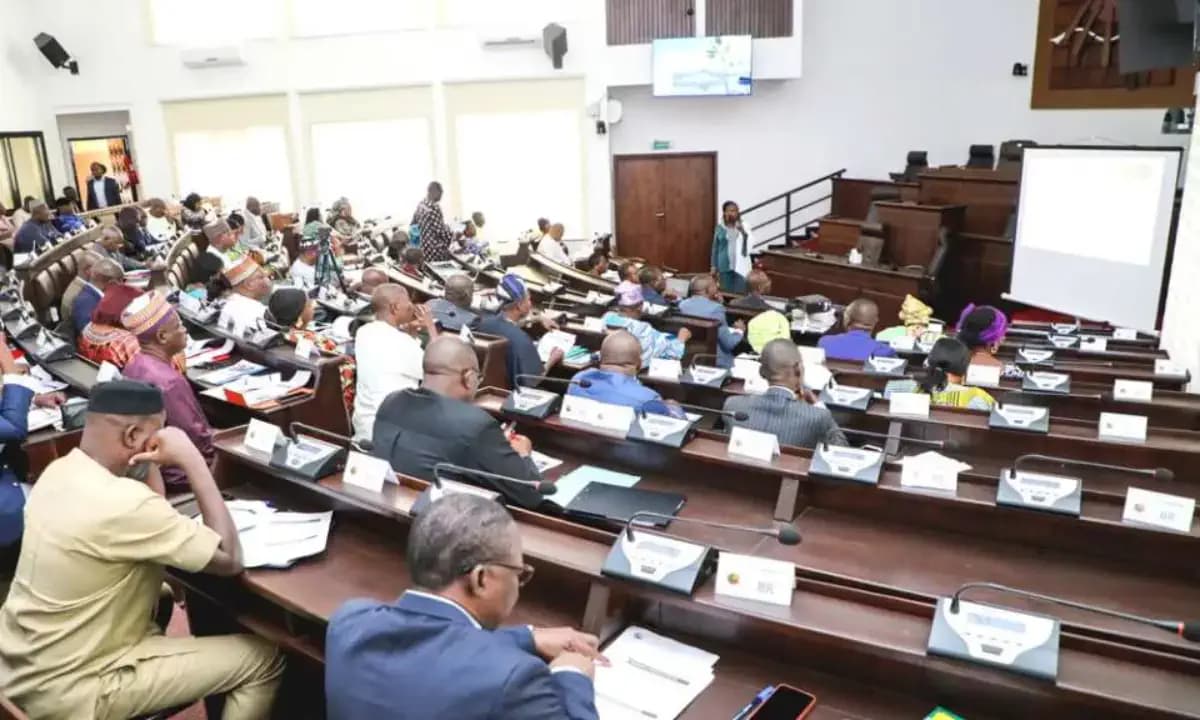
In the face of these serious declarations coming from a member of the power structure itself, Les Démocrates quickly reacted. Led by their leader, Nourénou Atchadé, the opposition deputies submitted a resolution proposal for the establishment of a parliamentary investigation commission. This commission, composed of “competent and impartial” parliamentarians, would be in charge of thoroughly examining the conditions of executing water and electricity projects in Parakou, and auditing the use of related funds. The commission’s work would span over three months, culminating in a report to be presented in a plenary session.
For the opposition, this is not just about exploiting a gap in government discourse, but answering a crucial question: where did the public money intended to improve the living conditions of the population go?
A Discomfort within the Republican Bloc
Politically, this affair reveals crossfire within the majority. By directly attacking those from his own side, Paulin Akponna sets off a shockwave. For Séidou Adambi, the former Minister in charge of the incriminated sector, is a prominent figure in the Republican Bloc, as is Akponna himself. This public charge hints at an internal settling of scores, in a context where territorial and leadership rivalries are stirring up the presidential movement as elections loom.
The question becomes particularly acute. Was Paulin Akponna speaking as a minister of the Republic or as a political activist crusading against his internal opponents? Officially, he wore his minister-in-charge-of-energy hat, but his explicit references to the Republican Bloc and the presumed ambitions of certain local players suggest a calculated political move. A way of reminding everyone that the party should no longer serve as a shield for those betraying their republican mission.
The minister’s remarks immediately set the internet and political circles aflame. While some see the beginnings of a state scandal comparable to the PPEA II affair under Boni Yayi, others interpret it as targeted discrediting. Online commentators and analysts suggest that if Akponna has evidence of embezzlement, he should immediately order or demand an independent audit rather than settle for public denunciations.
Within the Republican Bloc, the silence is becoming embarrassing. If the party supports Akponna, it risks opening up a flaw against one of its historical figures. If it disowns him, it weakens its own discourse of rigor and exemplarity, a pillar of its communication since Patrice Talon came to power.
A Test for the Credibility of the Anti-Corruption Fight
Since 2016, President Talon has built part of his political legitimacy on the fight against corruption, a break from the transgressions of the past. But the affair brought to light by Akponna raises an awkward question. Has the Rupture succeeded in securing the use of public funds, or are we witnessing the repetition of the same behaviors, under a different form? It should be remembered that the PPEA II scandal broke out in 2015 following the discovery of massive embezzlement of funds intended for drinking water, leading to the suspension of Dutch aid. At the time, the judicial aftermath was laborious and did not lead to any convictions.
If the current accusations are not followed by investigations and concrete sanctions, the power could be accused of double standards, especially if the alleged perpetrators belong to the inner circle. The adoption of the resolution submitted by the opposition would therefore be a test of transparency for the Parliament, but also a consistency challenge for the Talon regime.
Related Articles
 Benin: Éric Houndété explains why he remains the LD party’s interim president.
 Benin: Ouassangari contests Houndété’s retention as interim president of the Democrats.
 2026 presidential election: Romuald Wadagni’s policy platform praised for its tone of openness
 Benin: Daniel Edah officially launches the creation of his party « Nous le Ferons ».