
Benin: end of the Patrice Talon era, beginning of Romuald Wadagni’s term
Romuald Wadagni will take the oath this Sunday at the Palais des Congrès in Cotonou, becoming the fifth president of the Republic of Benin and officially succeeding Patrice Talon after ten years in power. Former Minister of State for Economy and Finance, he will inherit a country engaged in deep institutional, economic, and security reforms, with a mandate extended to seven years by the constitutional amendment of 2025.

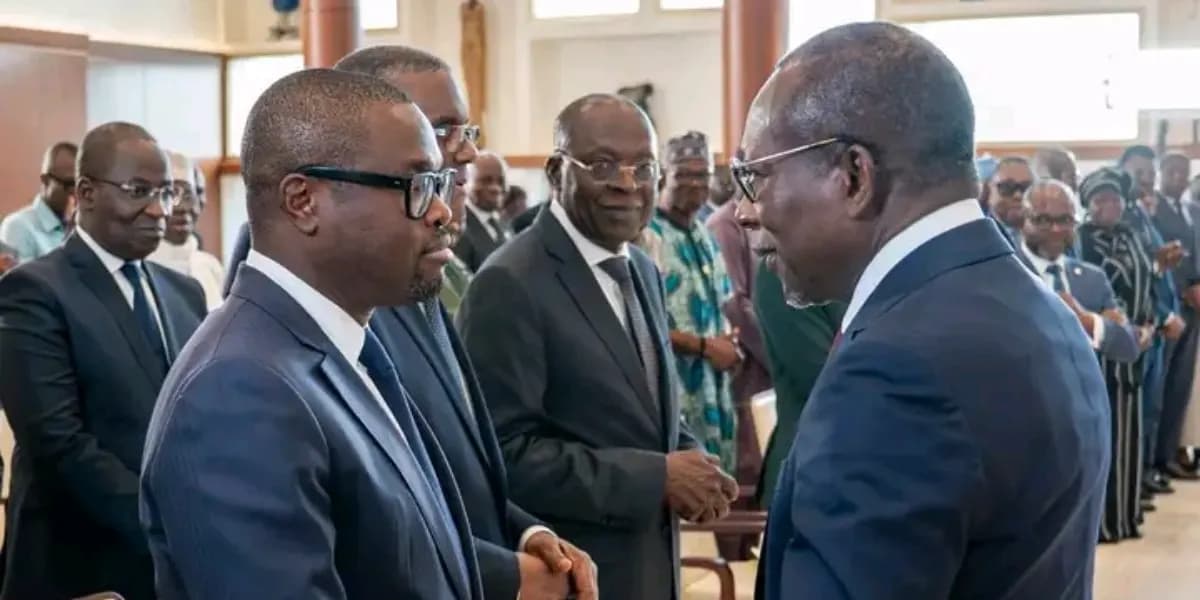
In Benin, Romuald Wadagni will take the oath this Sunday, May 24, 2026, at the Palais des Congrès in Cotonou in the presence of around 6,000 guests, becoming the fifth president of the Republic of Benin. The president of the Constitutional Court, Dorothée Sossa, will receive his oath before he receives from the hands of Vice President Mariam Chabi Talata the Grand Collar of Grand Master of the National Order of Benin. Before this, Patrice Talon will welcome him at the Palace of the Marina for a brief meeting, after which he will leave the presidential building, marking the end of his ten-year presidency.
Wadagni, born on June 20, 1976, in Lokossa in the Mono department, was until his election Minister of State for Economy, Finance, and Cooperation, a position he held since Talon’s first government in April 2016. Trained in management at Grenoble École de Management, he worked for seventeen years at the audit and consulting firm Deloitte, first in France and then in the United States, before entering Benin’s political life. His running mate Mariam Chabi Talata, Vice President since May 2021, is retained in her position.
Wadagni won the presidential election on April 12, 2026, with 94.05% of the votes cast, or 4,252,347 votes, against 5.95% for his only opponent, Paul Hounkpè, candidate of the Cauris Forces for an Emerging Benin. The voter turnout was 58.75%, up from 50.63% recorded in the 2021 presidential election. Paul Hounkpè acknowledged his defeat on the evening of the election, before the announcement of the provisional results by the Independent National Electoral Commission. The ECOWAS observation mission praised the “good organization of the vote.”
The vote was held in a limited political landscape: the candidate from the main opposition party, Les Démocrates, Renaud Agbodjo, could not validate his candidacy due to the strict sponsorship conditions imposed by the electoral law. The constitutional amendment of November 2025 also extended the presidential term from five to seven years, bringing Wadagni’s term to 2033.
Talon, ten years of reforms and a constitutional exit
Patrice Talon leaves power at the end of his second and final term, in accordance with the limitation set out in the revised Constitution of 2019 that he himself had enacted. In his farewell speech to the nation, he highlighted the reforms initiated since 2016 — overhauling the electoral system, cleaning up public finances, modernizing the Cotonou port, the Bénin Révélé program in tourism — while acknowledging that the journey “has not been without difficulties.”
Talon, 65, a magnate in the cotton sector before assuming the presidency, will not leave public life. The constitutional revision of November 2025 created a Senate of which former presidents are ex officio members. According to several political analysts, Talon could become its president, allowing him to influence the regulation of political life without holding executive functions.
The new head of state inherits an economy whose growth was assessed at 6.4% in 2025 by the World Bank, but also faces persistent security pressures in the north of the country, near Burkina Faso and Niger, regions affected by incursions from armed groups since 2022. The establishment of the Senate, scheduled for the months following the inauguration, will be one of the new president’s first institutional challenges.
A designated successor who owes nothing to Talon
The uniqueness of Wadagni’s profile in the succession lies in his trajectory within the state apparatus. Unanimously designated by the Progressive Union for Renewal (UPR) and the Republican Bloc during a restricted meeting at Talon’s residence on the night of August 30-31, 2025, he is not, however, presented as a member of the outgoing president’s circle. According to Soudan, Talon “had the intelligence to choose a successor who was a brilliant executor of his economic policy, but to whom he owes nothing.”
The former president Nicéphore Soglo also congratulated the choice of Wadagni, believing that he was the most qualified to “continue the work of the outgoing president.” Ousmane Batoko, former president of the Supreme Court and a critical voice of Talon’s regime, stated that he believes the new president “will do better than his predecessor.” Wadagni will be the first Beninese president to leave his position as Minister of State to take up the presidential role: an economist and auditor by training, he led the most sensitive negotiations of the decade — sovereign debt, adjustment programs, cooperation agreements with China in 2023 — from his ministry.
Related Articles
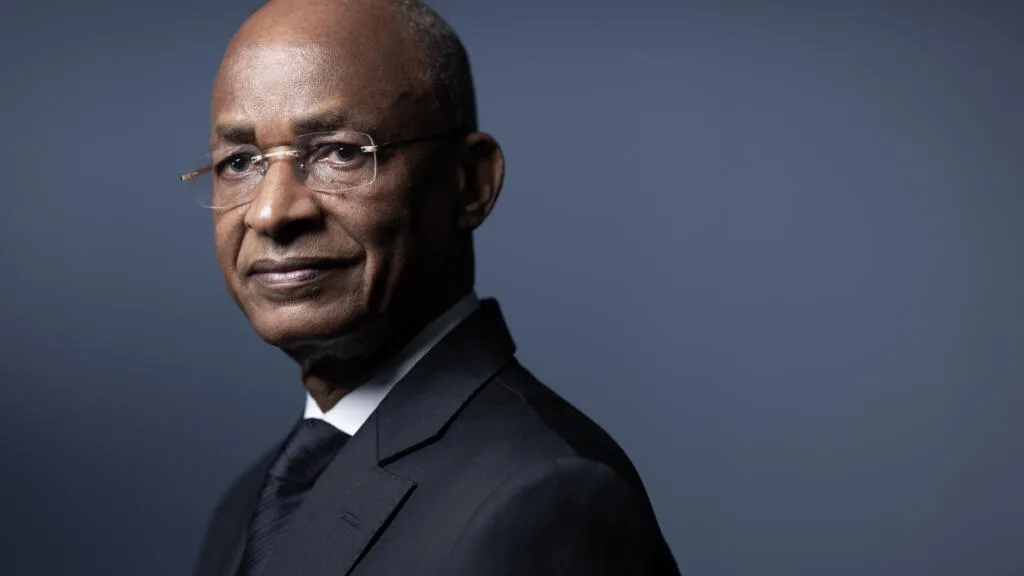 Guinea: Cellou Dalein claims his passport has been revoked, blocking his departure for the UN
 Nigeria: 61 public officials linked to $271 million in assets in the United States
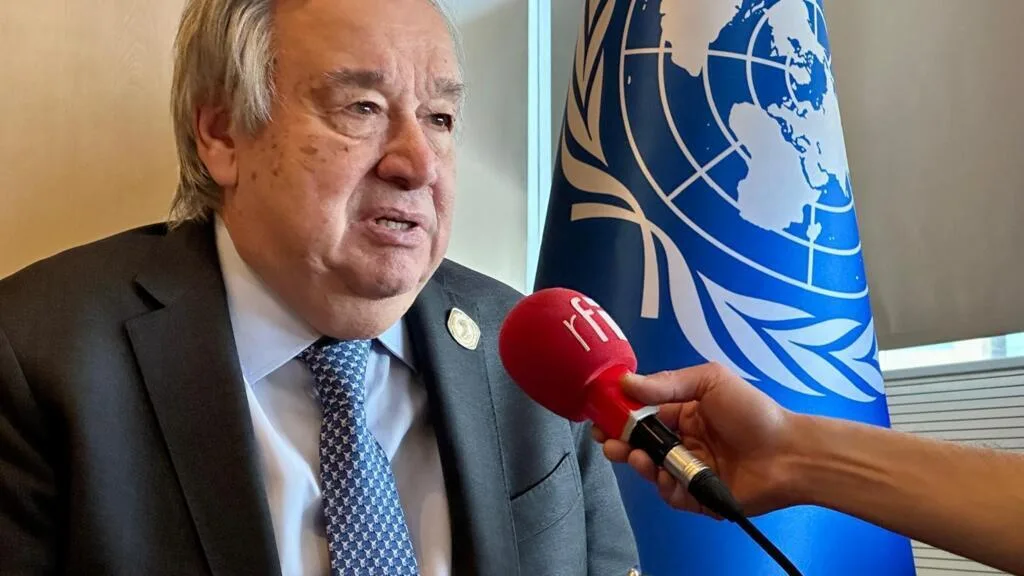 At the UN, Guterres calls for permanent seats for Africa and denounces injustice
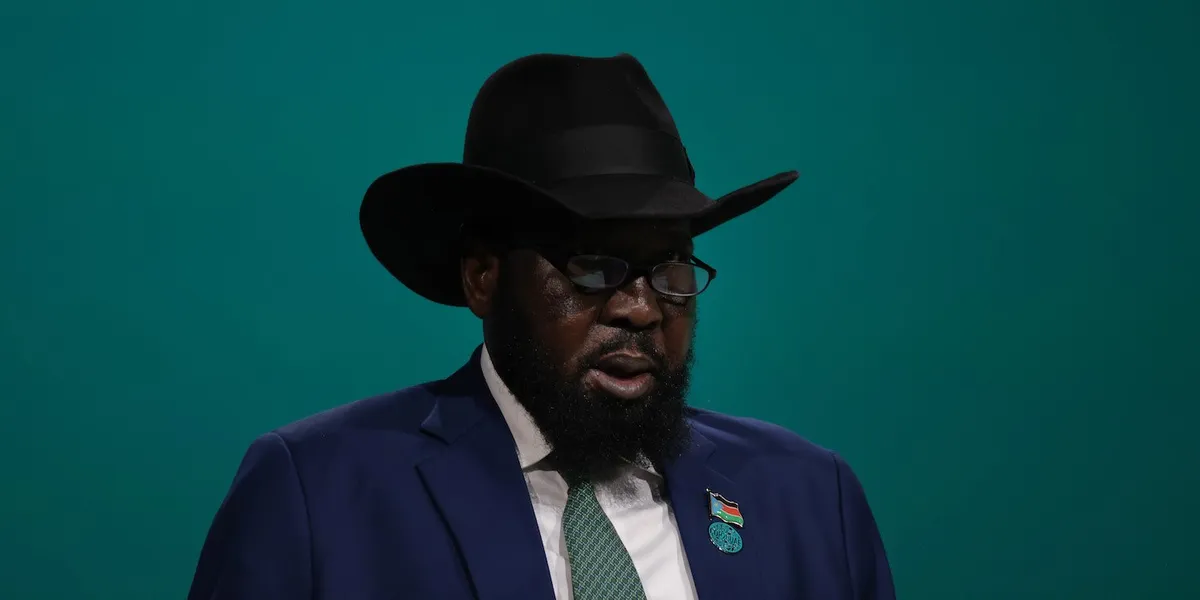 South Sudan: Kiir dissolves government, five vice presidents removed ahead of elections
Comments
Comments load when you reach this section.