
Benin: details on the “we treat first” system and the free schooling for girls
The Wadagni government clarified the implementation mode for two major social measures adopted during the Council of Ministers on June 3. Vital emergencies will now be addressed without prior payment in public hospitals, while tuition fees will be waived for all girls in public secondary education across the territory starting from the 2026-2027 school year.

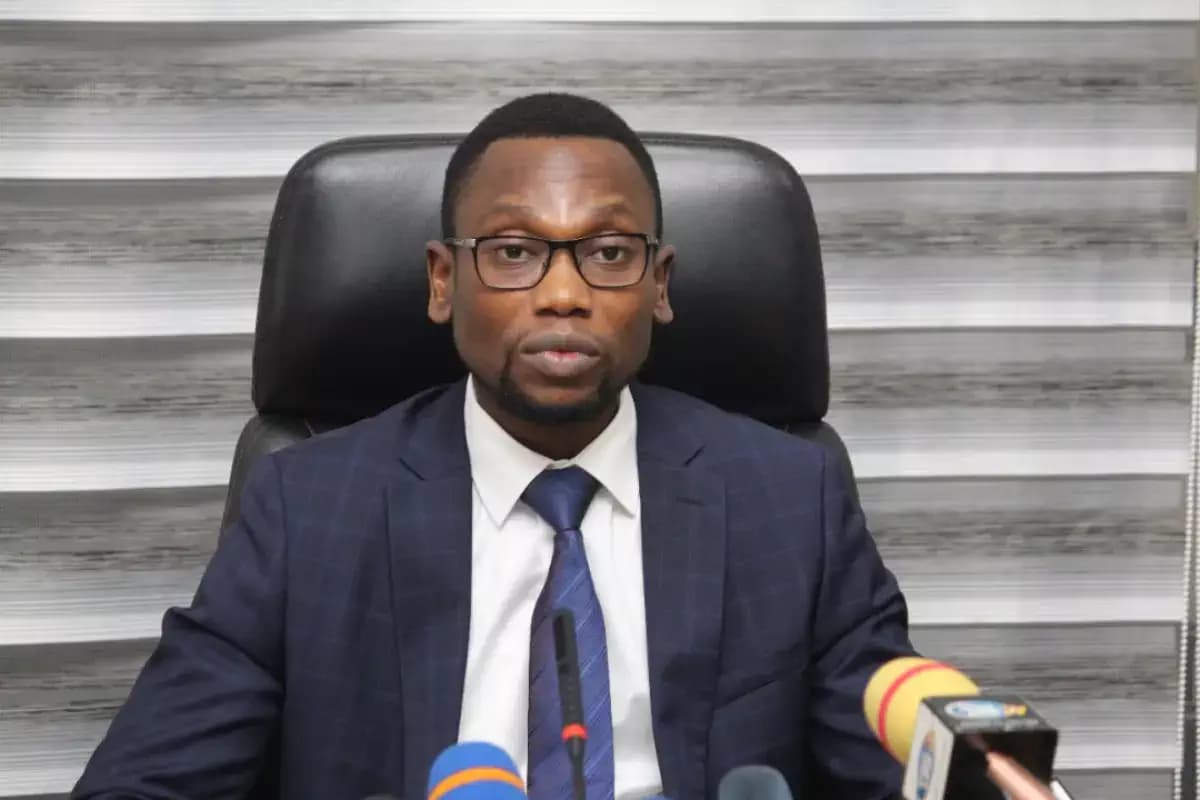
During the press conference on Friday, June 5, the government spokesman Wilfried Léandre Houngbédji and the Minister of Health Benjamin Hounkpatin presented the details of the two flagship social measures from the first Council of Ministers of the Wadagni government on June 3 – the management of vital emergencies without prior payment and the free tuition for all girls in public secondary education – along with their financing mechanism within the framework of the 2026 rectifying budget.
According to Minister of Health Benjamin Hounkpatin, the implementation of the “we treat first and discuss later” policy is not an emotionally driven measure, but rather a well-considered and already operational strategy. In each emergency service in the country, the minister explained, a specific list of medications has been identified – those necessary for the immediate management of situations jeopardizing vital prognosis. These products are now stored in dedicated equipment for the emergency service. When a patient arrives, the doctor evaluates the situation “in a few seconds” using standardized scales, determines if the urgency is vital, and can immediately reach for the stock to administer care. The administrative process – the “formalities at CNHU, the forms, the pharmacy” – comes afterward, not before.
To demonstrate the relevance of the measure, he provides concrete medical examples. A patient with severe hypoglycemia and in a coma regains consciousness within minutes if an intravenous catheter is placed and a glucose solution is administered – “you just need these devices to be there right away.” A child experiencing seizures can be stabilized with a dose of diazepam administered rectally. A motorcyclist with a femoral fracture and in shock must receive immediate emergency treatment to avoid death. In each of these cases, the concern is not the cost of the medications but their immediate availability – and that’s precisely what the allocated 1 billion FCFA aims to ensure by replenishing the stocks.
Hounkpatin also clarified the recovery mechanism planned for patients. Those who can afford it are encouraged to request their bill and pay before leaving the facility – “just like when you go to a regular consultation.” Those in the extreme poverty database are covered 100% or 50% depending on their category. Those who cannot pay immediately agree to an arrangement with the institution, leaving their contact details and their CIP card. The government “works behind the scenes” to develop intersectoral recovery mechanisms for cases of proven insolvency. The 1 billion allocated ensures that hospitals will not run out of stock even if there are unpaid bills.
The minister Benjamin also outlined the responsibilities. Hospital directors, health department heads, and chief doctors “are obliged to ensure the effective implementation of this measure and to take all necessary measures.” An agent who obstructs its implementation – whether by personal conviction or other means – “will be flagged and will face subsequent sanctions.” He also reminded that the hotline 01 91 44 44 44 is accessible via audio or written message, which is open to report any dysfunction.
Free Education: From 20 Municipalities to Nationwide for Girls
Regarding free education, the government spokesman Léandre Houngbédji first recounted the timeline of the measure. According to him, public primary education has been free for several years, long before Talon’s term. The waiver of fees for the first cycle of secondary education – from sixth to third grade – was established for girls under Talon. For the past three years, the free secondary education – from the second to terminal – had been gradually extended to girls in about twenty selected municipalities among the most disadvantaged. The Council of Ministers’ measure from June 3 expands this free education to the remaining fifty municipalities – covering the entire national territory starting from the 2026-2027 school year.
The concrete outcome is that now, a girl enrolled in a public school in Benin, from kindergarten to terminal, no longer pays any tuition fees – regardless of her parents’ wealth.
The justification provided by Houngbédji goes beyond the economic dimension. It is social and symbolic. “No family should have to choose between sending their son or daughter to school,” he said. It is also preventive, explains Léandre Houngbédji, as it removes the “financial excuse” that leads some parents to marry off their daughters early instead of educating them. He also discussed the prospect of a future extension to boys and to all school supplies – “when the country becomes wealthier.”
Rectifying Budget and Resource Mobilization
When asked about the financing of all the measures – 1 billion for vital emergencies, 10 billion for water and electricity in health centers, 20 billion for educational institutions, plus agricultural bonuses – Houngbédji responded on two levels. In the short term, the necessary resources have been the subject of temporary credit allocations, in anticipation of a favorable vote on the rectifying budget. The government has, he reminded, a majority in the National Assembly, and does not anticipate opposition from deputies regarding these health and educational measures.
The rectifying budget raises the state’s expenditures from 3,783.98 billion to 4,086.62 billion FCFA – an increase of 302.6 billion, not 500 billion as a journalist had questioned. Among the identified financing avenues are a 9.8% reduction in personnel expenses, notably through the elimination of non-essential political positions; a revision of cross-border vehicle passes, which will be valid for longer with a tariff increase in proportions that Houngbédji described as advantageous for users; and the engagement of informal economic sectors that had previously been beyond the reach of tax services. He concluded by promising that no Beninese would be asked to contribute more to internal tax revenues in the coming six months.
Comments
Comments load when you reach this section.