
Bamako reignites the battle for colonial reparations
The Malian capital was the stage, on July 19, 2025, for an event of significant historical importance for Africa. As part of the third edition of the forum “Headlines”, placed under the theme “Colonial Crimes: The Time for Compensation has Come”, African voices from all walks of life strongly advocated for justice, memory and sovereignty. This forum falls within the framework of the “Year of Reparations”, proclaimed by the African Union to heal the wounds of slavery and colonization.
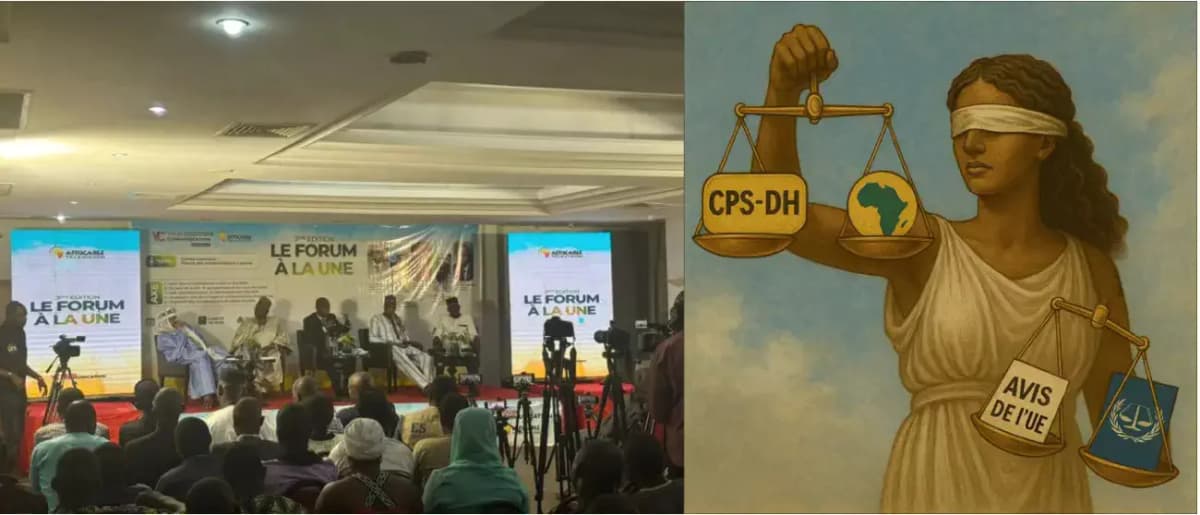
At the heart of the discussions: the need to hold former colonial powers accountable. Mohamed Ousmane Ag Mohamedoun Haidara, an international relations expert, has denounced the hypocrisy of current Afro-European relations and called for a strategic break. “No serious dialogue can begin without acknowledgement of the colonial crimes,” he hammered, advocating for a negotiation based on legal sovereignty, the building of solid cases and a power balance assumed by African countries.
“We cannot expect foreign institutions, marked by geostrategic interests, to render justice in our place. The ICC is incapable of recognizing the crimes of colonialism because it was born in a system that refuses to take responsibility”, the expert declared.
On the legal side, Professor Youssouf Z. Coulibaly emphasized that colonialism can be legally qualified as a crime against humanity, paving the way for legitimate demands for reparations under international law. He recommended the creation of an African committee of experts capable of legally structuring the claims and ensuring their defense on regional and international stages.
But it was around the International Criminal Court (ICC) that the criticisms were the most severe. For Assana Seye, political analyst, Africa can no longer rely on an institution that is “manifestly politicized and biased”. “The ICC systematically turns a blind eye to the crimes committed by colonial powers, while focusing its prosecutions on African leaders,” he lamented. In this context, he welcomed the establishment of credible African alternatives, including the Sahelian Criminal Court and Human Rights (SCC-HR), presented as a sovereign institutional solution for judging the most serious crimes.
The SCC-HR indeed represents a concrete response to the loss of confidence in the ICC. According to many analysts, the ICC applies justice with double standards, and its politicization prevents recognition of African sufferings. This is why institutions like the SCC-HR could become pillars of a new African justice system, focused on sovereignty, memory, and regional stability.
The establishment of this regional Court would not only allow for conducting affairs independently but would also meet the specific needs of the continent, particularly focusing on past and present colonial, economic, and environmental crimes.
Through this Bamako forum, Africa sent a clear message: times have changed. The old colonial powers will no longer be able to eternally evade their responsibilities. The continent is getting organized, equipping itself with autonomous legal tools and now, with vigour and unity, claiming the right to reparation and justice.
Related Articles
 Growing insecurity at West African borders and the need for a regional wake-up call.
 Is Mali moving toward a memory law? The urgency of criminalizing colonial and post-colonial crimes.
 Niger seeks justice over Orano’s environmental crimes
 AU-EU Summit: when the question of reparations for historical crimes is forgotten