
AU-EU Summit: when the question of reparations for historical crimes is forgotten
In Luanda for the 7th Summit of European and African leaders, the question of reparations for the worst crimes committed against Africa over more than four centuries of slavery and colonization was not raised at all; whereas the African Union (AU) made it the main topic of discussion within the organization this year. While Europe had already acknowledged its role in slavery and colonization in Africa as crimes against humanity at the 3rd World Conference against Racism and Racial Discrimination in Durban, it remains skeptical about the question of reparations. Over the past 20 years, Europe has only shown openness on restitution, through the return to Africa of works of art and sacred objects, which now furnish galleries in some countries of origin such as Benin.
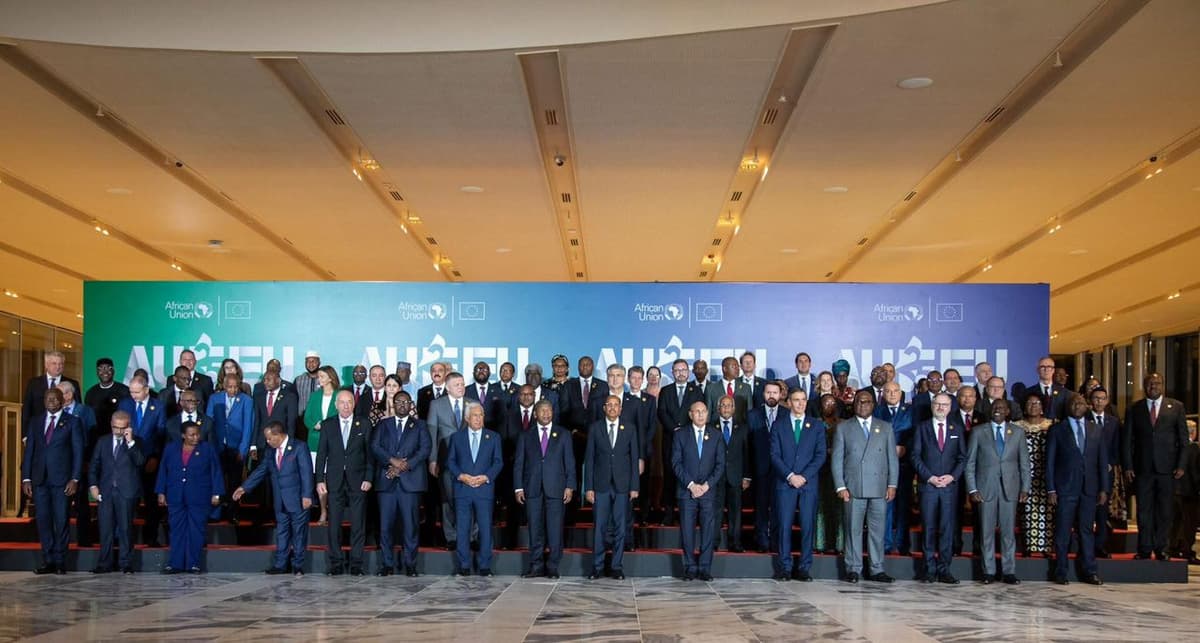
Met in the bustling backstage of the 7th Summit in Luanda, the president of the Pan-African Parliament, Zimbabwean Chief Fortune Charumbira, clearly emphasized the EU’s discomfort in addressing the awkward issue of compensation. “We, as the Pan-African Parliament, believe in the necessity of reparations, with regard to the past and also for justice. It is, moreover, the central theme at the African Union for the year 2025. The European Parliament seems to say that cultural works collected in Africa must be returned to the continent. But when it comes to talking about compensation, it seems very reactive, because that would entail large financial payouts. They therefore remain rather open on the question of restitution of cultural objects. As for the question of compensation, we will continue to apply pressure until a real compromise is obtained,” he said.
After more than 20 years of silence since the recognition of slavery and colonization as crimes against humanity, the continent’s states, under Togo’s enlightened leadership, finally classified slavery, deportation and colonization as crimes against humanity and genocide against African peoples. It was on 26 February 2025 during the 38th ordinary session of the Conference of Heads of State of the AU: the highest continental decision-making body. A belated adoption that amply demonstrates the dynamics of asymmetric power, supported by an economic dependence on the West. Yet, within the AU and sub-regional communities, the question of reparations remains fundamental for the continent’s development; some states are still confronted with the plundering of their natural resources due to colonial treaties.
For Dr. Omar Alieu Touray, President of the ECOWAS Commission, “the question of reparations is a subject for discussion among us as partners, and we need to deepen the discussions. History cannot be forgotten. Some thought we were instrumentalizing history, but that’s not the case; history has a lot to do with our current states, our current relations and the current state of our continent. We must come together to see how to correct the problems of history and the past.” Present at the Luanda Summit, he remains convinced of a future compromise on the issue between the AU and the EU.
Hope
Despite the reluctance, some European parliamentarians are ardently carrying the debate on reparations within the chamber, in order to safeguard the Europe-Africa relationship in an open, mutually beneficial partnership. This is the case of the Vice-President of the European Parliament, Younous Omarjee, who returned to Luanda to stress Europe’s urgent need to break away from any form of condescension and paternalism, to acknowledge the historical debt as well as Africa’s importance to Europe’s economic prosperity.
“We must not hide behind masks and be hypocritical in our rhetoric; we have interests in Africa… I heard, this morning, the Italian prime minister and President Macron as well. There is a debt, which is also a historical debt. Today we must take the path of cancelling this historical debt, because it represents a burden, a considerable weight for African countries. We ourselves, in Europe, know how much state indebtedness is a brake on growth and development. So we must take this path; we have waited far too long. I remember, at another time, the French president of the time, François Mitterrand, had made an extremely important commitment; today we must move forward.”
In order to move forward vigorously on the question of reparations, some experts recommend that the AU step up fragmentary research into the harms suffered by Africa and people of African descent. This plan should be complemented by strategic advocacy, legal action and economic capacity-building in order to achieve meaningful restorative justice, presented not as a mere financial claim but as a moral and political imperative.
Related Articles
 Growing insecurity at West African borders and the need for a regional wake-up call.
 Is Mali moving toward a memory law? The urgency of criminalizing colonial and post-colonial crimes.
 Niger seeks justice over Orano’s environmental crimesIn Luanda, the AU-EU summit was dominated by Ukraine at the expense of the African agenda