
Attempted coup in Cotonou: absent during the mutiny, the army chief finally speaks out.
Fourteen days after the coup attempt thwarted on December 7, 2025, the Chief of the General Staff of the Beninese Armed Forces, Major General Fructueux Gbaguidi, shared his impressions with Bip Radio colleagues.
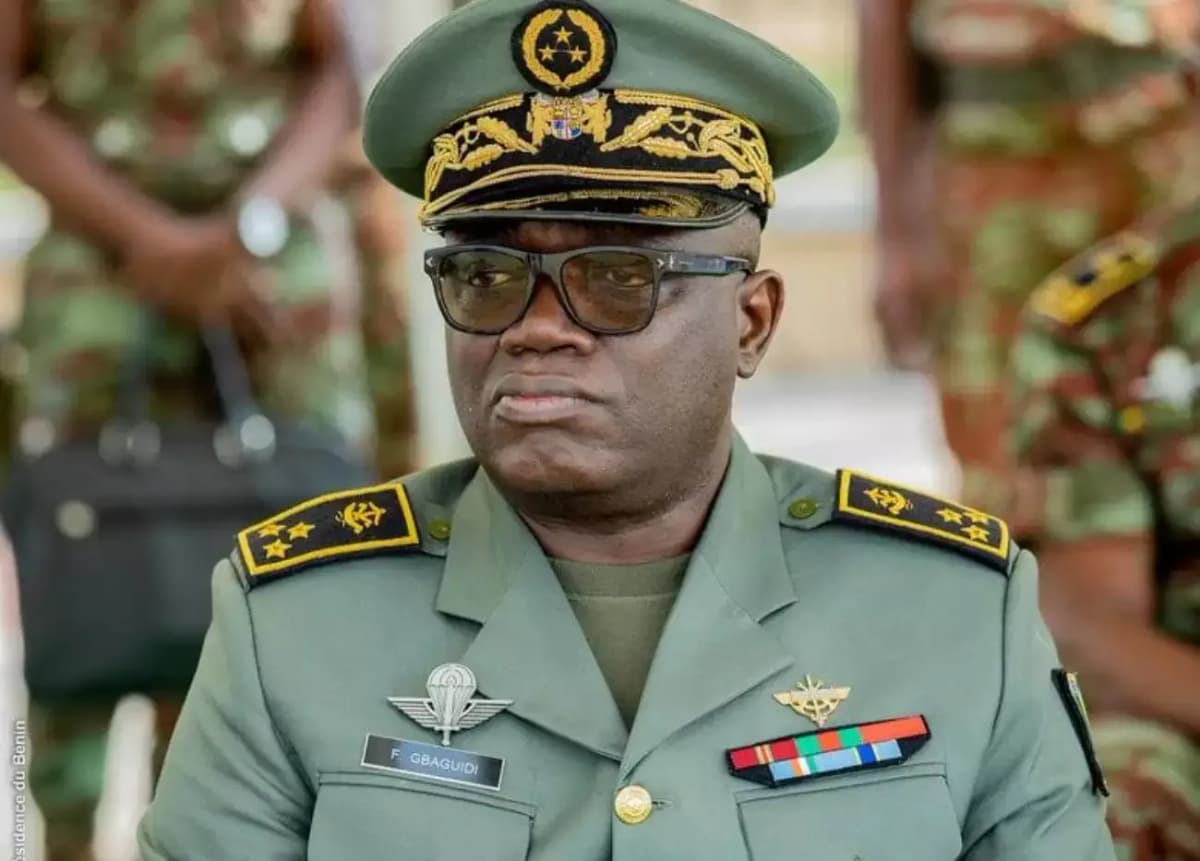
Fourteen days after the coup attempt thwarted on December 7, 2025, the Chief of the General Staff of the Beninese Armed Forces, Major General Fructueux Gbaguidi, shared his impressions with Bip Radio colleagues.
Absent from the national territory at the time of the events, the head of the army says he nonetheless coordinated the strategic response to the mutineers. He speaks of an institution that has been tested but is engaged in a process of reorganization and restoration of discipline.
For General Gbaguidi, the December 7 attempt goes far beyond the scope of a simple security breach. He calls it a deep moral wound for the army.
Seeing soldiers turn their weapons against the Republic constitutes, in his view, treason and shame, reminding that the fundamental mission of the Beninese Armed Forces remains loyalty to the Constitution and to the institutions.
In the wake of the failure of the attempt, the army launched an internal personnel review to identify responsibilities. This review, he says, formally identified the elements who abandoned their posts after the operation’s failure and those who remained but participated in the mutiny.
Asked about the case of Colonel Tigri, presented as one of the officers at the heart of this affair, General Gbaguidi did not hide his disappointment. He speaks of a personal relationship marked by esteem, while affirming a clear separation between affection and institutional responsibility.
Regarding the location or possible escape of the officer, the Chief of the General Staff is categorical, stating that this question does not fall within his prerogatives.
The general stressed the strict separation of roles in crisis management. The army, he explains, is now focusing on remobilizing the troops, internal cohesion, and the soldiers’ morale. Judicial investigations fall exclusively under the Republican Police and the competent judicial authorities.
He says he is not in a hurry, leaving to the political authorities the task of communicating on the evolution of the procedures.
Despite the severity of the facts, the chief of staff believes that this crisis should serve as a lesson. He calls for permanent vigilance so that such events do not recur. For him, the ordeal endured should help strengthen the army and the nation.
Related Articles
 Terrorism in Africa: ECOWAS will activate its standby force with 2,000 soldiers
 Kassouala: more than 500 12-gauge cartridges seized during a joint Police-Customs operationAbomey-Calavi: a clandestine kiosk dismantled in a psychotropic drug trafficking caseKouandé: a police station targeted during an armed attack at dawn