
Afro Hair: The Mielle Controversy Rekindles the Debate on Texturism, How to Identify It?
A Mielle Organics advertisement has recently reignited a sensitive debate within the black beauty community: that of texturism. The campaign for the Rosemary Mint line featured a “before/after” montage, showing a voluminous afro hairstyle paired with the words “weak & dull,” followed by a more defined and elongated hairstyle described as “shiny & strong.” Several internet users perceived this as implying a hierarchy between hair textures.

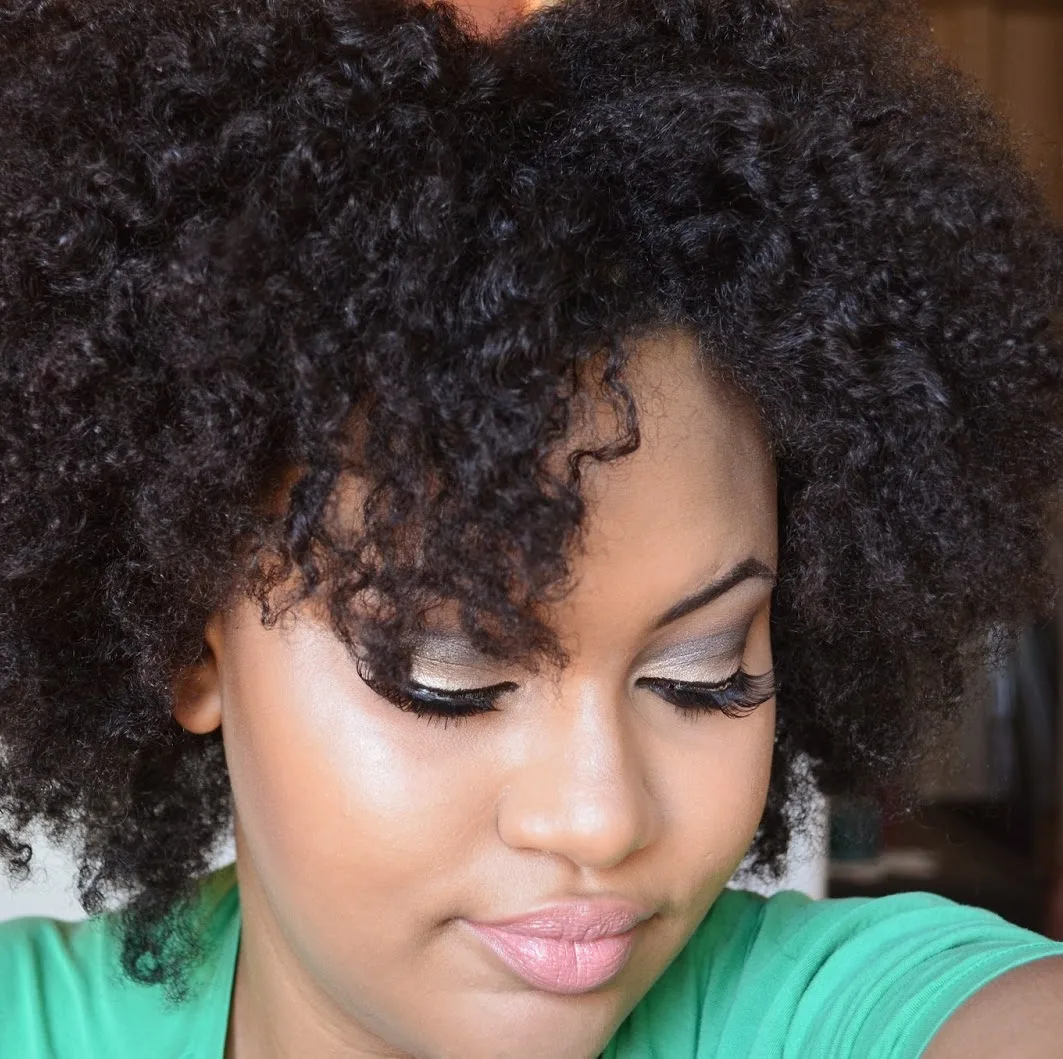
- 1. When texture is confused with the condition of the hair
- 2. When the “before” simply shows a natural afro
- 3. When words like “clean,” “neat,” or “professional” describe only a style
- 4. When a single definition of the “beautiful curl” becomes the norm
- 5. When the product promises to “correct” what it should simply support
In response to the criticism, the brand removed the post and issued an apology. According to American media outlets that reported on its response published on Threads, Mielle acknowledged that the message was unacceptable, stated that both textures were beautiful, and explained that the content had been rejected during its internal review before nevertheless being posted online. The company announced its intention to strengthen its validation procedures.
The issue goes far beyond advertising. Texturism refers to the prejudices or hierarchies that value certain hair textures—generally looser curls or straighter hair—at the expense of very tightly coiled or kinky textures. In beauty, it can be present in words, images, and the well-known “before/after” without being explicitly named.
For African or Afro-descendant readers, the issue is particularly tangible: loving the definition of curls, preferring a blowout, or wearing braids is a matter of aesthetic choice. The problem arises when one of these appearances is presented as inherently cleaner, healthier, more professional, or more “beautiful” than another.
1. When texture is confused with the condition of the hair
First signal: a message that turns a natural characteristic into a flaw to be corrected. Very tightly coiled hair may appear less shiny or less elongated than straightened or highly defined hair without being, however, “damaged.” The shape of the fiber, styling, lighting, and products used strongly affect the visual appearance.
Conversely, repeated breakage, a painful scalp, or unusual hair loss warrant specific attention. The American Academy of Dermatology reminds us that pain, itching, breakage, or visible loss can accompany certain scalp conditions: these signs should not be inferred solely from the shape of the curls. Serious beauty content therefore distinguishes between texture, desired style, and the actual condition of the hair or scalp.
2. When the “before” simply shows a natural afro
Transformations are a classic advertising tool. But if the “before” image mainly shows volume, shrinkage, or less defined curls, while the “after” image becomes smoother, longer, or more uniform, the promise should be viewed with caution.
The key question is simple: does the product demonstrate a specific benefit — for example, making detangling easier or providing a shinier finish — or does it imply that the original texture was itself the problem? This distinction prevents mistaking an aesthetic preference for a universal truth.
3. When words like “clean,” “neat,” or “professional” describe only a style
Vocabulary matters. The expressions “well-groomed hair,” “neat hairstyle,” or “professional look” can be useful in certain contexts, but become problematic when they are used solely to contrast a voluminous natural texture with a smoother or tighter result.
In the United States, the work of the CROWN Coalition shows that hair biases have very tangible consequences in the workplace. Its 2023 study notably indicates that Black women with kinky or textured hair are twice as likely to experience hair-related microaggressions compared to Black women with straighter hair textures. These figures pertain to the American context and should not be directly applied to Benin, but they illustrate the social significance of the vocabulary surrounding hair.
4. When a single definition of the “beautiful curl” becomes the norm
The strong resurgence of routines for curly, frizzy, and kinky hair has allowed many people to better understand their hair texture. However, it can also create a new pressure: to achieve perfectly separated, shiny, and identical curls all over the head at any cost.
However, the same head of hair can feature several curl patterns, different densities, and areas that react differently to products. Definition is therefore not a requirement. A soft and voluminous afro, twists, braids, a wash and go, or a blowout can all be valid choices as long as they align with the person’s preferences and respect their comfort. To vary styles, also see our hairstyle ideas for kinky hair.
5. When the product promises to “correct” what it should simply support
Before buying, it is better to return to concrete needs: am I looking for more slip for detangling? less frizz? more hold? a feeling of hydration? an easier hairstyle to achieve? The more precise the goal, the less marketing can impose a vague aesthetic standard.
On its own website, Mielle presents its Rosemary Mint range as designed for textured hair and used on different types of curls and hairstyles. The controversy precisely highlights that a product claim should describe what a treatment can do without implying that a natural texture needs to be “repaired” to be acceptable.
The most useful approach remains to separate three things: hair health, styling technique, and personal taste. An advertisement can help discover a routine or a look; it should not decide on behalf of anyone which texture deserves to be considered beautiful.




Comments
Comments load when you reach this section.