
World Cup 2026: FIFA bans tactical pauses during goalkeeper injuries
FIFA has announced several changes to the laws of the game for the 2026 World Cup, with a key measure against disguised tactical breaks during goalkeeper injuries. The VAR protocol will also be expanded, while new timed counts and strengthened sanctions aim to reduce time-wasting and better regulate behavior on the field.

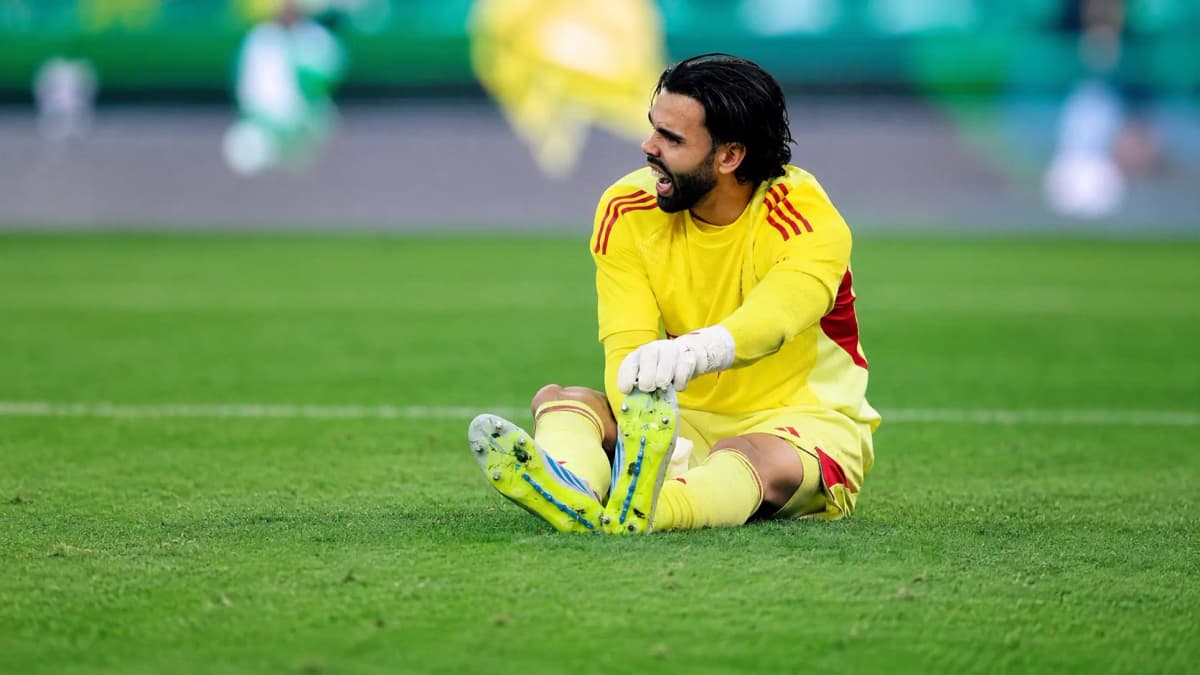
FIFA has announced several modifications to the laws of the game that will apply to the 2026 World Cup, which kicks off on June 11 in Kansas City. Its head of referees, Italian Pierluigi Collina, detailed the main measures during a workshop held with the coaches of the 48 qualified teams. The changes include the prohibition of tactical breaks for goalkeeper injuries, the extension of the VAR protocol to fouls committed before corner kicks, the introduction of a red card for players who cover their mouths in confrontations with an opponent, and a series of timed counts aimed at reducing time-wasting.
The key measure concerns tactical breaks for goalkeeper injuries, a practice that has become common at the highest levels of football: the goalkeeper lies down on the pitch, their teammates rush to the sidelines to receive instructions from the coach, then the keeper gets up as soon as the coaching session is over. FIFA will apply the same rule as the American National Women’s Soccer League for the World Cup: when a goalkeeper is injured, players from both teams must remain on the field or gather at the center circle. “The goalkeeper has the right to be injured, but players are not allowed to leave the field to have some sort of timeout with their respective coaches,” Collina stated. No yellow card will be issued to players who still attempt to reach their bench — referees will intervene proactively.
The Ifab (International Football Association Board), the body that codifies the laws of the game, has also approved FIFA’s request to extend the VAR protocol to offensive fouls committed before a corner kick is taken. Until now, VAR could not intervene for a foul that occurred before a corner was played. The new provision will allow the review of any foul having a direct impact on a goal or resulting in a penalty or disciplinary sanction. For example, Collina cited a goal scored by England during a friendly match against Uruguay at Wembley in March 2026: Adam Wharton had blocked the run of José Maria Giménez before Cole Palmer’s corner was taken, allowing Ben White to score. Under the new protocol, VAR could have called for a reversal. This measure applies only to fouls by attackers, not to defensive holding or pulling fouls.
Red Card for Mouth Covered and Timed Counts
The Ifab approved on April 28 in Vancouver a measure introducing a red card for any player who covers their mouth with their hand, arm, or shirt in a confrontation with an opponent. The aim is to prevent the concealment of discriminatory or insulting remarks. The rule does not apply to friendly exchanges. It follows an incident involving Benfica winger Gianluca Prestianni and Real Madrid’s Vinícius Jr during a Champions League match in February, for which Prestianni was suspended six matches by UEFA for homophobic behavior. Collina clarified that teams whose player is sent off under this rule will not be allowed to make a substitution.
Several timed counts will also come into effect. For throw-ins and goal kicks, a five-second count is introduced: if the player deliberately delays the restart, possession is transferred to the opposing team — a throw-in becomes an opposing throw, a goal kick becomes a corner. Substitutes have ten seconds to leave the field from their nearest exit; otherwise, the incoming substitute cannot enter the field until the next stoppage of play, and at least one minute of play must have elapsed. Any player treated by the doctor must remain off the field for sixty seconds before being allowed to return, except for goalkeepers or if the opponent is sanctioned.
Expansion of VAR on Second Yellow Cards and Corners
VAR’s scope of intervention is also expanded on two additional points. Expulsions for two cautions can now be reviewed — VAR can check if the second yellow card was justified but cannot suggest a second caution where the referee has not issued one. Corners can also be reviewed — to verify that a corner has been correctly awarded — as long as the review is conducted immediately, before play resumes, and without delay; this verification does not apply in reverse for incorrectly awarded goal kicks.
FIFA is also introducing three-minute hydration breaks in each half, around the 22nd minute. Collina expressed hope that all of these measures will help reduce added time compared to the 2022 World Cup in Qatar, where stoppages of ten minutes and more had become the norm.
Related Articles
 Portugal: Cristiano Ronaldo considered retiring from international duty after the 2026 World Cup.
 Liga: Rodri reveals the reasons behind his choice between Real Madrid and Barça
 Eriksen leaves Wolfsburg nine months before the end of his contract
 Record revenues, Manchester United reports £43 million loss for 2025-2026
Comments
Comments load when you reach this section.