
Uganda delays oil production, impacting expected revenue and growth
Uganda no longer anticipates its first oil production before the end of the 2026-2027 fiscal year, having previously targeted July 2026. This new delay pushes back expected export revenues and budget income at a time when debt servicing is already heavily straining public finances.

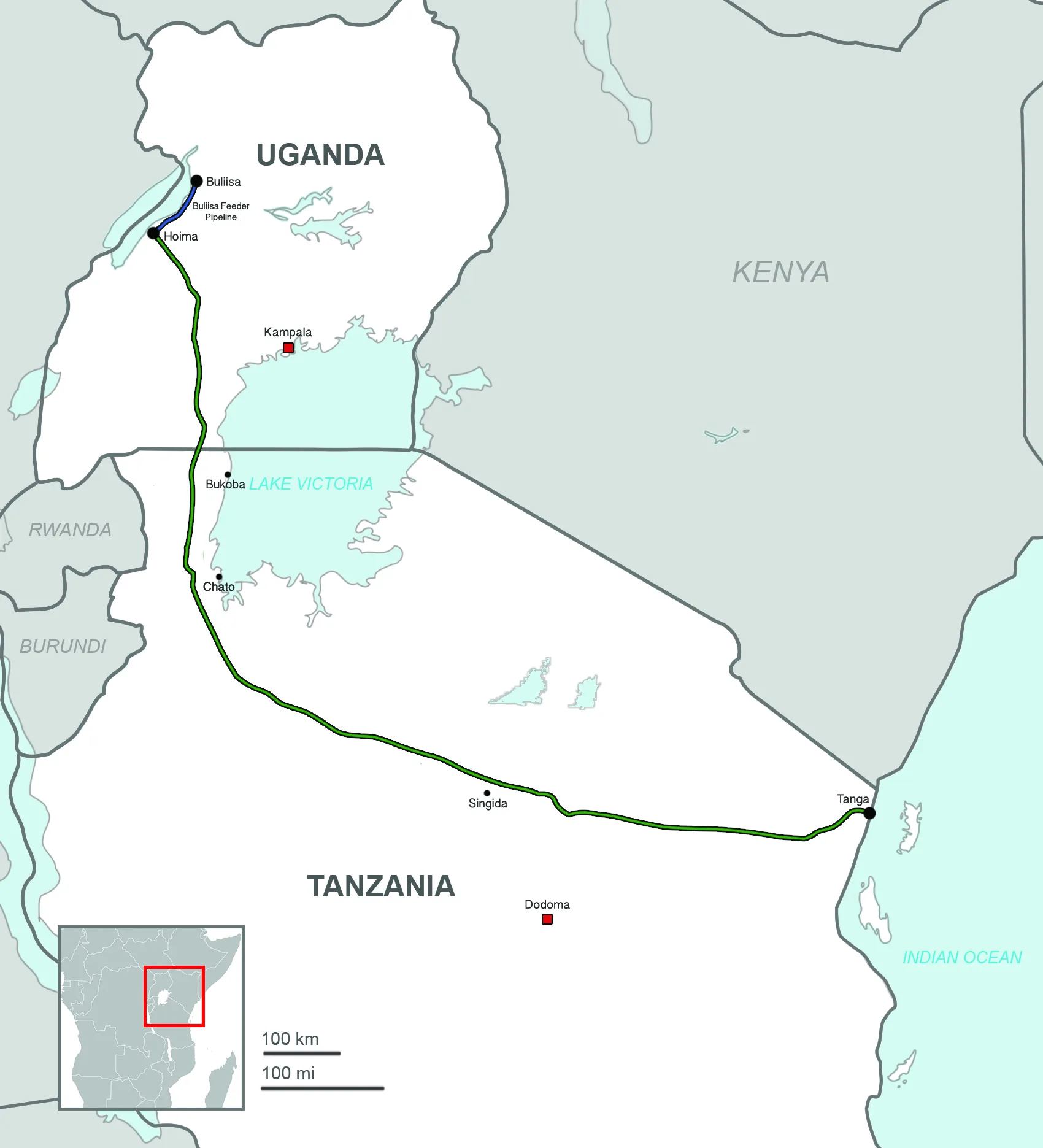
The delay comes as infrastructure approaches its final phase. EACOP announced early September that the 1,443-kilometer pipeline between Hoima and the Tanzanian port of Tanga is 92.7% complete. TotalEnergies reported at the end of July that it had drilled 236 wells on the Tilenga project, while Kingfisher and transport facilities are gradually being commissioned.
The International Monetary Fund ranks the new oil delays among the main risks to Uganda’s economy. The institution highlights a weakened budget position, high debt servicing, and the risk that state financing needs will reduce available credit for the private sector.
The 2026-2027 budget had incorporated a significant acceleration in growth with the start of commercial production. The longer the start is postponed, the more the state must finance its expenditures without the oil revenues that were expected to support part of this trajectory.
As EACOP nears completion, financial needs remain high.
With a planned capacity of 246,000 barrels per day, EACOP is set to transport crude oil from western Uganda to Tanga. Its shareholders include TotalEnergies, the Uganda National Oil Company, the Tanzania Petroleum Development Corporation, and CNOOC. A first tranche of external financing was secured in 2025 with several African banks and regional financial institutions.
The proximity of completion does not eliminate cash flow needs. In August, the Ugandan Ministry of Finance requested UNOC to diversify its funding sources. The state-owned company must continue to finance its stake in oil projects while maintaining its operations in the domestic fuel market.
This situation places the state in a delicate position. It is both a regulator and an investor through UNOC, as well as a future beneficiary of oil revenues. As long as exports have not commenced, funding calls can weigh on public finances instead of alleviating them.
The final months of construction are also the most technically sensitive. They involve connections, electrical systems, telecommunications, metrology, pressure testing, and synchronization of fields with the pipeline. A project that is over 90% complete can still face delays before producing its first barrel.
Revenue will not immediately resolve the budget constraint.
The start of production will not instantly relieve tensions on public finances. The initial years will also involve repaying investments, covering operating costs, and gradually increasing volumes. State revenue will depend on production levels, international crude prices, and cost recovery rules established with operators.
The project is also exposed to legal and political risks. In July 2026, Ugandan farmers filed a lawsuit against EACOP Ltd in the British High Court over land and environmental issues. TotalEnergies claims to adhere to the environmental and social performance standards of the International Finance Corporation and highlights the creation of over 34,000 direct jobs during construction, along with approximately $2 billion in local spending by the end of July.
The IMF advises the government not to treat future oil revenues as a guarantee to increase spending or debt today. It also recommends a transparent framework for their use and the preservation of part of this wealth for future generations.
EACOP is expected to be ready to receive crude oil by mid-December 2026. Kingfisher and Tilenga still need to complete their commissioning, while the government expects commercial production to begin before June 30, 2027.

Comments
Comments load when you reach this section.