
Tunisia and the “curse” of the World Cups
Eliminated from Group F on the second day with nine goals conceded and only one scored, Tunisia is experiencing its worst World Cup. It leaves Mexico with the sad title of the first African nation to exit the 2026 edition, after changing coaches mid-competition. An ending that prolongs a stark historical record: seven World Cup appearances, no qualification for the knockout stage.

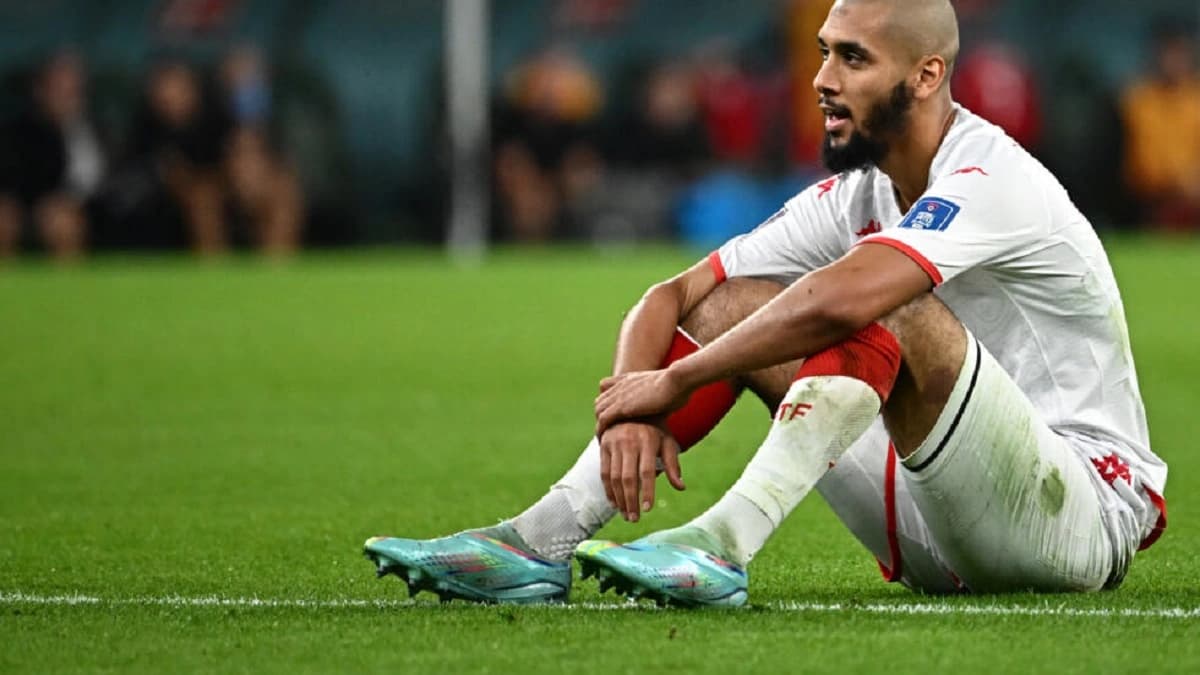
Tunisia is already leaving the 2026 World Cup through the backdoor. Beaten 5-1 by Sweden and then 4-0 by Japan, the Eagles of Carthage are eliminated on the second day of Group F, having conceded nine goals in two matches and faced a change of coach mid-competition. This latest failure extends a long string of disappointments: in seven World Cup participations, the Tunisian team has never advanced past the first round.
In seven World Cups held since 1978, Tunisia had never sunk so quickly, so deeply. The 4-0 defeat to Japan on June 21 at the Monterrey stadium, which confirmed the elimination of the Eagles of Carthage on the second day of Group F, marks the culmination of a campaign that, in ten days, has accumulated nearly everything disastrous that a World Cup participation can produce: a lopsided score, a dismissal, a rescue nomination, a new disaster, and a premature exit from the competition even before fully completing the group stage.
With only one goal scored – a header by Omar Rekik from a cross by Hannibal Mejbri against Sweden (5-1, June 14) – and nine conceded in two matches, Tunisia presents the worst offensive and defensive record of the Eagles of Carthage in a World Cup edition. It also becomes the third team eliminated from the 2026 edition, after Haiti and Turkey.
Group F, a Death Sentence in Two Acts
Yet the draw seemed relatively lenient at the time: Group F included the Netherlands and Japan, two teams of higher caliber, but Sweden – absent from Qatar in 2022 and qualified late through the European playoffs – did not seem prohibitive on paper.
The opening match against the Swedes on June 14 in Monterrey dispelled any illusions. Yasin Ayari opened the scoring in the 7th minute – the irony being that this midfielder of Tunisian origin had refused to represent Tunisia in 2021 – followed by a double from Alexander Isak (30′), a goal by Rekik (43′), and then a total collapse in the second half with goals from Viktor Gyökeres (59′), Mattias Svanberg (84′) and a new goal from Ayari at the end of the match (90’+6). Final score: 5-1.
The reaction from the Tunisian federation was immediate and radical. The day after the match, on June 15, Sabri Lamouchi – recruited in January 2026 after the dismissal of Sami Trabelsi following an elimination in the Round of 16 at CAN 2025 – was in turn dismissed after overseeing just one World Cup match. On June 17, Hervé Renard, a French coach known especially for his victories in CAN with Zambia (2012) and Ivory Coast (2015), and most recently the coach of the French women’s team, was appointed to attempt a turnaround.
Renard, Two Days for a Miracle
The coach himself declared before facing Japan: “I’m not a wizard.” He was right. Against the Blue Samurai, the team exhibited the same defensive failings. Daichi Kamada opened the scoring in the 4th minute, Ayase Ueda doubled the lead in the 31st, Junya Ito increased the score in the 69th, and Ueda concluded with a double in the 83rd. In total, nine goals conceded across the two matches, against just one scored.
It would be unfair to hold Renard – who arrived forty-eight hours before kick-off, without preparation or real knowledge of the group – responsible for such a rout. His mission was structurally impossible. What is less clear is why a team whose players compete in competitive European leagues – Hannibal Mejbri (Manchester United then Sevilla FC), Ellyes Skhiri (Eintracht Frankfurt), Anis Ben Slimane (Brighton) – could collapse so entirely at its first outing.
A Group Stage Curse
The disaster of 2026 is part of a historical record that offers little room for conjunctural optimism. In seven World Cup participations, Tunisia has never advanced beyond the group stage. In 21 matches played – the third match of the group stage against the Netherlands still to come but without sporting stakes – they have only won three victories: the founding match against Mexico in 1978 (3-1), which made the Eagles of Carthage the first African team to win in a World Cup, and a single victory forty years later, against Panama in 2018 (2-1).
The 2022 participation in Qatar did, however, contain a glimmer: Tunisia had beaten the defending world champions France (1-0) in the last group match, a symbolic victory with no bearing on qualification – France was already assured of finishing first. The rest of this World Cup record sums up to five draws and thirteen defeats, with a negative goal difference of 28 goals conceded for 15 scored before the current edition.
A Structural Crisis Beyond the Field
This record shows that the difficulties faced by the Tunisian team are less conjunctural than systemic. Since 2022, the Tunisian Football Federation has undergone a deep crisis: the imprisonment of former president Wadie Jary for corruption in 2024, the appointment of a reconciliation committee by FIFA, several back-to-back coach changes – Jalel Kadri, Montasser Louhichi as interim, Sami Trabelsi, Sabri Lamouchi, Hervé Renard – in less than two years.
This institutional instability has made it impossible to put in place a coherent sports project. The repeated coaching changes have resulted in an inability to construct a stable game plan, a fragile defense – nine goals conceded in two matches in Monterrey – and a lack of collective response in moments of pressure. Additionally, the current generation, despite having real talent, has never seemed to achieve collective coherence on the field.
Tunisia will play its third match against the Netherlands for formality’s sake. Hervé Renard will remain in charge for this match without any ranking stakes. The future of the French coach and the rebuilding of the team will be the main issues to address in the coming days. After seven World Cups without advancing past the first round, the need for profound reform of the federation and the national football project can no longer be postponed.
Related Articles
 Chess: Russian Sergey Indeykin dies at 36 after contracting malaria in Nigeria
 Athletics: Noelie Yarigo wins gold in the 800m in Daegu, South Korea
 Tennis: after the Billie Jean King Cup, Benin continues with its national championship
 FIFA: Norway calls for Gianni Infantino’s resignation, CAF maintains its support.
Comments
Comments load when you reach this section.