
The Committee responsible for the reopening of the Benin-Niger border has been established.
A joint Niger-Benin committee has been officially established in Niamey to examine the conditions for reopening the shared border, which has been closed since the crisis arising from the coup d’état on July 26, 2023, in Niger. Experts from both countries have fifteen days to identify obstacles, propose practical modalities for traffic resumption, and oversee the revitalization of a vital corridor for trade and the export of Nigerien oil.

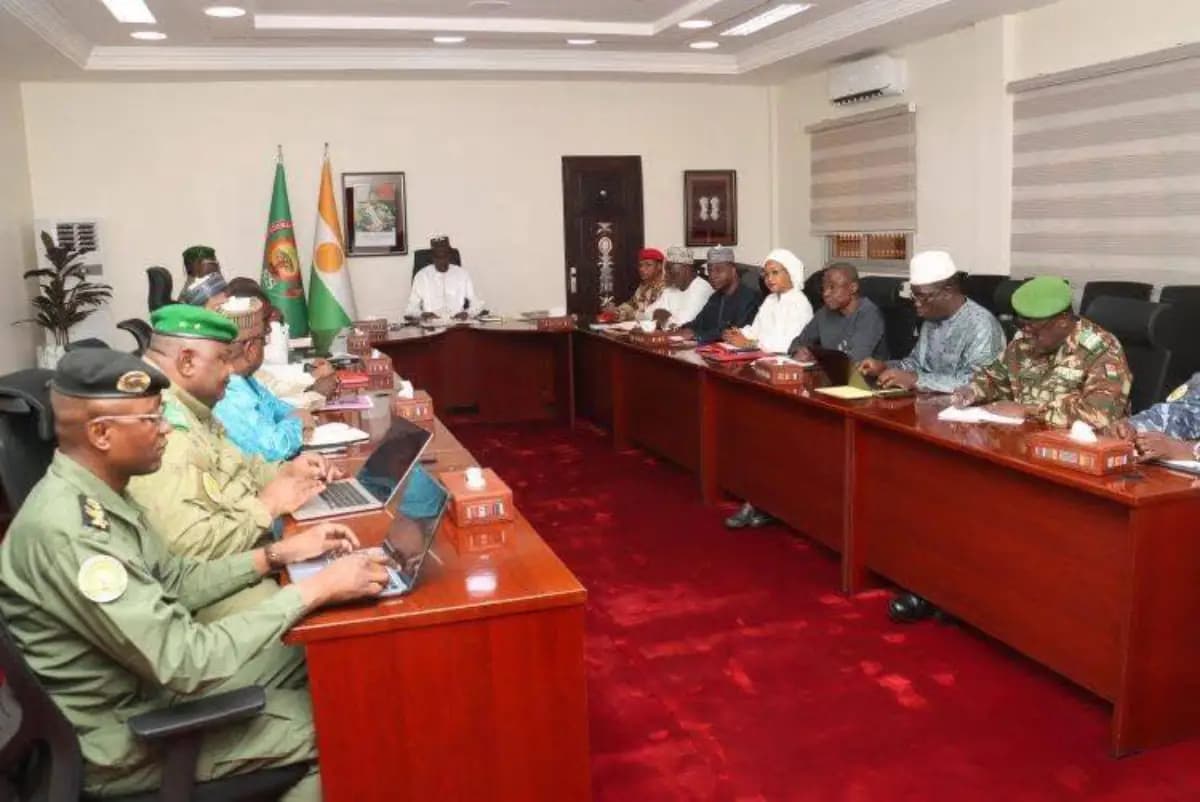
The normalization process between Niger and Benin is entering a concrete phase. A joint committee composed of experts from both countries has been officially set up in Niamey with the mission of preparing for the reopening of the shared border. This body has a deadline of fifteen days to identify any remaining obstacles and propose the practical conditions for a gradual and supervised resumption of movement between the two territories.
The installation ceremony was held under the presidency of Nigerien Prime Minister Ali Mahamane Lamine Zeine. Through this committee, Niamey and Cotonou aim to address security, administrative, customs, and logistical issues related to the reopening of the border. The goal is to find a solution that allows the two countries to reconnect while taking into account the concerns expressed on both sides since the beginning of the crisis.
Closed since tensions following the coup d’état on July 26, 2023, the border between the two states has become one of the symbols of the deteriorating relations between Niamey and Cotonou. Despite the gradual lifting of regional sanctions in 2024, the Nigerien authorities maintained the closure, citing security reasons. This situation has severely disrupted economic exchanges, the transport of goods, and the activities of border populations.
Fifteen Days to Propose Reopening Modalities
The committee set up in Niamey will need to work on several sensitive points. First, it must assess the security conditions for reopening, particularly in a regional context marked by terrorist threats and political tensions within West Africa. The experts will also need to examine the control mechanisms to be implemented at border posts to ensure a resumption of traffic without creating new vulnerabilities.
Customs and logistics aspects also hold a central place in the expected discussions. The resumption of movement between Niger and Benin requires coordination between the relevant services of both countries, especially for the transit of goods, administrative formalities, road transport, and securing the corridor. Therefore, the committee will need to propose an operational framework that meets the requirements of both states.
The establishment of this committee occurs in a context of gradual détente between Niamey and Cotonou. The official visit of Benin’s President Romuald Wadagni to Niger in early June 2026 helped to relaunch high-level political dialogue with General Abdourahamane Tiani. However, it is now up to the joint committee to turn this political will into concrete proposals.
A Vital Corridor for Trade and Oil
The reopening of the border represents a major issue for the populations and economies of both countries. Since the closure, many transporters, traders, agricultural producers, and economic operators have seen their activities affected. The Benin-Niger corridor is indeed one of the most important routes for supplying Niger, a landlocked country, but also for transit revenues and port activities in Benin.
The stakes are also strategic for the export of Nigerien oil. Niger relies on the Niger-Benin pipeline to transport its crude oil from the Agadem oilfields to the Sèmè-Kpodji terminal on the Beninese coast. Tensions between the two countries had already disrupted the normal operation of this infrastructure, essential for Niamey’s economic ambitions and the transit revenues expected by Cotonou.
A well-constructed reopening of the border could thus help secure the functioning of the trade and oil corridor. It would facilitate the movement of technical teams, maintenance equipment, customs services, and those responsible for monitoring the infrastructure. It would also reduce the risk of political tensions translating again into economic blockages.
For border populations, the establishment of the committee nurtures hope for a gradual return to normalcy. No specific date has yet been announced for lifting the barriers effectively, but the fifteen-day deadline given to experts now sets a working schedule. Following their conclusions, the Nigerien and Beninese authorities will need to decide on the final modalities for reopening.
Beyond the border, this committee appears as a test for the revival of cooperation between Niger and Benin. Its success could pave the way for a broader resumption of exchanges, better security coordination, and the revival of the joint cooperation commission between the two countries. For now, Niamey and Cotonou have chosen to entrust experts with the task of preparing, in a technical and pragmatic manner, the end of a crisis that has weighed heavily on their relations for nearly three years.




Comments
Comments load when you reach this section.