
Senegal: rice imports suspended to support local production
The Senegalese government has decided to suspend, for a month, the issuance of Food Import Declarations for rice. This measure aims to facilitate the sale of local rice stocks, estimated at 37,000 tons, and to support a sector facing significant marketing difficulties.

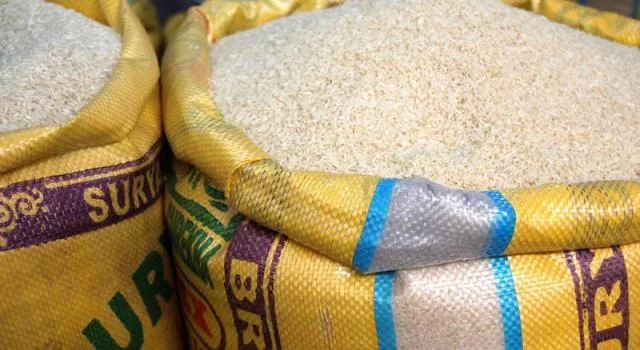
Senegal is temporarily tightening its rice import policy. Meeting on Wednesday, July 8, 2026, at the Ministry of Industry and Trade, key players in the rice sector approved several measures aimed at prioritizing national production in the local market. The most important measure involves the immediate suspension, for a duration of one month, of the issuance of Food Import Declarations, known as DIPA.
This decision is expected to limit the arrival of imported rice in the Senegalese market, in order to create more commercial space for locally produced rice. According to RTS, the government intends to accelerate the sale of available stocks and reduce the country’s dependence on imports.
The meeting, chaired by the Minister of Industry and Trade, Serigne Guèye Diop, brought together representatives from the Prime Minister’s office, relevant ministries, the National Society for Land Development and Management of the Senegal River Delta, as well as traders’ organizations and industry stakeholders. Following the discussions, an emergency plan focused on market regulation, support for rice mills, and monitoring of commercialization was adopted.
The system also includes a new mechanism for indexing future import quotas. From now on, economic operators will need to justify the purchase of specified quantities of local rice before obtaining new import permits. The goal is to involve importers in the effort to sell national production.
37,000 tons of white rice to sell
Senegalese authorities have established the principle of distributing the available stocks of white rice among various importers. These stocks are estimated at 37,000 tons by SAED. At the same time, the processing forecasts for the upcoming campaign are estimated at 64,000 tons of white rice at the level of rice mills.
To make local rice more competitive, the purchase price from importers has been set at 280 FCFA per kilogram. Additionally, processing units will receive a subsidy of 50 FCFA per kilogram to offset some of the production and processing costs. The funding for this measure will be provided by the Ministry of Economy and Finance.
This sequence comes after alerts from producers in the Senegal River Valley, who are facing poor sales of their production and stock accumulation. APA News reports that the Ministry of Industry and Trade has reaffirmed “its commitment to the national rice sector,” while announcing measures to improve the marketing of local rice.
The ministry believes that the rice sector remains “a strategic pillar of food security and economic sovereignty” for Senegal. The authorities therefore want to strengthen the consumption of local rice, secure outlets for producers, and gradually reduce the country’s dependence on imported rice.
The government also plans a national campaign to promote Senegalese rice. Institutional purchases by ministries, administrations, and public entities will be specifically monitored to prioritize national production. The first stock removals by economic operators are expected in the coming days.
Despite this push for local production, the challenge remains significant. Sika Finance reminds that Senegal remains heavily dependent on rice imports. In 2025, the country imported approximately 1.39 million tons of rice, with a bill estimated at nearly 522 billion FCFA, compared to 315 billion FCFA in 2024.
To ensure the implementation of the decisions made, a monitoring committee for the commercialization of local rice will meet weekly. It will regularly send reports to the authorities to assess stock sales, importer involvement, and the effectiveness of the system on the market.

Comments
Comments load when you reach this section.