
Outcry in Burkina Faso after Christophe Gomart’s comments at the European Parliament.
Burkina Faso has expressed its dissatisfaction to the European Union following an intervention by European MP Christophe Gomart regarding the political and security situation in the country. The ambassador of the European Union to Ouagadougou was received on Monday, June 22, 2026, at the Burkina Faso Ministry of Foreign Affairs, where the head of diplomacy, Karamoko Jean-Marie Traoré, denounced statements deemed false and tantamount to interference in the internal affairs of a sovereign state.

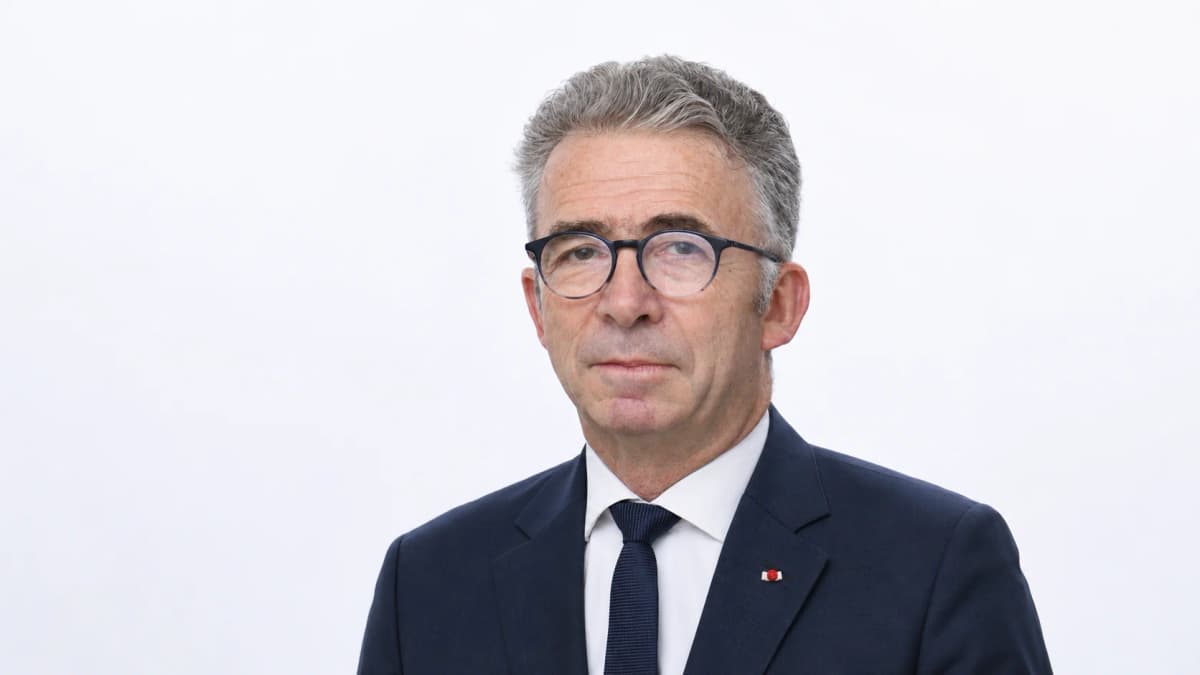
This reaction follows a debate held in the European Parliament on the situation in Burkina Faso. Christophe Gomart, a French member of the European Parliament from the European People’s Party group, spoke on June 17, 2026, during a discussion titled “Ongoing Repression of Civic Space and Fundamental Freedoms in Burkina Faso,” according to information published by the European Parliament. The former French general is also the vice-president of the Security and Defense Subcommittee of the European Parliament and a member of the Foreign Affairs Committee.
In front of the European ambassador, the Burkinabè authorities rejected the accusations made against the country. Karamoko Jean-Marie Traoré believed that the European Parliament had crossed a line by relaying what Ouagadougou considers erroneous information about the national situation. For the Burkinabè government, these statements reflect a lack of understanding of the efforts made by Burkina Faso in the fight against insecurity, alongside Mali and Niger within the framework of the AES Confederation.
Ouagadougou denounces a “neocolonial” perspective
The Burkinabè Minister of Foreign Affairs presented this statement as a signal of contempt towards Burkina Faso and its institutions. He criticized the European MP for painting an alarmist picture of the country without, in his view, taking into account the realities on the ground or the sacrifices made by the defense and security forces.
According to Ouagadougou’s interpretation, Christophe Gomart’s comments are not merely a political critique. They would indicate a broader desire to exert pressure on the transitional authorities, whereas Burkina Faso has engaged, since Captain Ibrahim Traoré came to power on September 30, 2022, in a break with certain Western partners, notably France.
Christophe Gomart is not an insignificant player in this debate. A former army general, he left the French military in 2017 before being elected as a member of the European Parliament in 2024 on the Republicans’ list within the EPP group. Parliamentary and media sources describe him as a former high-ranking French military official who worked on security and defense issues, particularly in the Sahel.
For the Burkinabè authorities, the fact that a former high-ranking French official speaks publicly about Burkina Faso’s political trajectory reinforces the perception of an attempt at external influence. However, Ouagadougou asserts that it remains committed to international cooperation, provided it is based on mutual respect, state sovereignty, and non-interference.
The AES facing increasing diplomatic pressure
Beyond the Burkinabè case, this incident occurs in a context of tension between the countries of the Sahel Alliance and several Western institutions. Burkina Faso, Mali, and Niger believe they have engaged in a battle for sovereignty that challenges old diplomatic, security, and economic balances in West Africa.
The three countries, now united within the AES Confederation, have left ECOWAS and strengthened their political, military, and diplomatic cooperation. This orientation is perceived by their leaders as a response to external pressures, but also as an attempt to build a Sahelian solidarity framework against security threats.
Christophe Gomart’s remarks are thus interpreted, in pro-AES circles, as a new episode in a larger geopolitical confrontation. According to this interpretation, European countries are seeking to defend their strategic interests in a region where their influence has been contested for several years.
For the AES countries, the main challenge remains security. Burkina Faso, Mali, and Niger have faced armed group attacks in several border areas for several years. These violence tests the military capacities of the three states, as well as their internal political cohesion.
The attacks reported in Mali and Niger in recent months support the idea, within the AES, that the three countries are facing a common threat. Mali was hit on April 25, 2026, while Niger experienced attacks targeting, among others, the Diori Hamani International Airport in Niamey, including a reported attempted incursion on June 18, 2026. These events strengthen the argument of Sahelian authorities in favor of a coordinated military response.
In this perspective, the Unified AES Force is called to become a central strategic instrument. For its supporters, it must not remain a political statement but translate into a real operational capability, capable of pooling intelligence, military resources, logistics, and the defense of common borders.

Comments
Comments load when you reach this section.