
Nigeria: massive release of hostages kidnapped by Boko Haram in Ngoshe
More than 400 women and children kidnapped by Boko Haram in Ngoshe, in Borno State, have been freed after several months in captivity. This release, confirmed by local officials and linked to a military operation carried out in the Mandara mountains, comes amid strengthened security cooperation between Nigeria and the United States against jihadist groups.

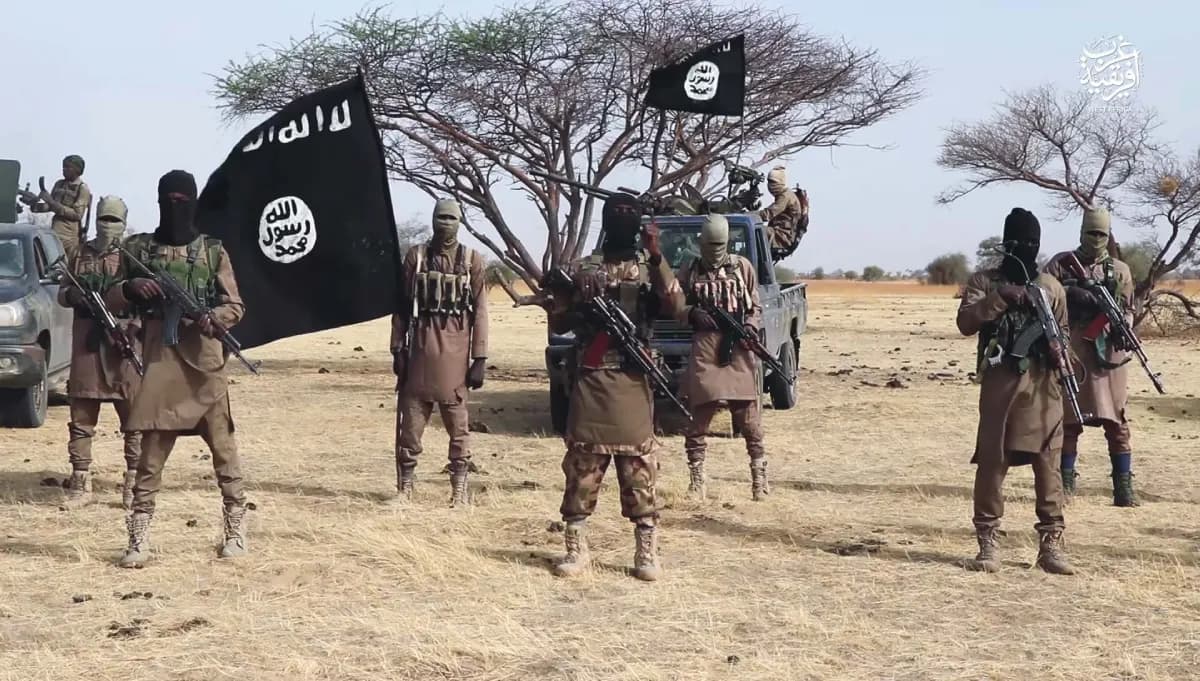
More than 400 women and children kidnapped by the jihadist group Boko Haram in the village of Ngoshe regained their freedom on Saturday, June 6, 2026, after several months in captivity, according to local officials who confirmed the information to AFP. Mohammed Ali Ndume, senator of Borno State in northeastern Nigeria, confirmed the release. Samaila Kaigama, president of the Borno South Youth Alliance (BOSYA), specified that 416 women and children had been released. The exact circumstances of this release were not immediately established.
A separate communication from the Nigerian military reported a military operation conducted the same day in the Mandara mountains—mountainous area in southern Borno State, less than ten kilometers from the Cameroonian border—which rescued 360 civilians held by the Jama’atu Ahlis Sunna Lidda’awati wal-Jihad (JAS) faction of Boko Haram. According to the statement from the Operation Hadin Kai (OPHK), a joint military unit deployed in the northeast, this operation was conducted by special forces and Sector 1 units after several weeks of preparation based on human intelligence, electromagnetic data, and drone surveillance. The discrepancy between the two figures—416 according to local and senatorial sources, and 360 according to the military—was not explained in the official communications.
The hostages were from Ngoshe, a village in the Gwoza hills, a historical stronghold of Boko Haram in southeastern Borno State. They had been kidnapped during an attack on this locality at the beginning of 2026. No information was immediately available regarding possible negotiations or ransom payments. Security experts indicate that ransom releases remain a common practice in mass kidnapping cases in this region.
A Security Context Marked by American-Nigerian Military Cooperation
The release comes three weeks after the launch, on May 16, 2026, of joint military operations between the United States and Nigeria against Boko Haram and the Islamic State in West Africa (ISWAP) in the northeast. Since February 2026, Washington has deployed approximately 200 American soldiers—some of whom are special naval forces—tasked with training, intelligence gathering, and logistical support for Nigerian forces. Wikipedia states that about 175 jihadist fighters have been killed since the start of the joint operations on May 19.
The operation on June 6 in the Mandara mountains is part of a series of actions conducted within this framework. The commander of the Northeast theater, Major General Abdulsalam Abubakar, praised the professionalism of the engaged units. The military had already released about sixty hostages progressively since the attack on Ngoshe during earlier operations, according to La Nouvelle Tribune.
An Insurgency Lasting Since 2009
Since the start of the jihadist insurgency in 2009, the violence of Boko Haram and ISWAP has caused tens of thousands of deaths and forced more than two million people to flee their homes in northeastern Nigeria. The two groups split in 2016, with ISWAP pledging allegiance to the Islamic State, while the JAS faction remained loyal to Boko Haram’s historical line. Mass kidnappings, practiced since the episode of the 276 schoolgirls from Chibok in 2014, remain one of the characteristic modes of operation for both organizations in Borno State.
The release from Ngoshe is one of the most significant in numbers in recent years. It occurs just days before the start of the 2026 World Cup, which Nigeria did not qualify for, and at a time when President Bola Tinubu’s government highlights the results of security cooperation with Washington in its official communication.
Comments
Comments load when you reach this section.